Hotel Manzoni Wellness&Spa
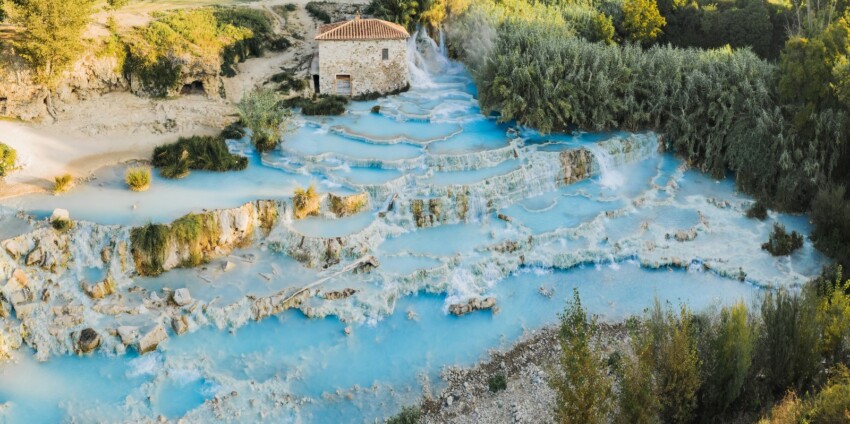
It’s easy to understand why Tuscany’s thermal spas are one of the preferred destinations for wellness holiday lovers: a quarter of Italy’s thermal springs are located in this region, and they’re all surrounded by a beauty that nourishes both the eyes and the spirit.
The beauty of the landscape and art—that unique blend that man has created in Tuscany—provides the backdrop for pools of naturally heated water just steps away from charming villages where time seems to have stood still, hidden in woodlands or nestled within meticulously maintained spa parks, perhaps with panoramic views across rolling hills.
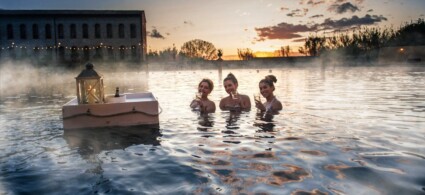
In such a setting, a day at the spa is always a rejuvenating experience, whether you choose to enjoy them simply, in full contact with nature, at the free thermal pools, or by treating yourself to a stay at a luxurious spa hotel.
But which are the most beautiful spas in Tuscany? Are there free thermal spas or do you have to pay for them all? Which spa towns should you choose for a romantic weekend and which are best for combining relaxation with cultural visits all in one holiday?
To help you choose where to visit the spas in Tuscany, we’ve created a short guide featuring six spa towns not to be missed, plus some practical information to help you make the most of your well-deserved wellness break.
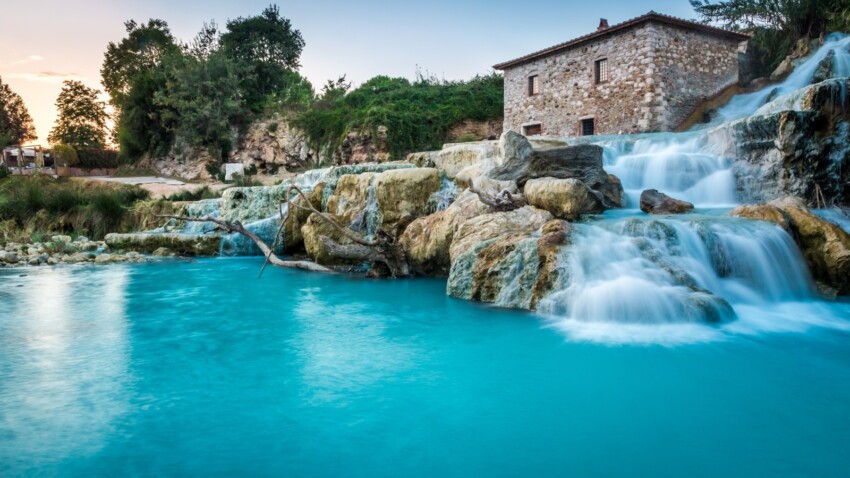
The healing properties of Tuscany’s thermal waters have been recognised since ancient times: even before the Romans, the Etruscans knew of them and valued them. Given the considerable number of thermal springs in Tuscany, it’s difficult to describe the properties of the region’s thermal waters in general terms.
Some waters are particularly suited for muscle and skeletal pain, others are recommended for treating gastrointestinal disorders, whilst others have a positive effect on the cardiovascular system. Among the conditions effectively treated by Tuscan thermal waters are bronchitis, dermatitis, sinusitis, osteoarthritis, rheumatism, constipation and venous insufficiency.
Generally speaking, you can make a distinction between central and northern Tuscany, where the waters have a relatively lower average temperature, and southern Tuscany (particularly the area from Larderello to Monte Amiata), characterised by hot springs. Temperatures can range between 25° and 54°C.
Today, thermal treatments in Tuscany remain widespread, including those covered by the national health service, but thermal tourism is now driven more by the desire for wellness holidays than by medical needs. All the major spa towns have equipped themselves with modern, elegant and comfortable accommodation for tourists seeking a few days to completely switch off.
From a place of healing, Tuscany’s spas have thus become a place where you can spend unforgettable moments of relaxation—as a couple, with family, with friends, and why not?—alone.
Tuscany’s spa towns are scattered throughout the region, but the most beautiful and well-known are concentrated in the south-eastern part: here you’ll find Chianciano Terme, Bagni di San Filippo and Bagno Vignoni; Terme di Saturnia is also in this area but slightly further west, whilst Rapolano Terme is a little further north. In northern Tuscany, the main spa town is Montecatini Terme.
Each town differs in terms of water type, services, hotel availability and atmosphere. Here’s a brief look at the main characteristics of the 6 best spa towns in Tuscany: we’ve created a detailed page for each one where you’ll find more information and recommended hotels.
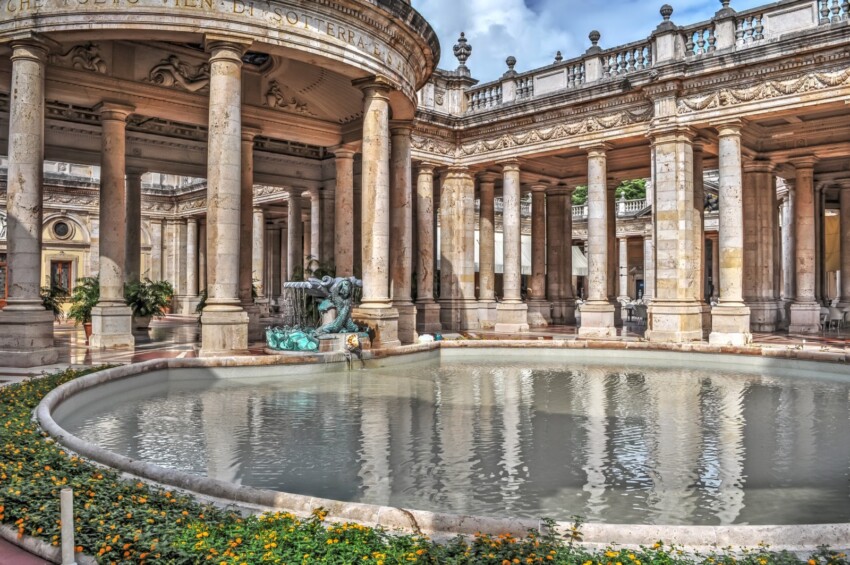
Montecatini Terme is Tuscany’s historic spa destination and one of the most famous in Europe—so much so that in 2021 it was added to UNESCO’s “The Great Spas of Europe” list.
Hugely popular until the 1970s, it subsequently experienced a gradual decline before recovering in recent years by valuing both its glorious past and its strategic location. It’s just 40 minutes from Pisa and Florence and conveniently close to many other interesting cultural attractions.
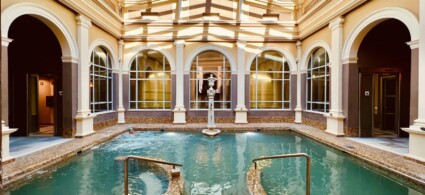
The thermal facilities have been updated whilst the Belle Époque atmosphere remains intact: Montecatini is therefore the ideal destination for those who associate spas with elegance, neoclassical harmony, Art Nouveau villas, illustrious visitors, and who want to experience a romantic dream with a 19th-century flavour. It’s also recommended for those who, in addition to relaxation, want shops, restaurants and venues for evening entertainment.
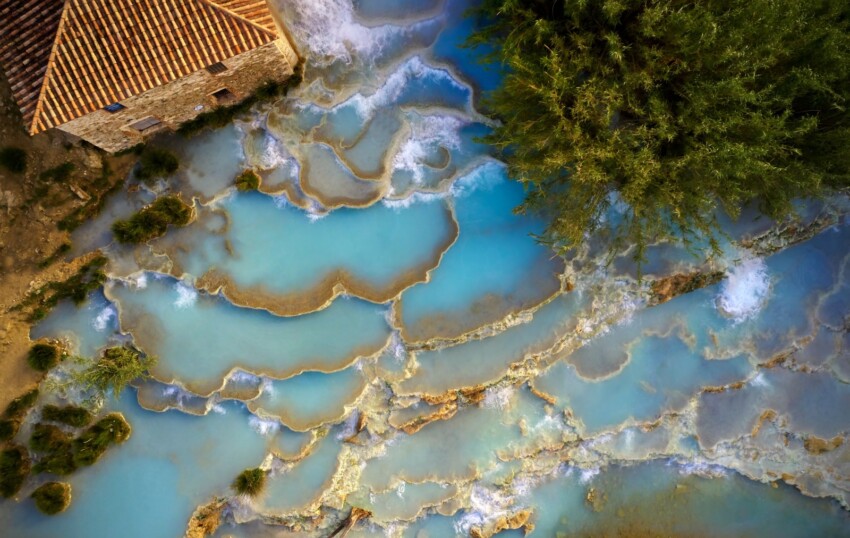
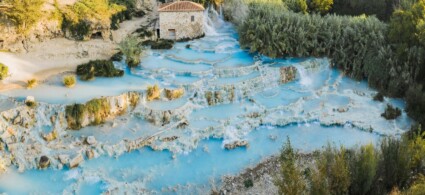
Nestled in Tuscany’s rolling countryside are enchanting natural pools of tiered limestone rock filled with hot water from the Gorelle thermal stream: these are Terme di Saturnia, probably Italy’s most famous free thermal spa.
Close to the highest waterfall stands an old cottage with a mill, which has become an indispensable element of Saturnia’s spas in the collective imagination—which is why they’re also known as Cascate del Mulino (Mill Waterfall). It’s currently unused, though there are reports of plans for tourist development.
A place so beautiful and relaxing with free access inevitably attracts numerous visitors both day and night. For this reason, many people prefer to pay an entrance fee and spend their relaxation day in the spa park next to the waterfall.
The park includes pools, hydromassage baths and outdoor vascular circuits; an upmarket hotel with spa is attached to the park. You can enter the park by paying a daily entrance fee or use the facilities as a resort guest.
The spring that creates the stream originates from a volcanic crater which now corresponds with the pool of the thermal establishment. The waterfall waters flow into the Stellata stream and then merge into common waters.
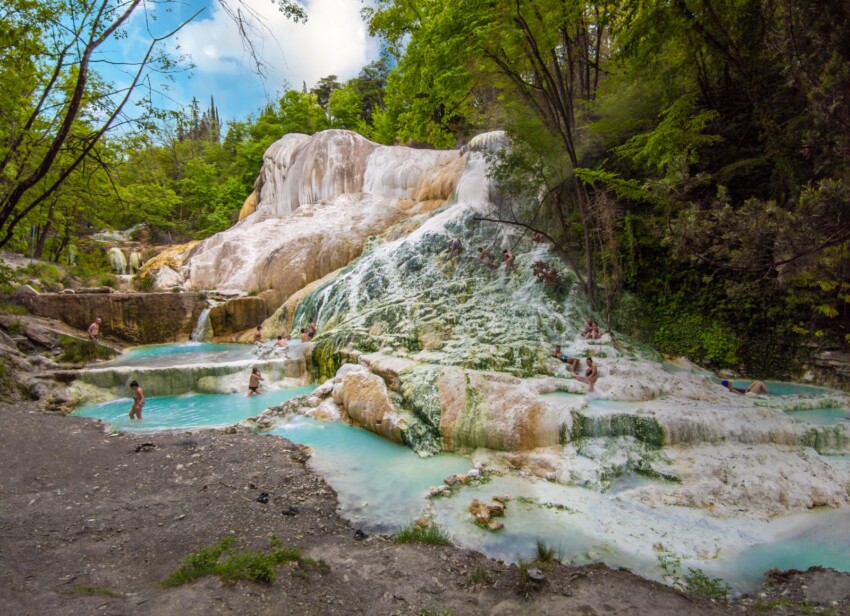
The second most famous free thermal spa in Tuscany is in Fosso Bianco, more commonly referred to by the name of the nearby village of Bagni San Filippo.
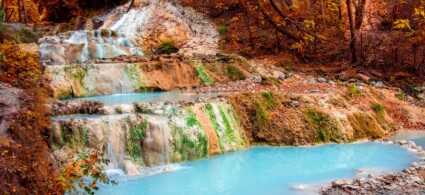
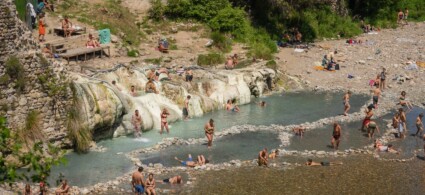
Like at Saturnia, you can bathe for free in natural water pools created by tiered limestone formations, but the difference here is that the spa is completely immersed in woodland that you encounter as you pass through the small town centre.
The free thermal pools at Bagni San Filippo are also called Balena Bianca (White Whale) after the name given to a monumental limestone formation that towers over the pools and from which the water of the Fosso Bianco river descends. In the pools immediately below, the water is warmer and there are more people; moving further along, you can find other smaller pools that are generally quieter.
Currently there are no paid thermal facilities at Bagni San Filippo; there was a spa hotel with outdoor thermal pool, but it closed for refurbishment.
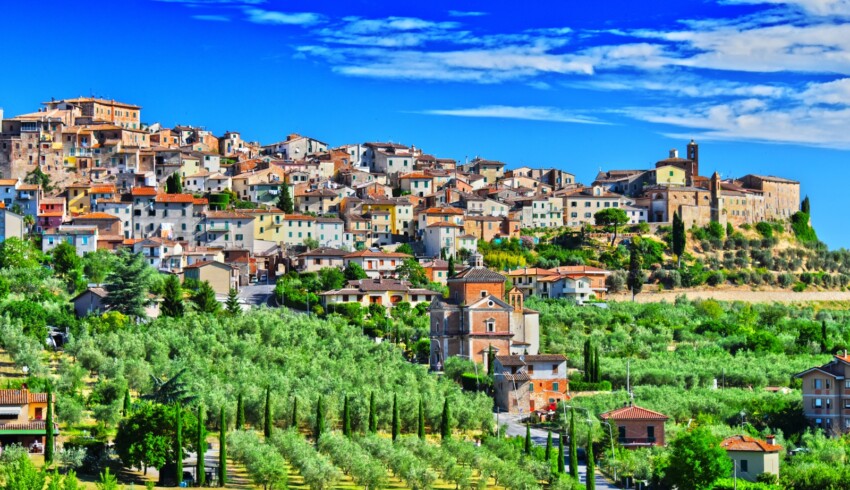
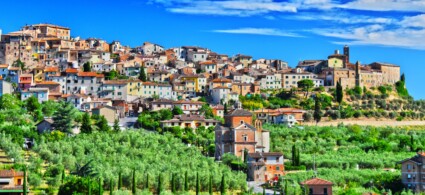
Chianciano Terme is a well-known spa town with a long tradition, located in the midst of the Val d’Orcia and Valdichiana, two charming areas famous for their splendid views. It’s the recommended destination for those wanting a relaxing stay with high-quality services, ready to meet the new needs of wellness-focused clients.
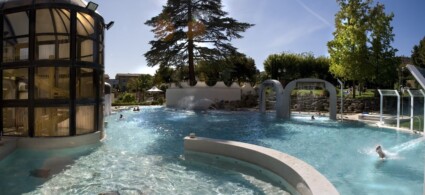
Chianciano boasts five thermal waters, each with an evocative name and suited to treating different conditions. Alongside the treatment facilities, the Theia pools and Terme Sensoriali have been built—two modern wellness centres entirely dedicated to wellbeing and relaxation, plus spas and beauty centres.
Once, the historic village (now called Chianciano Paese) and the thermal establishment area were two separate worlds, but today they’re integrated into one town.
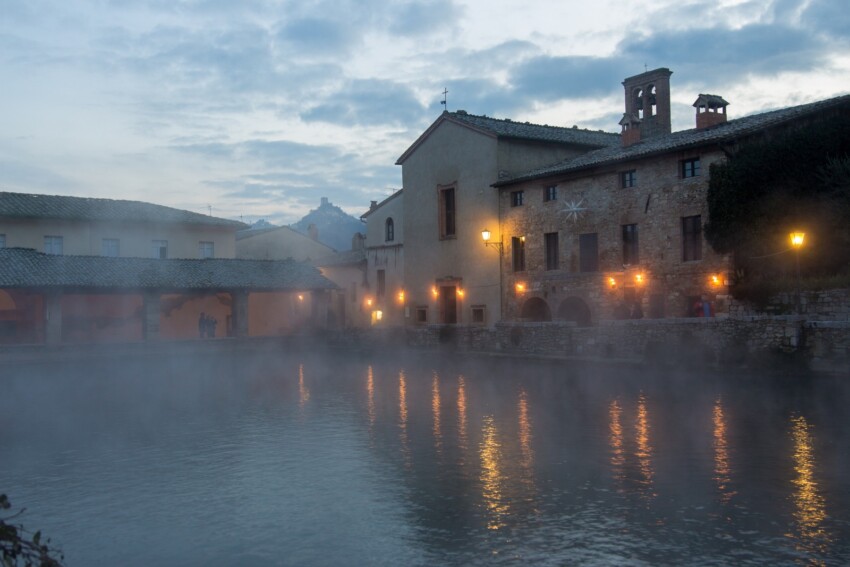
A weekend at Bagno Vignoni lets you enjoy the relaxation of the spa alongside the evocative atmosphere of a charming medieval village. The little town is charming in itself and sits a short distance from the more famous San Quirico d’Orcia (of which it’s a hamlet), considered one of Tuscany’s most beautiful villages.
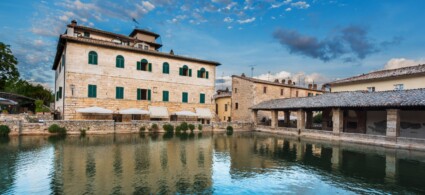
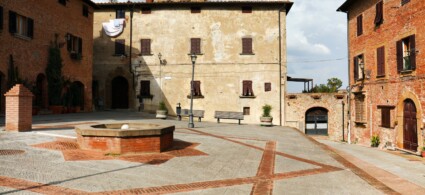
The thermal waters that made Bagno Vignoni famous are beautifully displayed in a large pool at the centre of the main piazza. Be aware, though, that it’s not a swimming pool: you can only bathe in the luxurious spa hotels in the area.
Don’t expect large thermal establishments with various indoor and outdoor pools; what is guaranteed is quality service and an ideal environment for relaxation. Whilst less well-known than Chianciano, prices aren’t exactly budget-friendly, but if you want to treat yourself, Bagno Vignoni is the place.
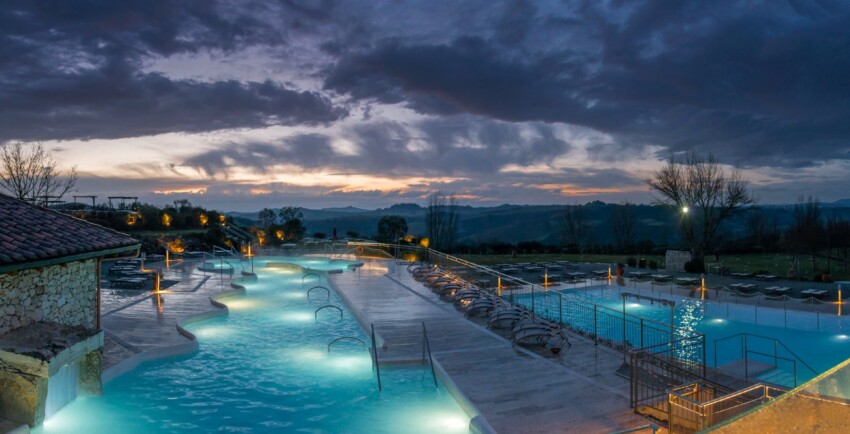
Rapolano Terme is a characteristic town in the heart of the Crete Senesi, a fascinating area south-east of Siena characterised by rolling hills and clay-based valleys.
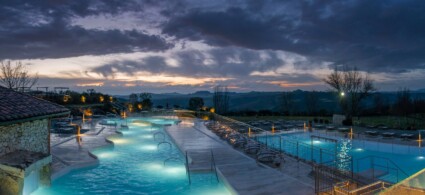
There are two thermal establishments, both very elegant and well-maintained, with indoor and outdoor pools, beauty centre, spa and an area for treatments and therapies; both are positioned to enjoy splendid sunsets.
Terme Antica Querciolaia is located closer to the village, whilst the Parco delle Terme di San Giovanni is slightly further out with views across the hills; the latter has an attached hotel.
In the following map you can see the location of the main places of interest mentioned in this article.
The experience of free thermal pools is fascinating, but requires a bit of adaptability. There are no facilities—not even basic ones like toilets, showers or changing rooms—so it’s best to come prepared. Make sure you have a towel near the pool; if you’re not visiting in summer, it’s a good idea to have dry clothes to put on straight away so you can get back to your car without catching a chill.
It’s recommended to wear water shoes: they’re not essential, but they can make it easier to get in and out of the water and help you avoid slipping if you move from one pool to another.
The most famous free thermal pools, such as Saturnia and Bagni San Filippo, attract many visitors. On public holidays they’re always crowded and finding parking near the thermal pools can be a challenge. If possible, visit them on weekdays and in the evening, so you can enjoy them more peacefully.
Tuscany’s thermal hotels are invariably mid-range or upscale establishments, typically 4 or 5-star properties. You can save money by purchasing day passes to the pools and staying in a bed and breakfast or apartment within the same spa town. For even greater savings, consider accommodation in nearby villages: since Tuscany’s thermal spas are generally very small hamlets, moving just a couple of kilometres away puts you outside the town centre and significantly reduces costs.
However, if the occasion is special or you fancy treating yourself to a holiday without worrying about the budget, we’d strongly recommend staying at hotels with pools. Once you’ve arrived, you won’t need to use your car, and you can retreat into a dreamlike world far removed from noise and stress.
On our Hotels with Spas and Wellness Centres page, we’ve handpicked the finest establishments in Tuscany – you’re sure to find one that perfectly suits your needs.
 Hotel
Hotel  Budget accommodations
  Apartments
  Family Hotel
  Luxury Hotel
  Resorts