Typical Tuscan Products
Tuscan cuisine is a typical expression of the Mediterranean diet, considered among the healthiest and most flavourful.
Read more
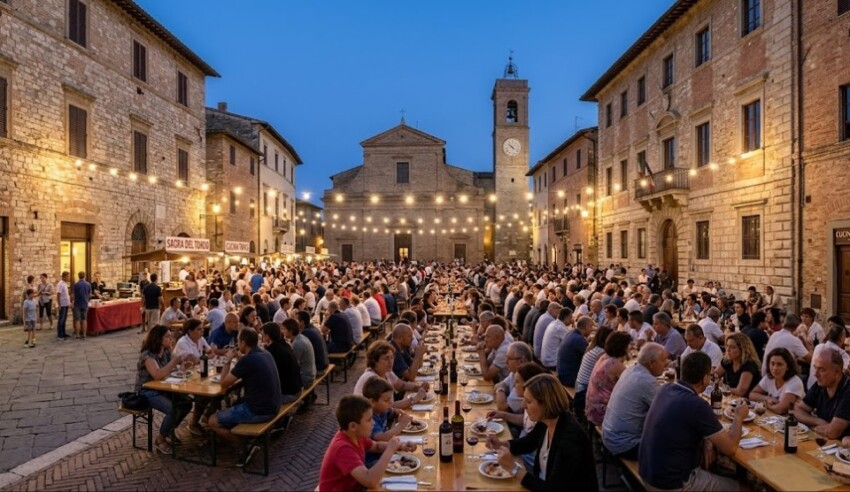
Tuscany is a region that tells its story at the table better than anywhere else. Medieval villages, countryside that smells of grape must and truffle, piazzas animated by centuries of history: it is within this landscape that Tuscan festivals find their reason for being, far beyond a simple gastronomic occasion. Taking part in a historic festival means entering the authentic rhythm of a community, understanding what is eaten and why, discovering typical Tuscan products that exist only in that precise corner of hillside or coastline.
Unlike many events born in recent times, the festivals presented here are deeply rooted in local tradition, often with hundreds of years of history behind them. Some follow the agricultural cycle of the seasons, others arise around a product that made the village famous throughout the country. They all share one thing in common: the ability to transform a dish into a collective story.
In this guide you’ll find the ten historic festivals of Tuscany that deserve a place on the itinerary of anyone wanting to explore the region beyond the most well-trodden tourist circuits. For each one you’ll find the context, the signature product and some practical tips for organising your visit.
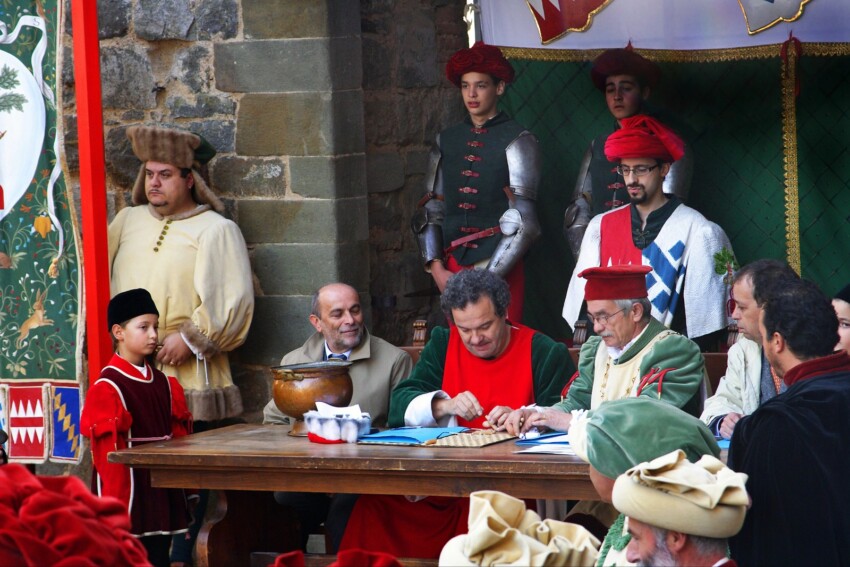
On the last Sunday of October, Montalcino transforms into a medieval stage: the four districts of the town compete in a historical costume archery tournament, whilst in the piazzas traditional Sienese dishes are served such as pappardelle al cinghiale, ribollita and the inevitable Brunello di Montalcino.
The Sagra del Tordo takes its name from the migratory bird that once formed the basis of local peasant cooking and has been held uninterruptedly for over sixty years, with popular participation that involves the entire community in the respect of rules and rituals passed down from generation to generation.
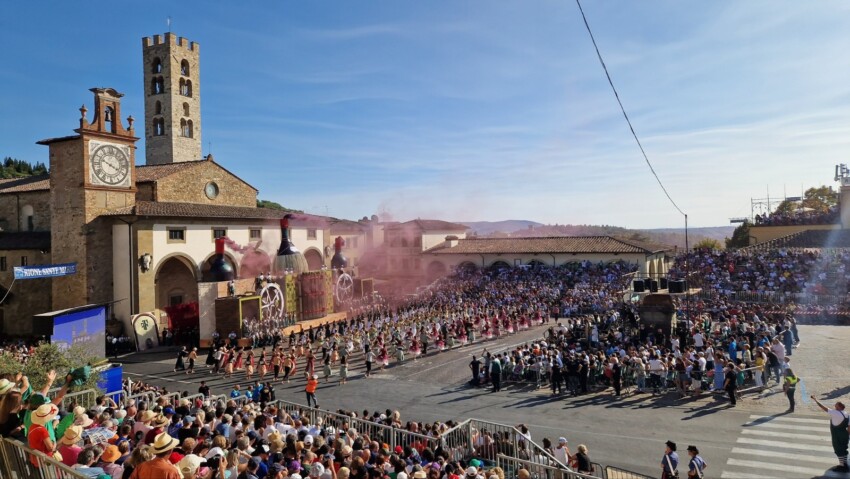
In Impruneta, in the heart of Chianti Fiorentino, the Festa dell’Uva is celebrated every year on the last Sunday of September coinciding with the grape harvest. Founded in 1926 as an agricultural exhibition of the produce of local farms, since 1932 the four historic neighbourhoods of the town — Pallò, Sant’Antonio, Sante Marie and Fornaci — have competed through allegorical floats of ever-increasing complexity, with scenery, costumes and choreography prepared for months by hundreds of volunteers.
It is considered Italy’s oldest wine festival and attracts thousands of people to Piazza Buondelmonti every year. The month of September comes alive with side events — street dinners, cycling races, exhibitions — that make the festival an appointment that goes well beyond the single day of the procession.
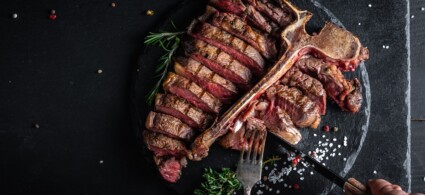
If there is a dish that represents Tuscany to the world, it is bistecca alla fiorentina, and on the outskirts of Arezzo — more precisely in Olmo, a small village within the main municipality — you’ll find one of the longest-running festivals dedicated to this cut of meat. The Sagra della Bistecca di Olmo was founded in the early 1970s and takes place every year in July at the town’s sports field, attracting thousands of people each evening from across the region.
The steak is strictly chianina, the native cattle breed of the Valdichiana, and is cooked over wood on live coals. In addition to the meat, you can enjoy typical side dishes such as beans in olive oil, roast potatoes and unsalted Tuscan bread.
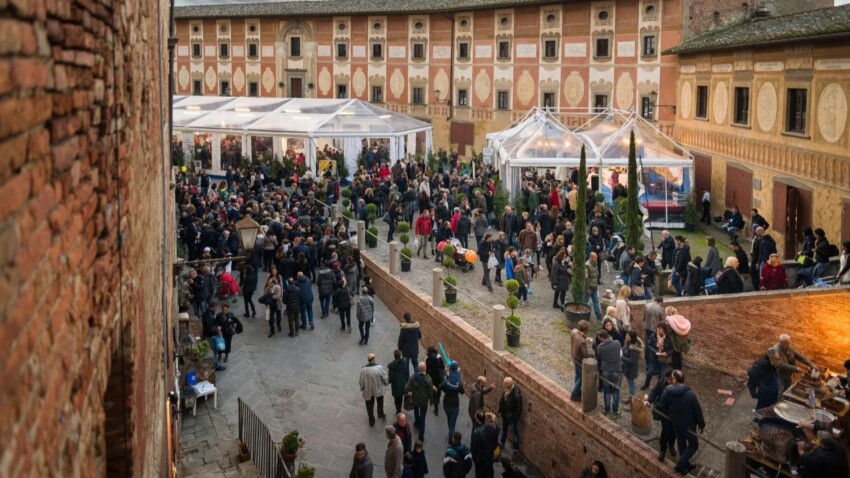
San Miniato is one of Italy’s main territories for harvesting prized white truffle (Tuber magnatum Pico), and in the last three weekends of November the historic centre of the town hosts the Mostra Mercato del Tartufo Bianco delle Colline Sanminiatesi, a food and wine fair that, whilst not a festival in the strict sense, has little to envy of the region’s most deeply rooted events.
Having surpassed fifty years of editions, the trade fair occupies the piazzas and alleys of the village with stalls from truffle hunters and local producers, celebrity chef cookery shows and guided tastings that help you truly understand the differences between one truffle and another. It is considered one of Europe’s most important white truffle markets and a point of reference for enthusiasts and professionals in the field.
The Maremma is the Tuscan territory most closely linked to the figure of the wild boar, an animal symbolising the Mediterranean scrub and the undisputed star of local cuisine. In Capalbio, a medieval village in the southernmost part of the region, the Sagra del Cinghiale takes place every year in autumn and offers ragu, sausages, stews and cured meats made entirely from Maremma wild boar.
The event takes place within the historic centre, between the town walls, with outdoor tables and a rustic atmosphere that well reflects the rugged and genuine character of this part of Tuscany.
Pici is Tuscan pasta par excellence: thick and irregular spaghetti, made strictly by hand, typical of the Sienese territory and the Val d’Orcia. The oldest and longest-running festival dedicated to this pasta takes place every year in May in Celle sul Rigo, a small village in the municipality of San Casciano dei Bagni, on the border between Tuscany, Umbria and Lazio. Founded in 1969 by the local Philharmonic Society, the Sagra dei Pici di Celle sul Rigo is now in its 55th edition and represents the flagship event for this pasta format across the entire region.
Pici is served with traditional condiments: all’aglione from the Valdichiana, with meat ragu or with breadcrumbs. The proceeds of the festival keep the village band alive, which makes taking part something more than just a simple dinner.
In the hills of the Mugello, in the Florentine Apennines, Scarperia hosts every year in September, at the town’s MCL Circle, the Sagra del Tortello e del Fungo Porcino, now in its 41st edition. The two stars of the menu both reflect the gastronomic identity of Mugello: the porcini mushroom, which grows abundantly in the beech woods and chestnut forests of the Apennine slopes, and the tortello mugellano, a filled pasta with potatoes that represents the most rooted first course in the area’s peasant tradition.
The two specialities are offered both paired and in separate preparations, sautéed, fried and baked for the mushrooms, with various sauces for the tortelli. The event is often combined with markets of local products and activities linked to mushroom foraging, which makes it interesting for families too.
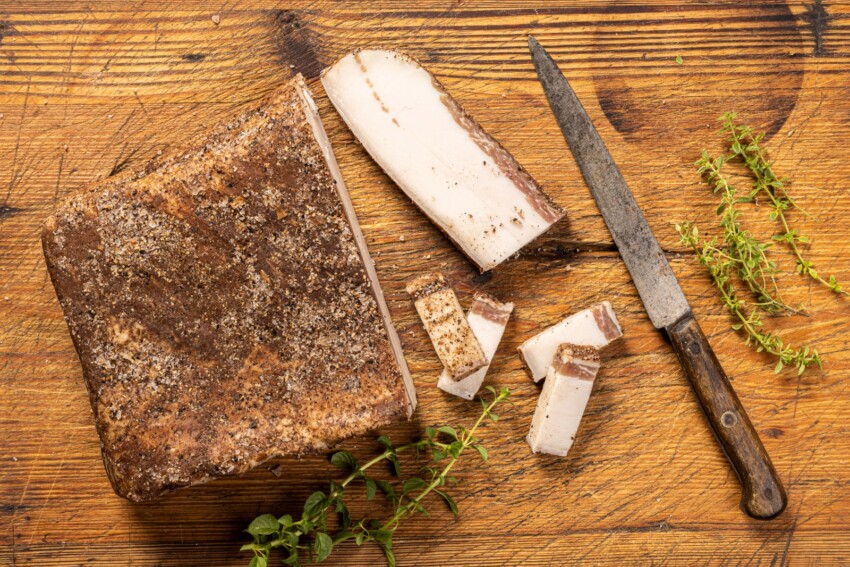
The lardo di Colonnata is one of Italy’s most well-known cured meats in the world, produced in the marble quarries of the Apuane with a recipe that hasn’t changed in centuries. The small village of Colonnata, a village within Carrara, hosts every year in August the festival dedicated to this PGI product: blocks of lard aged in marble troughs are sliced paper-thin and served on warm Altopascio bread, or paired with local cheeses and honey.
The event attracts tens of thousands of visitors every year despite the village’s small size, confirming how deeply rooted this product’s reputation is in the Italian gastronomic imagination.
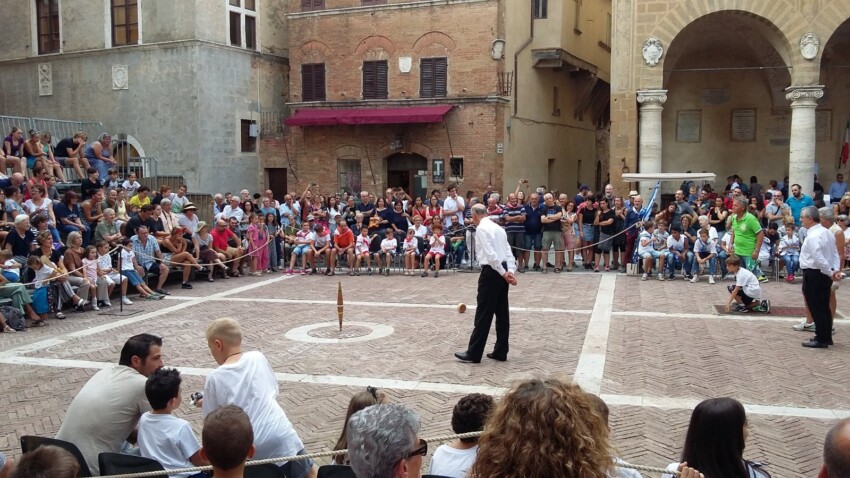
Pienza, the ideal Renaissance city of Val d’Orcia, is celebrated worldwide for its aged pecorino, a firm-textured cheese made from the milk of sheep raised on the pastures of the Crete Senesi. The Fiera del Cacio takes place every year on the first Sunday of September and includes, in addition to tastings and producers’ stalls, the traditional Cacio al Fuso competition: representatives of the town’s six districts compete in Piazza Pio II, trying to roll a wheel of pecorino as close as possible to a spindle planted in the centre of the piazza.
It is a bizarre and amusing spectacle, whose origins are documented in the town’s sixteenth-century statutes, which tells much about Tuscan ability to transform food into collective identity.
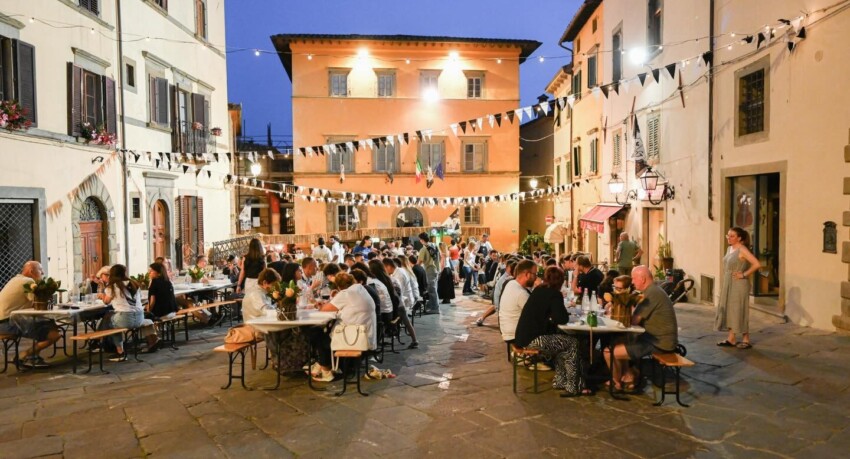
Monte San Savino, a Renaissance village in the province of Arezzo on the doorstep of the Valdichiana, hosts every year in the second weekend of September one of Tuscany’s longest-running gastronomic festivals. Now in its 60th edition and beyond, the Sagra della Porchetta features as its absolute star the whole pig roasted in wood-fired ovens fuelled with broom from the surrounding woods: it is precisely this shrubby essence typical of the Tuscan scrub that gives the porchetta of Monte San Savino a fragrance and flavour that is hard to find elsewhere.
Alongside the porchetta, the stalls offer pici with white pork sauce, grilled meats and the traditional cream gnocchi, a local sweet practically unknown outside the territory. The festival takes place in the historic centre of the village, amongst the architecture of Vasari who designed the Loggia dei Mercanti, in a setting that makes an evening in the piazza something more than just an alfresco dinner.
 Hotel
Hotel  Budget accommodations
  Apartments
  Family Hotel
  Luxury Hotel
  Resorts