Florence
The online guide to Florence, the cradle of the Renaissance, capital of Tuscany and without doubt one of Italy's most beautiful and important art cities.
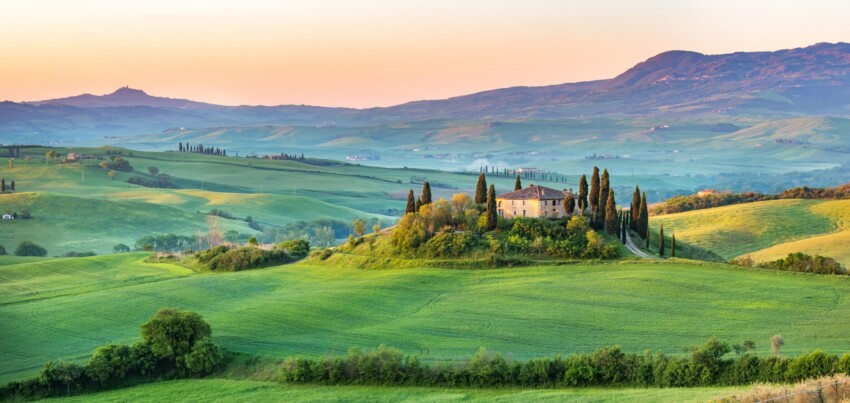
Tuscany is one of Italy’s major regions in terms of historical, artistic, cultural and landscape heritage. Tuscany is also the birthplace of the Renaissance and the Italian language, which derived almost entirely from the Tuscan dialect. Two major human achievements occurred in Tuscany for the first time in history: equality of rights between men and women during the Etruscan civilisation, and the abolition of capital punishment, which took place in the Grand Duchy of Tuscany on 30 November 1786 thanks to Pietro Leopoldo of Lorraine.
Positioned in central Italy, it borders Liguria to the north-west, Emilia-Romagna to the north, the Marche and Umbria to the east, and Lazio to the south. To the west, its 397 km of continental coastline is bathed by the Ligurian Sea along the central-northern stretch between Marina di Carrara (border with Liguria) and the Gulf of Baratti; the Tyrrhenian Sea washes the southern coastal stretch between the Piombino promontory and the mouth of the Chiarone river, which marks the border with Lazio.
Tuscany also administers the islands of the Tuscan Archipelago: Gorgona in the Ligurian Sea, Capraia in the Strait of Corsica, Elba Island, straddling the Ligurian Sea, the Strait of Corsica, the Tyrrhenian Sea and the Piombino Channel, the islands of Pianosa, Montecristo, Giglio and Giannutri in the Tyrrhenian Sea. In total, the islands of the Tuscan Archipelago stretch along 230 km of coastline.
Tuscany has more than three and a half million inhabitants, representing approximately 6% of the Italian population, with a density of around 155 inhabitants per km², which is lower than the national average.
The regional capital is Florence; the other provincial capitals are Arezzo, Grosseto, Livorno, Lucca, Massa-Carrara, Pisa, Pistoia, Prato and Siena.
Just over 10% of the Tuscan population lives in the regional capital, and approximately one-third of the total regional population lives in the Florence-Prato-Pistoia metropolitan area, which develops continuously in the corresponding inter-mountain basin. Other densely populated areas are, in descending order, the Livorno area, the coastal strip of Massa-Carrara province and Versilia, the Valdinievole and the Plain of Lucca, the Pisa area and the lower Valdarno and finally the upper Valdarno zone between Arezzo and Florence.
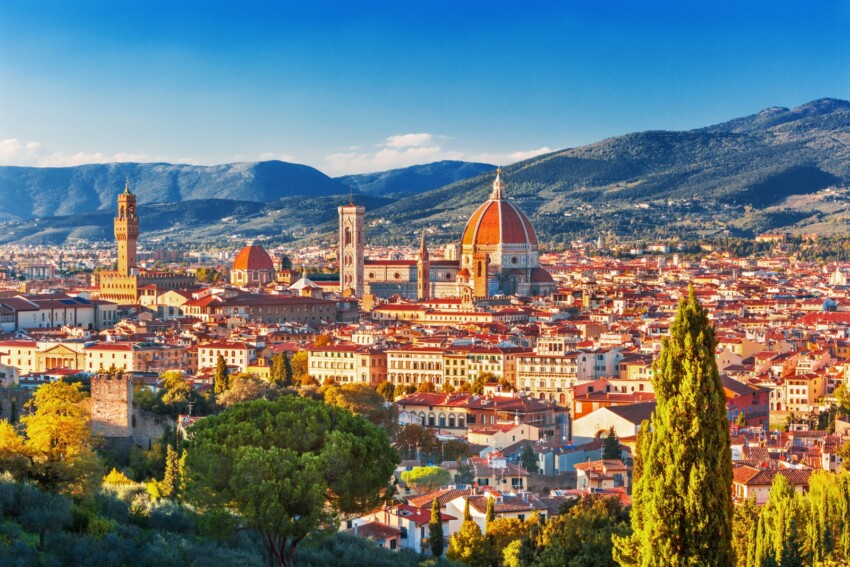
Florence is a city in central Italy with 366,488 inhabitants, capital of the province of the same name and of the Tuscany region, of which it is the largest and most populous city, as well as the principal historical, artistic and economic-administrative hub.
It is considered the birthplace of the Renaissance and is recognised worldwide as one of the cradles of art and architecture, with its numerous historic buildings, monuments and rich museums (including the Uffizi Gallery, the Palatine Gallery, the Bargello and the Palazzo Pitti museums).
Since 2015, the province of Florence has become a Metropolitan City.
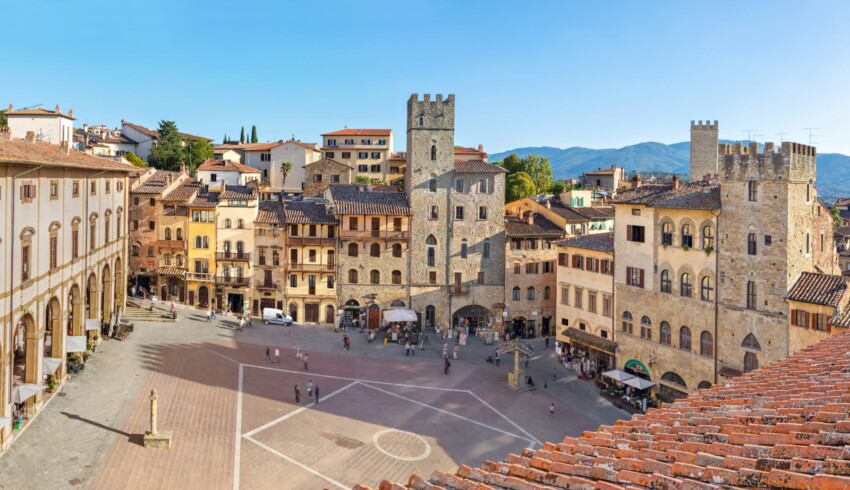
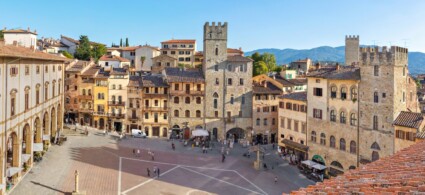
Arezzo is a town of 95,229 inhabitants, capital of the province of Arezzo. The town of Arezzo is situated at the confluence of three of the four valleys that make up its province.
The territory of the town is very extensive and varied: it ranges from the plain that opens onto the Val di Chiana and the Arno, to hills south of the city, to mountainous areas, especially to the east. The bordering towns are numerous: on the Val di Chiana side are Civitella in Val di Chiana and Castiglion Fiorentino; on the upper Valdarno side are Laterina and Castiglion Fibocchi; on the Casentino side is Capolona; on the Val Tiberina side are Anghiari and Monterchi and the province of Perugia, in Umbria.
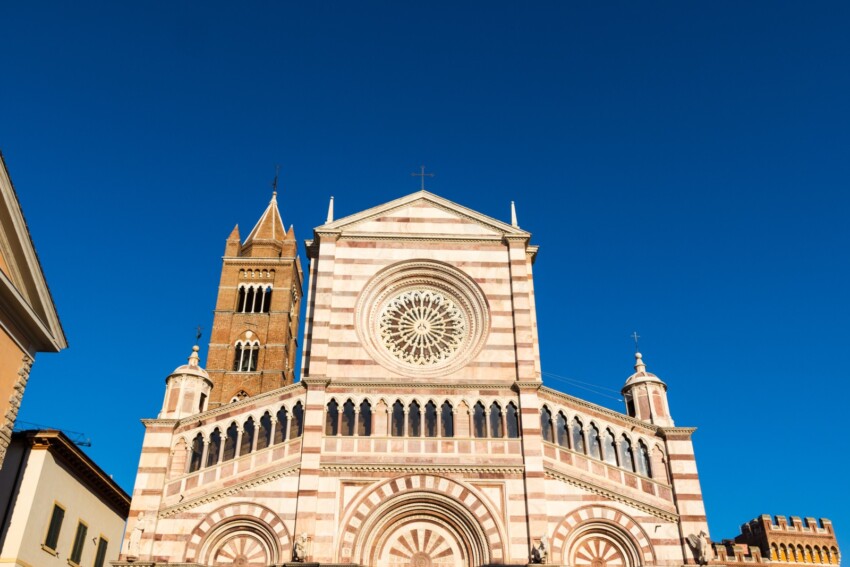
Grosseto is a city in Tuscany with approximately 77,500 inhabitants, capital of the province of the same name and main centre of the Maremma. It is the capital located furthest south among those in Tuscany and is also one of only a few Italian provincial capitals (Ferrara, Bergamo, Lucca) whose historic centre has remained completely surrounded by walls that, in turn, have maintained their original appearance virtually intact over the centuries.
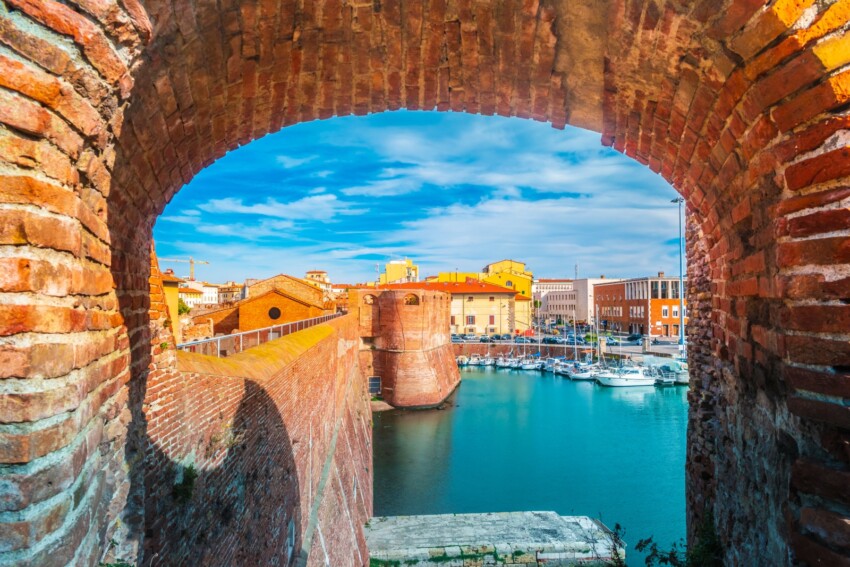
Livorno (approximately 155,986 inhabitants) is a city in Tuscany, capital of the province of the same name.
It is one of the most important ports on the Ligurian coast, both as a commercial and tourist port and, among all Tuscan cities, the youngest. The municipal territory of Livorno also includes Gorgona Island and the Meloria shallows, which are part of the Tuscan Archipelago National Park.
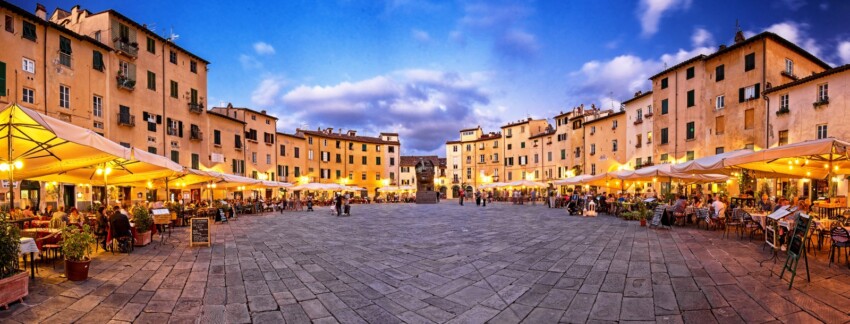
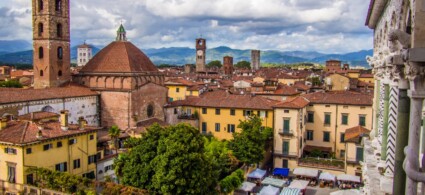
Lucca is a city in Tuscany with 81,862 inhabitants (of which 75,545 are entitled to vote), capital of the province of the same name.
Lucca is one of Italy’s principal art cities, celebrated even beyond national borders especially for its intact city walls from the 15th-17th century, which describe a perimeter of approximately 4,450 m around the historic centre of the city and make it one of 4 provincial capitals in Italy with an intact ring of walls, alongside Ferrara, Grosseto and Bergamo; the same walls, transformed from the second half of the 19th century onwards into a pleasant pedestrian promenade, remain to this day one of the best preserved in Europe as they were never used for defensive purposes in past centuries.
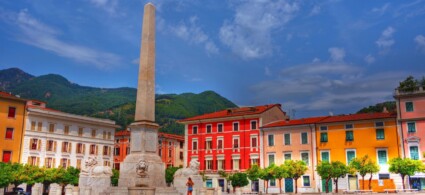
Massa is a city in Tuscany, capital of the Province of Massa-Carrara. The city centre develops around the 15th-century castle of the Malaspina and the Renaissance ducal palace overlooking Piazza Aranci, in the centre of which stands an obelisk surrounded by four lions. From the north side of the square begins via Dante Alighieri, which ends at the city’s cathedral.
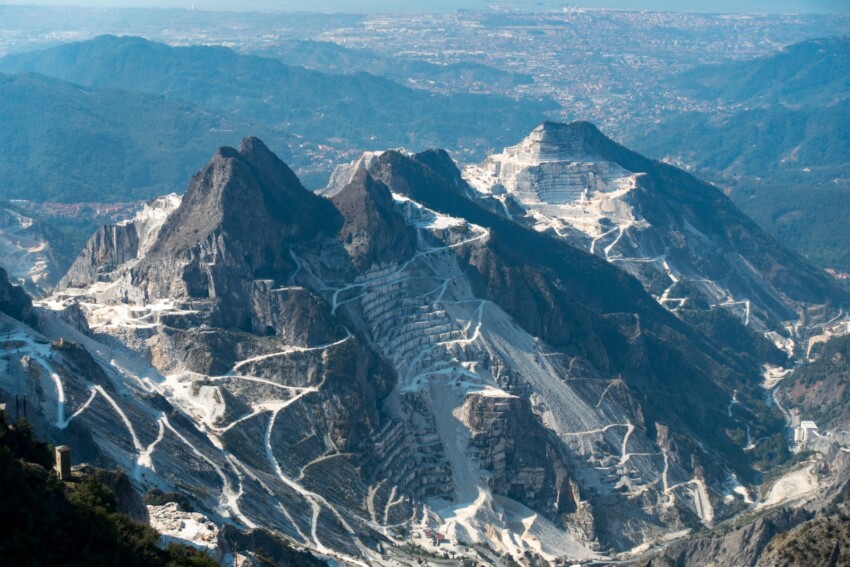
Carrara is the most important centre for the Italian Carrara Marble industry, with the famous white marble extracted from the nearby Apuan Alps. Among the monuments of the city are the 12th-century cathedral and the 16th-century ducal palace, now home to the Academy of Fine Arts.
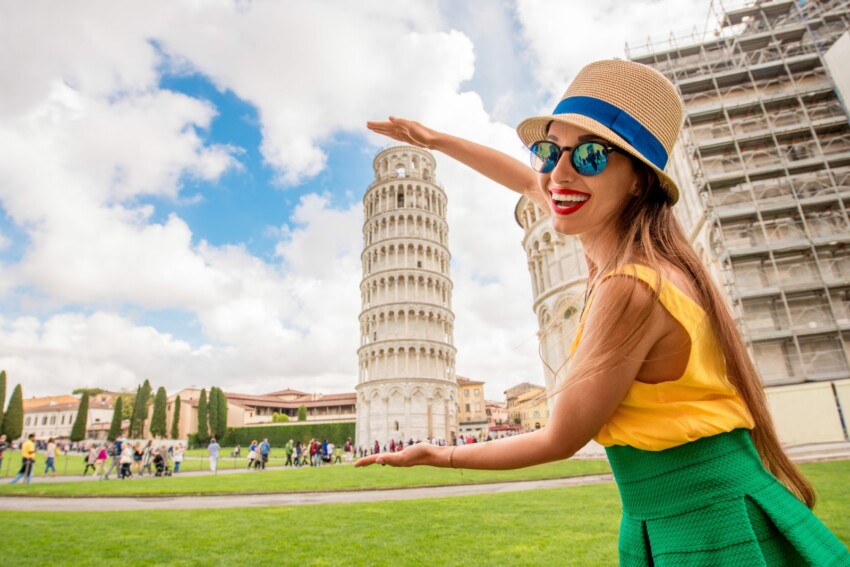
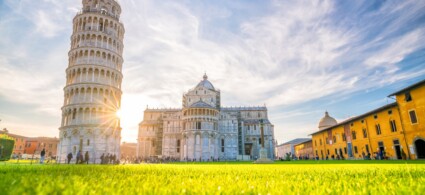
Pisa is a town in Tuscany and capital of the province of the same name. It hosts the most important airport in the region, the “Galileo Galilei”, and is home to three university institutions.
Among the city’s most important monuments is the cathedral – in the famous Piazza dei Miracoli, declared a UNESCO World Heritage Site – built in marble between 1064 and 1118 in Romanesque style, with its bronze portals by Bonanno Pisano and the pulpit by Giovanni Pisano. In the square stands the characteristic Leaning Tower of the 12th century, 55 metres high, which acquired its characteristic tilt immediately after construction began.
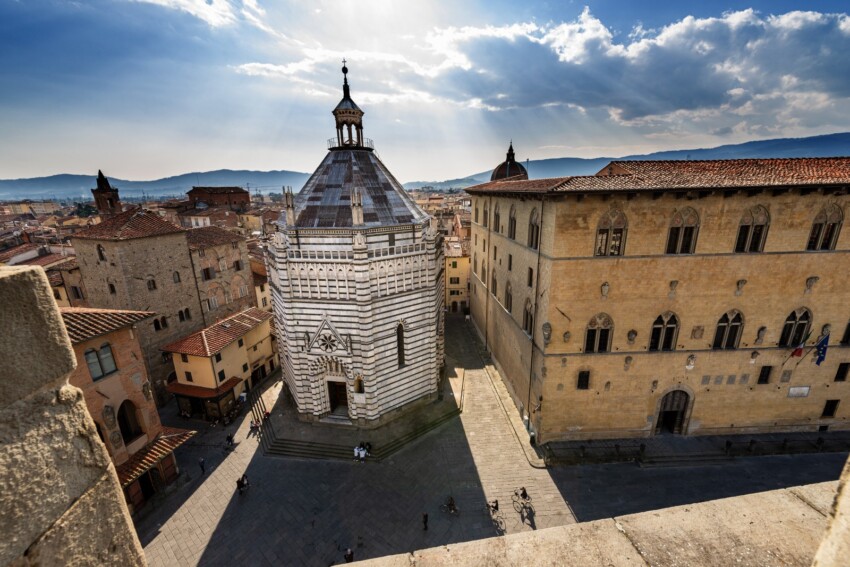
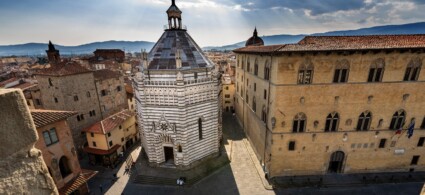
Pistoia is a city of approximately 90,000 inhabitants, capital of the province of the same name. The town of Pistoia is crossed by several watercourses, though none of great size and all characterised by a distinctly torrential regime. The principal one is the Ombrone Pistoiese, which skirts the city to the west. Upon reaching the vicinity of the San Biagio district, the Ombrone Pistoiese has clear, clean waters capable of supporting valuable fish species such as brown trout, dace and bullhead.
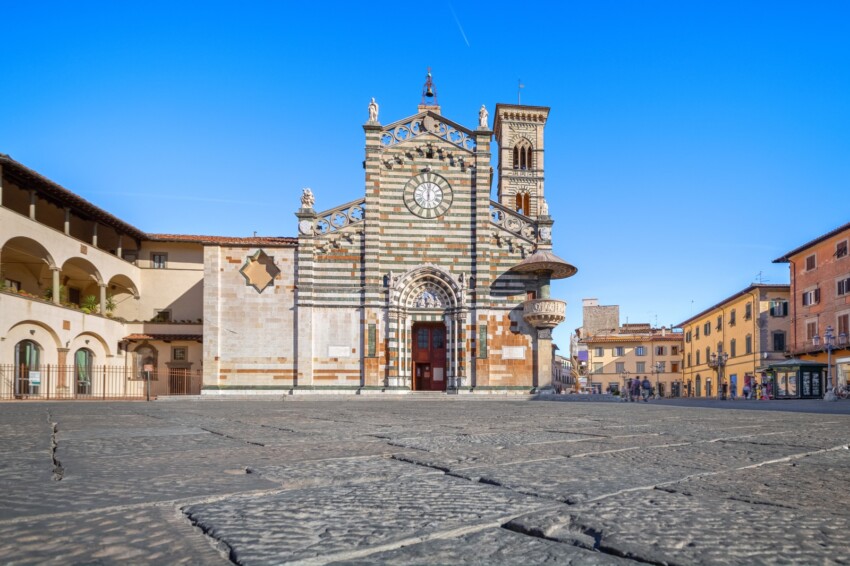
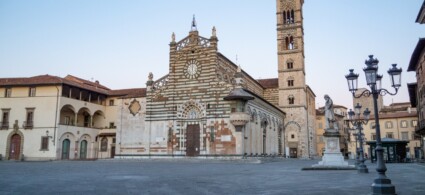
Prato is a town of 185,538 inhabitants, capital of the province of the same name. The city is famous in Italy and around the world for textile production. In recent years it has experienced remarkable demographic growth and is currently the second Tuscan city (after Florence) and the third in central Italy (after Rome and Florence) by number of inhabitants.
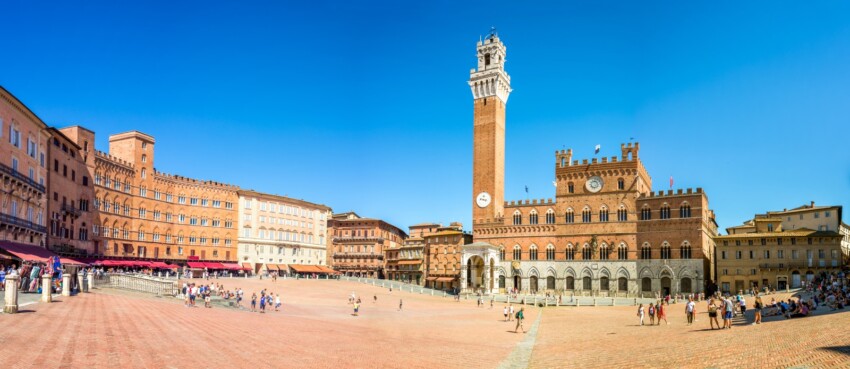
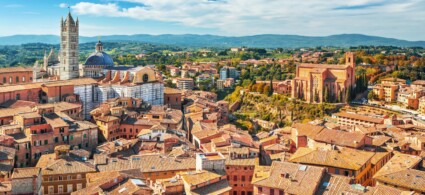
Siena is a town in Tuscany (approximately 55,000 inhabitants), capital of the province of the same name. The city is universally known for its artistic heritage and for the substantial stylistic unity of its medieval urban fabric. It has been declared a UNESCO World Heritage Site.

 Hotel
Hotel  Budget accommodations
  Apartments
  Family Hotel
  Luxury Hotel
  Resorts