Pisa Airport
Everything you need to know about Pisa Galileo Galilei Airport: People Mover, taxis, buses to Florence and car hire to explore Tuscany at your leisure.
Tuscany is served by two international airports — Pisa and Florence — and a small regional airfield on Elba. The first two are operated by the same company, Toscana Aeroporti S.p.A., and form an integrated system that collectively handles several million passengers annually, ranking among Italy’s leading regional airport systems.
Choosing between Pisa and Florence isn’t always straightforward: it depends on where you’re travelling from, which airline you use, and above all your final destination in Tuscany. Pisa is the region’s main gateway and is particularly strong for budget airlines, with connections to a wide range of European destinations. Florence, meanwhile, offers an extensive choice of flights with both full-service and low-cost carriers to major European hubs, with the advantage of being just a few kilometres from the city centre. For those heading to Elba only, Marina di Campo airport is the only alternative to the ferry.
In this guide you’ll find all the essential information on each airport, with details on connections to the region’s main destinations.
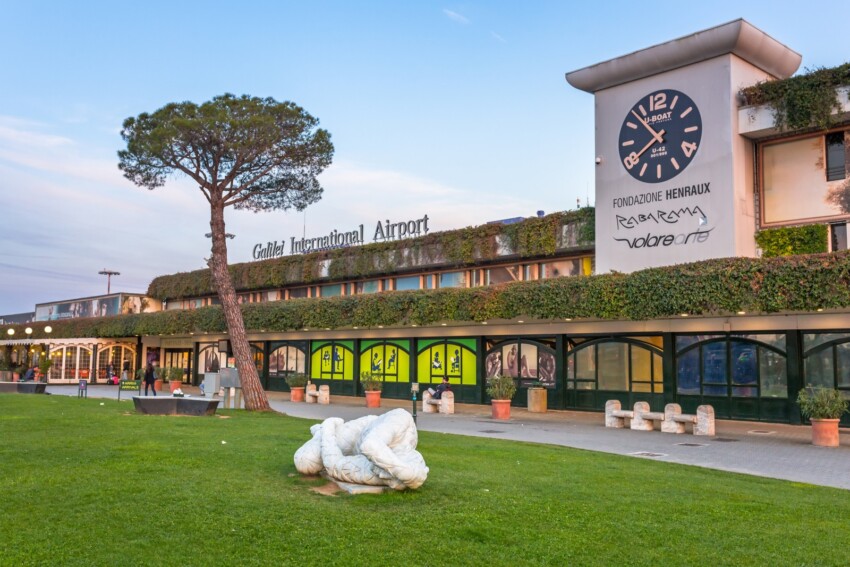
The Pisa airport (IATA code: PSA) is Tuscany’s main gateway, handling several million passengers each year with steady growth that ranks it among central Italy’s busiest airports. Its focus is primarily on budget airlines, especially Ryanair, though there are also flights from major carriers to Europe’s principal capitals.
Pisa and Florence are roughly 80 kilometres apart, and over time the Pisa airport has developed its own distinct identity. Today it’s used not only by those visiting Florence, but also by travellers heading to the coast, Versilia, Maremma, and of course those planning a weekend in Pisa.
Once you’ve landed, shuttle buses operated by private companies run to Florence’s Santa Maria Novella station; the journey takes about an hour and tickets are purchased directly outside the terminal at the dedicated desk.
Pisa city centre is a short bus ride away, or even reachable on foot in around 20–25 minutes. The terminal is also served by the People Mover, an automated shuttle that, after one intermediate stop, reaches Pisa’s main railway station in just 5 minutes. This is an important transport hub with connections to both inland Tuscany (Florence, Lucca, Siena) and the coast (Livorno, Genova).
For advice on getting around once you’ve landed, what services are available in the terminal and how to check flight times, consult our Pisa airport guide.
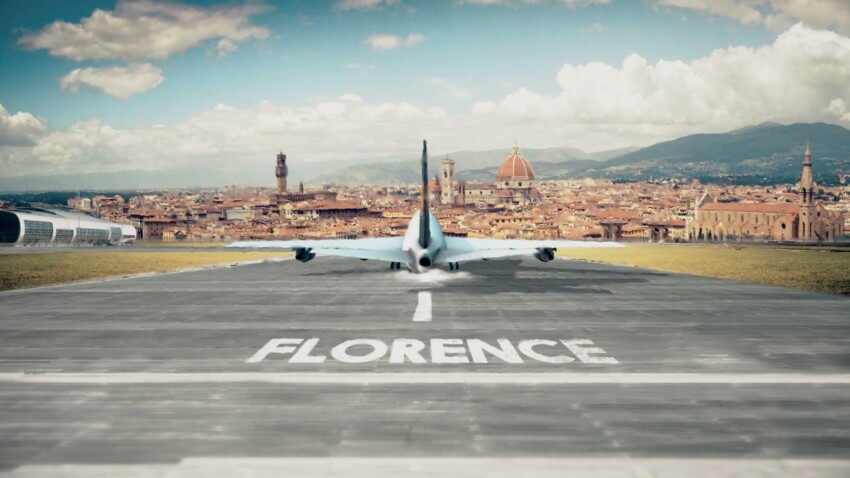
Although it serves the regional capital and one of the world’s most famous Italian cities, Florence airport (IATA code: FLR, officially named Florence-Peretola Airport after the district where it’s located) remains Tuscany’s second-busiest airport by passenger traffic, behind Pisa. In recent years, however, it has achieved consistent growth and record figures, regularly surpassing 3 million annual passengers.
Peretola airport, dedicated to explorer Amerigo Vespucci, sits just a few kilometres from Florence city centre, reachable by tram, bus or taxi. Both full-service and budget carriers operate from the airport: the most active include Volotea — with the most routes —, Vueling, ITA Airways, Air France, British Airways and Air Dolomiti, with flights to Europe’s main capitals and Italy’s major cities.
Our Florence airport guide contains all the information on connections to the city, available terminal services and how to check live arrivals and departures.
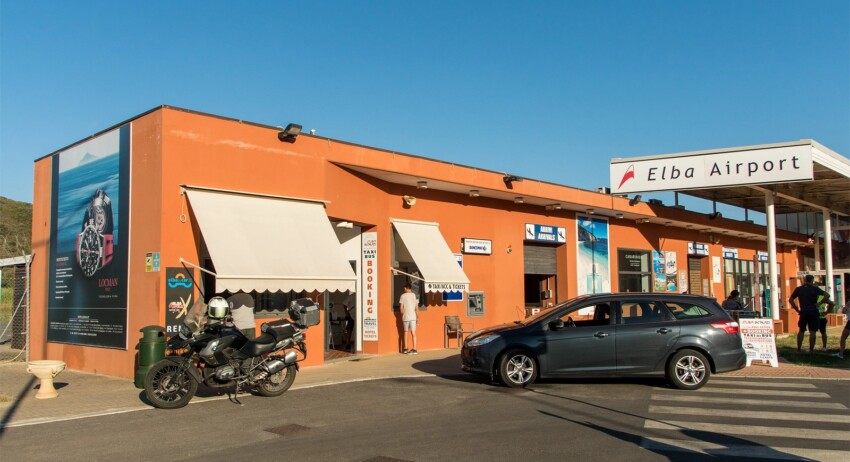
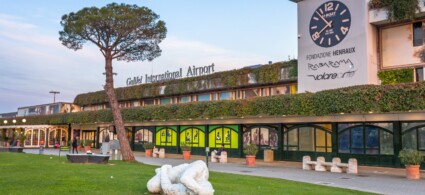
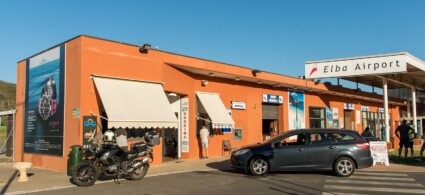
The third of Tuscany’s airports is the small Marina di Campo airport (IATA code: EBA), located on Elba in the La Pila district, 2 km from Marina di Campo town centre. The main operator is Maltese carrier SmallFly, operational from 2025 as part of ENAC-guaranteed regional continuity flights: it connects Elba with Pisa and Florence year-round, Milan Linate during the summer season and, from 2026, also with Rome Fiumicino. Seasonal flights from Germany and Switzerland complete the offering, operated by German and Swiss carriers in partnership with specialised tour operators.
Flights are pricey compared to the ferry and not particularly frequent, which explains why the vast majority of tourists reach Elba by sea, using comfortable ferries departing from Piombino and Livorno — sometimes several times an hour during peak season.
The choice between Pisa and Florence depends on three main factors: flight availability from your departure city, your final destination in Tuscany and ticket price.
Pisa makes sense if you’re travelling with budget airlines, if you’re heading to the northern Tyrrhenian coast (Versilia, Cinque Terre) or if you’re flying from European destinations not served by Florence. The airport’s location also makes it convenient if you’re heading to Lucca, Prato or Garfagnana.
Florence makes sense if your final destination is Tuscany’s capital or nearby areas such as Chianti, Siena or Arezzo, and if you’re travelling with full-service carriers from hubs like London, Paris, Amsterdam or Frankfurt. The tram provides rapid access to the city centre with no need for additional transfers.
In any case, it’s always worth comparing prices at both airports before booking: the difference in fares can more than make up for any additional transfer time.

 Hotel
Hotel  Budget accommodations
  Apartments
  Family Hotel
  Luxury Hotel
  Resorts