Florence: Uffizi Timed Ticket & Masterpieces Audio App
7.148 reviews
Buy now
From 27,20€ per person
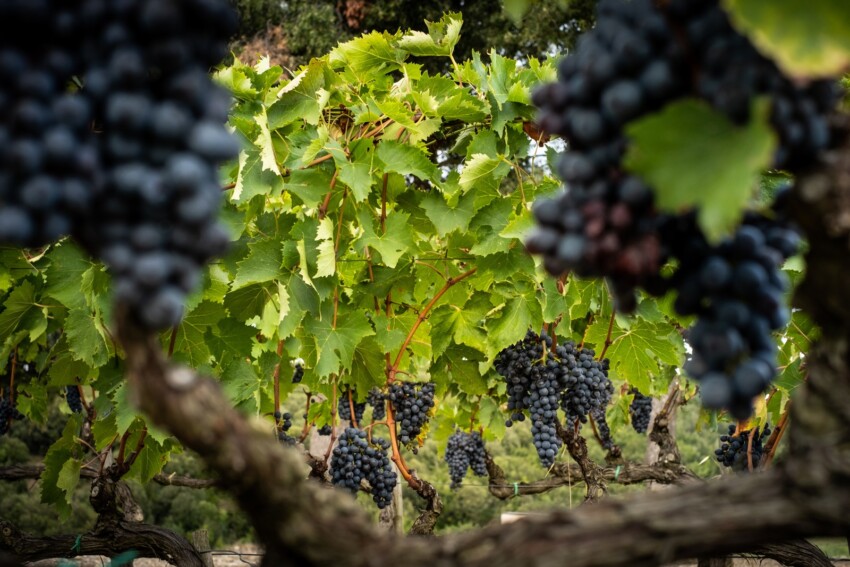
Nestled among the rolling hills of the Val d’Orcia, Montalcino stands as a remarkable example of how a territory can become inextricably bound to a single grape variety. Here, the pursuit is not for shock value, but rather for longevity and consistency. Brunello has become the benchmark for those who appreciate Sangiovese in its purest form, a choice that demands terroir perfectly suited to the vine and meticulous vineyard management, without reliance on other varieties to correct course.
Its rise to prominence was not sudden, but rather the result of constant evolution that began in the nineteenth century. It was Ferruccio Biondi Santi’s insight that isolated a particular clone of Sangiovese—Sangiovese Grosso—capable of ageing gracefully and refining slowly over time. Since then, the village of Montalcino has built its identity around this variety, transforming from a rural economy into one of the most respected wine-producing regions on the international stage.
On the eye, Brunello presents itself as a clear and brilliant wine, defined by a vibrant garnet hue that hints at its nobility. On the nose, the impact is intense, persistent and distinctly ethereal. Notes of undergrowth, aromatic wood and small red fruits emerge clearly, accompanied by a subtle whisper of vanilla and a composite jam that enriches the bouquet without ever becoming excessive.
On the palate, the wine reveals an elegant and harmonious body, possessed of great grip and breeding. It is a dry red, with a very long aromatic persistence that leaves the palate clean and satisfied. This beautifully balanced structure is the result of perfect grape ripeness and skilful barrel maturation, which transforms the typical vigour of Sangiovese into refined and complex silkiness.
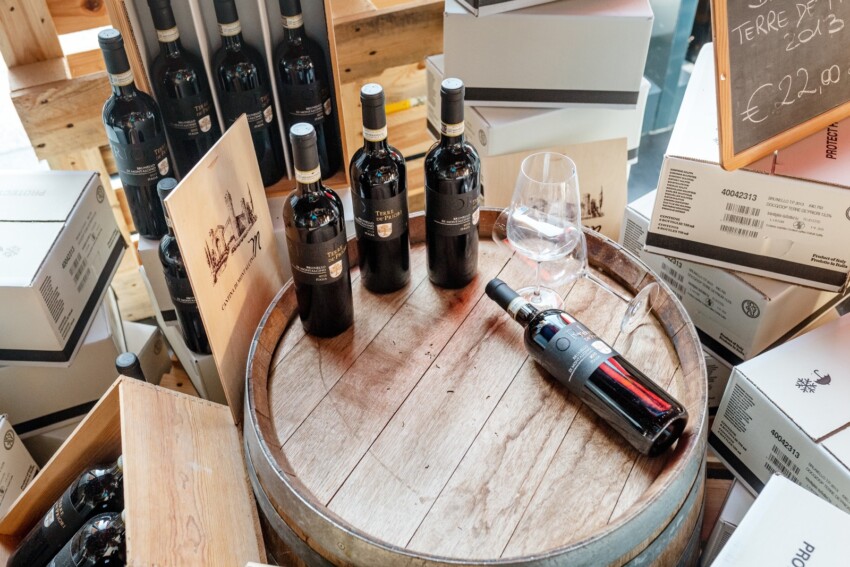
Thanks to its natural qualities, this wine is capable of lengthy ageing, improving noticeably with the passing years. It is difficult to say with precision exactly how long it will continue to evolve in bottle, as much depends on the vintage: it ranges from a minimum of ten years to thirty, but in exceptional vintages it can be kept considerably longer, offering unexpected rewards to patient collectors.
To preserve this liquid heritage, correct storage is essential. Brunello should rest in a cool cellar at a constant temperature, away from light and strong odours or noise. One crucial technical detail concerns positioning: bottles must be stored on their side, so the cork remains in constant contact with the wine, maintaining its elasticity and ensuring perfect micro-oxidation over time.
The consistency of the product is guaranteed by strict appellation rules, among the most precise in the Italian wine landscape. The goal is not to produce an easy-drinking wine, but a red capable of standing the test of decades. There are no shortcuts: quality comes through temporal constraints that require producers to make long-term investments and exercise careful cellar management. Here are the pillars that define production:
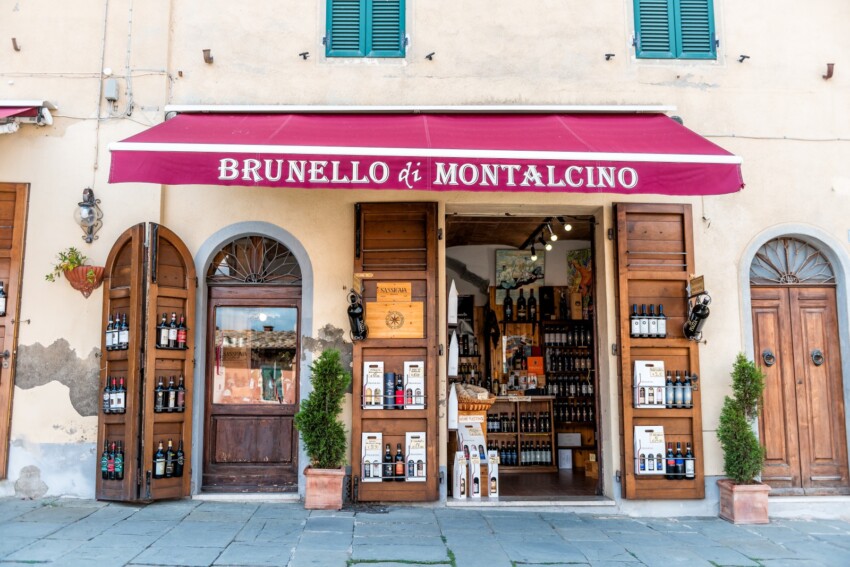
Montalcino’s success stems from a highly diverse community of producers, ranging from historic estates to recently established ventures. This is not a hierarchy, but rather different interpretations of the territory, each connected to a specific hillside or a different winemaking philosophy. Among the wineries that have cemented the region’s reputation are:
In a world that moves at pace, Montalcino remains a place where territorial identity is defended through slowness and attention to detail. To taste a Brunello is thus to accept nature’s timeframe and respect the work of agriculture, enjoying a sincere story that only Tuscan land knows how to offer with such depth.
One cannot discuss this village without mentioning Rosso di Montalcino DOC, often regarded as Brunello’s younger sibling. Whilst it shares the same terroir and the requirement for one hundred per cent Sangiovese, Rosso is a wine conceived for freshness and immediate drinking pleasure. It is the ideal choice for those wishing to savour Montalcino’s identity in a more relaxed setting, without compromising the exceptional quality that this land demands of every label it produces.
The fundamental difference lies in the ageing process: whilst Brunello must wait five years, Rosso may be released after just one year of maturation. This brief period, which does not require barrel ageing, preserves the crisp notes of cherry and red fruits typical of young Sangiovese. It is an exceptionally versatile wine at table, capable of adapting to the entire meal thanks to its leaner structure and the vibrancy that makes it perfect for everyday Tuscan cuisine.
 Hotel
Hotel  Budget accommodations
  Apartments
  Family Hotel
  Luxury Hotel
  Resorts