Florence: Uffizi Timed Ticket & Masterpieces Audio App
7.148 reviews
Buy now
From 27,20€ per person
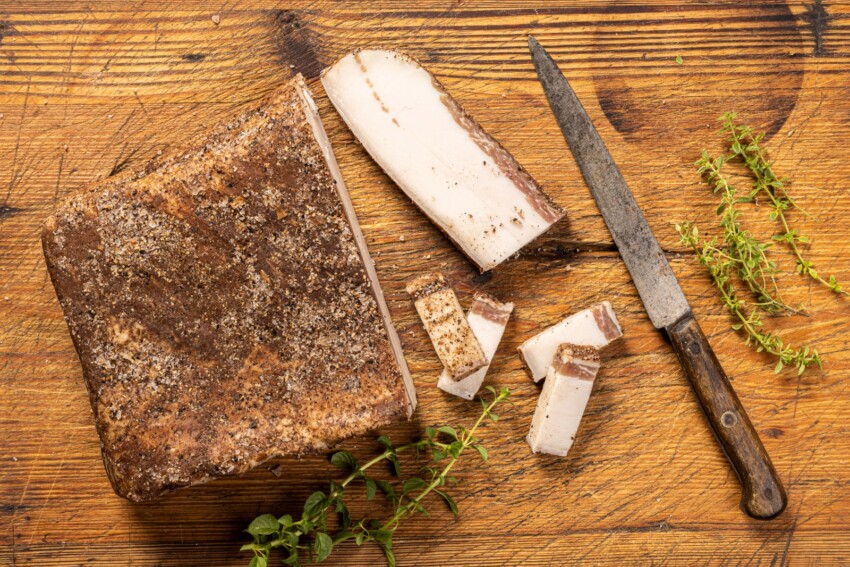
Perched amongst the jagged peaks of the Alpi Apuane mountains, the village of Colonnata guards a secret rooted in marble and the sweat of quarrymen. Here, in a landscape dominated by the dazzling white of Carrara’s quarries, a unique product is born that transforms an humble cut into a delicacy. Lardo di Colonnata is the story of an unbreakable bond between man and mountain, born from the need to nourish those who faced the gruelling work of marble extraction every day. Lardo di Colonnata has always been the meal of marble quarrymen and was sliced and eaten with bread, raw onion and tomato.
The distinctive quality of this cured meat lies entirely in its maturing environment: the famous basins. These are stone troughs carved directly into white marble, the same material chosen by great sculptors for their most celebrated works. Thanks to the natural porosity of the stone, the basins allow ideal transpiration without the aid of modern technology. Carrara marble acts as a natural regulator, maintaining constant temperature and protecting the fat while absorbing the scents of the mountain.
The preparation of lardo follows procedures dating back to around 1000 AD, and the secret is passed down from generation to generation. The lardo is laid in the basins in layers, alternated with a mixture of natural salt, black pepper, fresh rosemary and chopped garlic. Each producer jealously guards their secret spice blend, a family recipe that makes each piece slightly different from the others. Once sealed, the stone protects the contents for at least six months, allowing time to transform the raw material into something velvety.
During this long rest in the darkness of the cellars, the salt draws out moisture, creating a natural brine that preserves the softness of the fat. At the end of the ageing process, the lardo emerges with an incredibly soft texture and a candid white colour. It is a slow and silent process, where the stone imparts to the product the cold, mineral soul of the rock, making it capable of practically melting on the palate.
Naturally, thanks to its particular maturing procedure, Lardo di Colonnata is a genuine product, free from preservatives and additives.
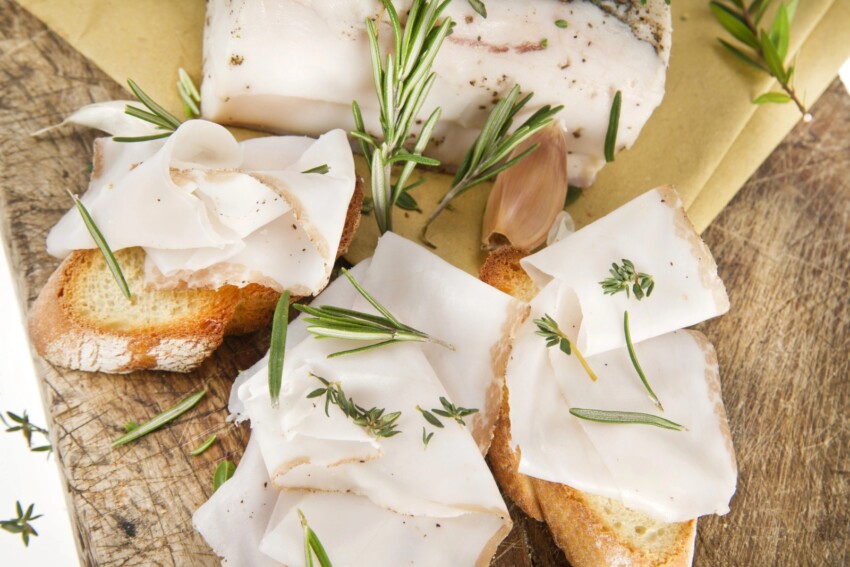
In ancient times, lardo was simply considered the food of quarrymen, an essential energy reserve for surviving the extreme toil under the sun or in winter frost. Today that value has transformed into gastronomic prestige, but the substance remains the same: simplicity at table is still the best way to honour it. Elaborate recipes aren’t needed to appreciate its sweetness, as the complexity of aromas is already contained within the slice itself thanks to the months spent in marble.
The most authentic way to eat it is to place a paper-thin slice on a piece of warm Tuscan bread fresh from the oven. The warmth of the bread makes the fat ooze, rendering it almost transparent, and immediately releases the scents of rosemary and garlic. It is a moment of pure pleasure that speaks of an authentic Tuscany, capable of ennobling even the simplest cuts through respect for tradition and the wise use of the natural resources that surround it.
To enjoy this exquisite product at its best, with a well-sharpened knife, cut away the top layer and the lower rind, just enough to make the slices you desire. Remove any salt residue and slice the lardo into thin pieces. To preserve the lardo after cutting, fold the remaining rind flap back over the body of the lardo. Leave the piece covered by its salt and wrap it in a cloth that should always be kept slightly damp. Keep it in a cellar or cool room; if you don’t have one available, it can be stored in the refrigerator, in the vegetable drawer.
This jewel of our table is protected by the PGI mark, which strictly limits production to the tiny village of Colonnata. This geographical constraint ensures that the lardo breathes the same air as the quarries and rests in cellars carved into living rock. Choosing authentic lardo means supporting a community of artisans who have chosen not to succumb to the allure of industrial production, keeping intact a ritual that has lasted for centuries.
Beyond the classic crostini, the versatility of this product allows for extraordinary pairings, such as prawns wrapped in lardo or warm crostini with a drizzle of chestnut honey. In any case, the star must remain lardo itself, with its capacity to evoke the strength of the mountain and passion for tradition. To sit in a lardo shop in Colonnata, surrounded by marble walls, is an experience every lover of Tuscany should have to fully understand the soul of this territory.
 Hotel
Hotel  Budget accommodations
  Apartments
  Family Hotel
  Luxury Hotel
  Resorts