Florence: Uffizi Timed Ticket & Masterpieces Audio App
7.148 reviews
Buy now
From 27,20€ per person
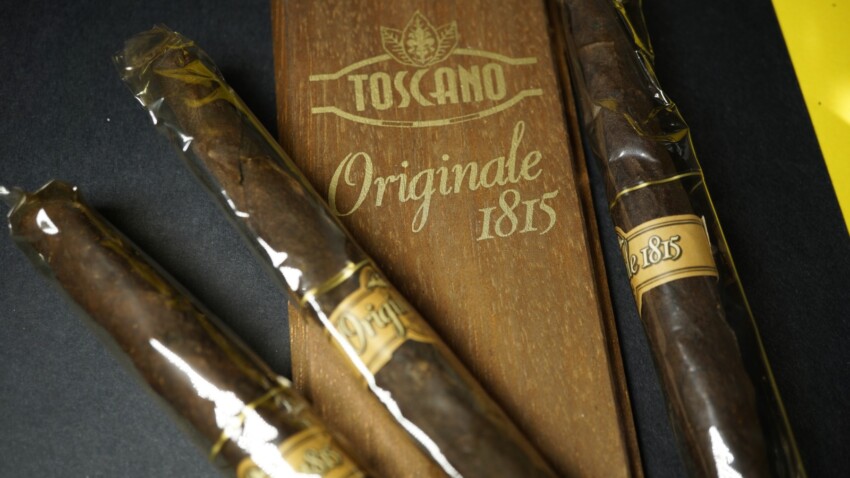
The Tuscan Cigar was born by chance in Florence in 1815 following a violent summer downpour that soaked a batch of Kentucky tobacco which then, due to the heat, underwent ammonia fermentation. The factory director, unwilling to waste this “spoiled” tobacco, decided to use it as filler for cigars to sell at a very low price. The reception for this “smelly cheap cigar” was so enthusiastic that it became an industrial production.
It is a tobacco derived, through hybridisation and selection, from the North American flue-cured type. It is a dark tobacco belonging to the fire-cured class, tobacco cured over direct fire, using special woods whose smoke slowly penetrates the cells of the tobacco leaves, imparting a specific aroma to the cured tobacco whose leaves take on a colour ranging from brown to dark brown, right through to black.
The Kentucky variety, initially used as a chewing product and later in “strong” cigarettes, is cultivated in the United States (Kentucky, Virginia, Tennessee) and Mexico, in many African countries (Malawi, Tanzania, Kenya, Zaire, Sierra Leone, Mali), and in Europe (Poland, Italy). Fire-cured tobaccos account for approximately 1% of tobacco produced worldwide.
In Italy, Kentucky tobacco is one of the oldest American varieties to be introduced. It was initially imported in the early 1800s from the United States for the production of Tuscan cigars, and subsequently its cultivation began on an experimental basis from 1850 onwards. Hybridisations with some local varieties and adaptations to the environment led to the development of a particularly well-characterised Kentucky tobacco.
Kentucky is a large-growing plant, reaching up to 2 metres in height, with a vigorous stem and short internodes, bearing 18-20 wide, lanceolate leaves of a dark green colour.
Under normal growing conditions, Kentucky is a vigorous plant with a cylindrical or conical shape, averaging between 180 and 200 cm in height, with 24-28 usable leaves. The leaves are ovate at the base of the plant, lanceolate at the top, dark green in colour. The leaves are large, averaging 70-80 cm in length and 40-50 cm in width, rich in resins. The leaf rib and veins are quite pronounced, with tissue tending towards substance, and with an open inflorescence and pink corolla. The fruit is a capsule containing approximately 3,500 seeds.
Kentucky cultivation reached its peak around the mid-1980s, when production exceeded 12,000 tonnes; subsequently, due to declining cigar consumption and reduced demand from the manufacturing industry, as well as changes introduced by the European Community (varietal groups and maximum guaranteed quotas), production was halved, though it has maintained substantial stability in recent years.
Kentucky production currently represents approximately 5% of the total tobacco cultivated in Italy. Campania is the region where almost half of all Kentucky tobacco production is concentrated, particularly in the province of Benevento (45% of national production). It is also grown in Tuscany, Veneto, Lazio and Umbria.
The number of seeds per gram is approximately 13,000-14,000. Sowing takes place in February-March, using 0.20 g of seed per square metre of seed bed. From a seed bed area of 60 square metres, sufficient seedlings are obtained for one hectare of cultivation. Care in the seed bed consists of frequent watering, thinning of seedlings, weeding and protection from animal and plant pests, particularly from blue mould (downy mildew).
Kentucky prefers deep, cool, medium-textured soils that are naturally fertile and rich in organic matter. Soils that are too loose and sandy produce a product with poor tissue, whilst those that are too clayey and water-permeable produce tobaccos with ordinary and coarse tissue.
Organic fertilisation, carried out in autumn, does not exceed 100 quintals per hectare. Mineral fertilisers are applied in spring, in quantities of approximately 150 kg of nitrogen per hectare, and similar quantities of phosphoric anhydride and potassium oxide.
Transplanting, carried out when seedlings in the seed bed have reached a height of 10-15 cm, takes place between May and June, with spacing of approximately 90 x 90 cm. Normal production conditions require plant density varying on average from 10,000 to 12,000 plants per hectare, equal to approximately 100,000 leaves per hectare.
Kentucky requires earthing-up operations, top-dressing fertilisation and supplementary irrigation, carried out especially during the leaf maturation phase, and removal of the lowest leaves in contact with the ground (defoliating).
Topping is carried out leaving 14 to 20 usable leaves per plant, with removal of the flower bud and the highest leaves. This results in an increase in leaf surface area, particularly the apical leaves, and more substantial and elastic leaf tissue. Subsequently, the axillary buds that form are removed (suckering), with one or two treatments with contact and systemic anti-sprouting products.
Leaf maturation is reached 40-50 days after topping, progressing from the bottom (basal leaves) upwards
(middle and apical leaves), and involves colour lightening and the appearance of yellow-greenish spots. Harvesting is carried out by picking leaves from the stem 2-3 at a time. Whole plant or mixed harvesting is rarely carried out. The harvested leaves are strung and taken to the curing rooms.
The yield of green product, under normal conditions, averages between 1,500 and 2,100 kg per hectare.
The curing rooms are equipped with “stringing” systems for the leaf bundles, and air vents for regulating humidity during curing.
The curing stages determine changes in leaf colour and physical condition, through appropriate temperature gradations that can be controlled by fire. Four stages are distinguished: yellowing, browning, drying of the leaf blade, drying of the rib. In the yellowing phase, leaves are placed in closed rooms for several days at room temperature, without heat. In the browning phase, when the tobacco has largely taken on a yellow colour, fires are lit with dry wood of strong essence (beech, holm oak, oak and similar) to produce smoke without flame. The temperature remains at 28-30°C for one day, and is raised to 38-40°C over 4-5 days, removing the humidity that forms from the rooms.
In the leaf blade drying phase, when the tobacco is completely brown, the temperature is raised to 45-50°C, activating the bulk fermentation processes that impart fragrance and aroma to the tobacco. Appropriate humidity controls prevent leaf overheating phenomena that would render them unusable. Smoke in this phase makes the leaves glossy and of compact tissue.
In the subsequent phase, rib drying, lasting approximately three days, the leaf blade becomes glassy and fragile to the touch: the fire is extinguished and allowed for the leaf to become soft and pasty again. The fire is lit again to gradually raise the temperature to 50°C and restore the leaf blade to a glassy state once more.
The final operation, re-conditioning, allows the reabsorption of humidity to restore the pasty consistency of the leaf. These fire operations and the latter, alternated, bring the rib and blade to a uniform brown colour, elastic and soft.
In total, the curing process lasts 15 to 20 days, with a wood consumption of approximately 50 kg per quintal of green tobacco to be cured.
The cured Kentucky leaves are wide, gummy, glossy brown, elastic and resistant; the high nicotine content (3-6%) imparts intense flavour and aroma.
The cured leaves are presented in handfuls, and generally conditioned in bales. In the pre-manufacturing phase, leaves are separated by grade of use (wrapper, filler and shredded). Kentucky for cigar wrappers features well-cured and aged leaves, dark brown in colour, with substantial tissue rich in resins and good combustibility.
Kentucky is used mainly for the production of Tuscan cigars (wrapper and filler), to a lesser extent in pipe shreddings and some cigarette types.
CIGAR: MORO (launched in 2000)
DRAW: CORRECT
COMBUSTION: UNIFORM
ASH: PEARL GREY
FLAVOUR: EXCELLENT
AROMA: RICH
STRENGTH: INTENSE
PERSISTENCE: LINGERS IN THE MEMORY
NOTES: It is difficult to judge products that achieve excellence such as the Moro, risking saying only platitudes.
Launched in 2000, it is even more difficult to imagine anything better. Our thanks to E.T.I. for managing to give us a product of absolute world-class standard, it fears no comparisons. Its diameter at the tips and belly makes it harmonious, like the forms of a beautiful woman.
CIGAR: MILLENNIUM (launched in 1999)
DRAW: CORRECT
COMBUSTION: EXTREMELY UNIFORM
ASH: PEARL GREY
FLAVOUR: EXCELLENT
AROMA: RICH INTENSE
STRENGTH: BALANCED
PERSISTENCE: VERY PERSISTENT
NOTES: Absolutely uniform combustion ring, compact ash, to be smoked entirely, reserved for special occasions. It manages to release softness and aroma that are splendidly combined with the great body of the cigar. A great sense of fullness “the last wish of the condemned”, considering its rarity.
CIGAR: SELECTED (launched in 1998)
DRAW: CORRECT
COMBUSTION: UNIFORM
ASH: STEEL GREY
FLAVOUR: TYPICAL
AROMA: INTENSE
STRENGTH: ACCENTUATED PUNGENCY
PERSISTENCE: VERY PERSISTENT
NOTES: Uniform combustion ring has a fire force in the mouth that is too accentuated if smoked in half. If drawn in an avid and frenetic manner it has bitter peaks that gradually fade. If humidified we find great softness that we would expect to be slightly peppery on the tongue.
CIGAR: ORIGINALE (launched in 1985)
DRAW: CORRECT
COMBUSTION: EXTREMELY UNIFORM
ASH: PEARL GREY
FLAVOUR: EXCELLENT
AROMA: RICH INTENSE
STRENGTH: BALANCED
PERSISTENCE: VERY PERSISTENT
NOTES: Absolutely uniform combustion ring, great quantity of very soft smoke in the mouth. If we are fortunate to have larger diameters it is fantastic. Astonishing value for money.
CIGAR: ANTICA RISERVA (launched in 1992)
DRAW: CORRECT
COMBUSTION: VERY UNIFORM
ASH: STEEL GREY
FLAVOUR: EXCELLENT
AROMA: PLEASANT INTENSE
STRENGTH: BALANCED
PERSISTENCE: FAIRLY PERSISTENT
NOTES: Absolutely uniform combustion ring, it is the first cigar in the range machine-rolled. Its characteristic lies in great balance and ease of draw: it is practically infallible. Recommended for those who are sceptical about Tuscan cigars. It encompasses softness, quantity of smoke and reliability. It is certainly the cigar for approaching the fascinating world of Tuscan cigars.
CIGAR: ANTICO TOSCANO (launched in 1973)
DRAW: WITH RESISTANCE
COMBUSTION: GOOD
ASH: STEEL GREY
FLAVOUR: PEPPERY FLAVOURS
AROMA: RICH INTENSE
STRENGTH: PRONOUNCED RESISTANT
PERSISTENCE: VERY PERSISTENT
NOTES: Fairly uniform combustion ring, it is the Tuscan cigar par excellence. Of great strength and impact with very pronounced aromas and some resistance to the draw, it is certainly the most difficult of Tuscan cigars. Only for experienced smokers, it recalls the fragrance of worked tobacco, preserves the typicality of the traditional product.
CIGAR: EXTRA VECCHIO (launched in 1953)
DRAW: CORRECT
COMBUSTION: GOOD
ASH: DARK GREY
FLAVOUR: UNIFORM
AROMA: INTENSE
STRENGTH: PRONOUNCED RESISTANT
PERSISTENCE: VERY PERSISTENT
NOTES: Combustion ring not always uniform, floury ash, the first cigar in the range with Italian-sourced wrapper. Its composition gives it a very intense flavour without sharp edges, distinctive; its fermentation and maturation impart body and persistence to the cigar. It has a fabulous value-for-money ratio, a shame that as prices decrease the cigar diameters also diminish. We would be curious to try one day a hand-rolled Tuscan cigar with an Italian-sourced wrapper.
CIGAR: TOSCANI (launched in 1930)
DRAW: FAIRLY CORRECT
COMBUSTION: IRREGULAR
ASH: DARK GREY
FLAVOUR: MATURE TOBACCO
AROMA: INTENSE
STRENGTH: PRONOUNCED
PERSISTENCE: PERSISTENT
NOTES: Combustion ring often irregular, it has an intense aroma with decisive impact from the flavours of dry wood essences. An all-Italian cigar. A product of this kind would deserve more care and attention. Wrappers with fantastic burnished brunette tones and golden reflections are often found with accentuated veining. Shredded filler sometimes uneven.
CIGAR: GARIBALDI (launched in 1982)
DRAW: CORRECT
COMBUSTION: GOOD
ASH: DARK GREY
FLAVOUR: AROMATIC
AROMA: PLEASANT
STRENGTH: ROUNDED
PERSISTENCE: FAIRLY PERSISTENT
NOTES: Fairly regular combustion ring, Italian wrapper with “sanniti” shredded filler. A most original Tuscan cigar “tempered” by soft flavours. A cigar for any time of day. Its composition is due, as legend has it, to the recently deceased writer Mario Soldati. Absolutely, it is the cigar for transitioning the smoker from cigarettes to cigars, easy to smoke.
There are several steps enthusiasts can take to preserve their cigars better:
– Store cigars in suitable containers such as the elliptical box of the classic Toscano or the wooden case of the Toscano Originale; avoid containers with distinctive odours
– Do not place cigar containers in kitchens, cellars or lofts; areas prone to significant fluctuations in temperature and humidity, or where strong fragrances or odours may be present.
Excess moisture in a cigar can be assessed with a simple physical test: when pressed gently between thumb and forefinger, it should not feel soft, but rather show a certain elasticity in the wrapper. Mould is irreparable damage that can appear on the wrapper, making the cigar unsmokeable.
Conversely, over-drying makes the cigar extremely fragile, risking easy breakage even when cutting, and possible wrapper separation, rendering it unsmokeable. These are the most common problems arising from poor storage, but let’s not forget that Tuscan cigars are highly resilient when properly stored: we’ve smoked them after twenty years without experiencing any issues with draw, flavour, aroma or combustibility; provided, of course, that humidity, temperature and light levels have been maintained correctly throughout.
Before lighting: it’s customary to take a careful look at the cigar before lighting it, and it’s an excellent habit! The pleasure actually begins before smoking, simply by observing the cigar and assessing its qualities and any potential flaws. A gentle squeeze tells you whether it’s dry or moist, light or dark, whether the tip or body are calibrated as you’d like. In short, you’re already savouring it before you even light it!
Lighting: most of us keep a gas cigar lighter handy for convenience, though it’s not ideal. Petrol lighters, wax matches and anything that might impart an unpleasant taste should be avoided entirely. Alcohol flame would be ideal, more easily replaced by traditional wooden matches. Always allow the sulphur to evaporate before lighting the cigar.
A good light is essential. The combustion must spread evenly across the entire section of the cigar, or half-cigar, being lit. It’s recommended to draw gently whilst slowly rotating it, so the flame distributes evenly. If the draw is good and you’ve achieved a proper light, the cigar will burn slowly with the ember forming a “cone” shape. For aesthetic reasons, never ash the cigar. If the ember forms an inverted funnel shape during lighting, correct it immediately with the lighter flame: this will prevent disappointment during smoking.
Occasionally a cigar may burn poorly. The causes could be:
poor draw, overly tight tips, wrapper damage, holes in the wrapper, wrapper separation…
Unfortunately, there are no remedies for these potential defects: they are risks inherent to hand-rolled products.
Re-lighting: the cigar often goes out. Re-light it before it cools, rotating it over the flame, drawing gently and letting it resume naturally as if continuing from where it stopped. This way you’ll avoid the cigar acquiring a bitter, unpleasant taste.
If you wish to cut the cigar in half, bear a few simple points in mind. To avoid easy breakage near the cut, it’s advisable to slightly dampen the wrapper. Some enthusiasts use saliva, others water, wine, grappa or cognac. The key is making it less fragile to achieve a clean, decisive cut. The best cigar cutters are those that completely envelop the cigar around its full circumference at the moment of cutting, thereby preventing possible breakage or wrapper separation.
Even if you’re not fond of cellophane, the cigar can be cut while still wrapped in it; the film helps prevent breakage. We know some smokers who snap the cigar by hand; however, this inevitably causes damage, particularly to the Toscano Originale, which with its long filler is most prone to irreparable harm.
Poor draw can have many causes. It’s naturally the worst flaw a cigar can have, as it’s difficult, and sometimes impossible, to remedy. It may be caused by filler that’s too tightly packed or has narrow tips; holes or tears in the wrapper, or wrapper separation. In some cases solutions exist. If you believe the tip is too compressed, try cutting off a small piece (no more than 1 cm), or pierce the cigar with a needle through the centre of any constriction to allow air to pass more easily, thereby improving draw.
A small hole near the tip can be plugged with your finger whilst smoking. If the hole is near the lighting point, you can cut the cigar right there. Whilst wrapper separation is difficult to repair, it can often be remedied by lightly dampening the separated area, always avoiding tearing it.
 Hotel
Hotel  Budget accommodations
  Apartments
  Family Hotel
  Luxury Hotel
  Resorts