Olive Oil Tours in Tuscany: Best Tastings and Estates to Visit
Guide to Extra Virgin Olive Oil Routes in Tuscany. Discover pathways through Sienese villages, taste DOP olive oil and admire breathtaking landscapes.
Read more
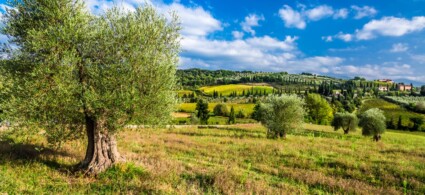
The olive tree, together with the vine, has always been the defining feature of the most typical Tuscan landscape, with its centuries-old history that stretches back to the age of medieval city-states and continues through the Renaissance.
This century’s “renaissance of the olive” coincides with its protection at European level, along with the necessary enhancement and promotion of Tuscan extra virgin olive oil.
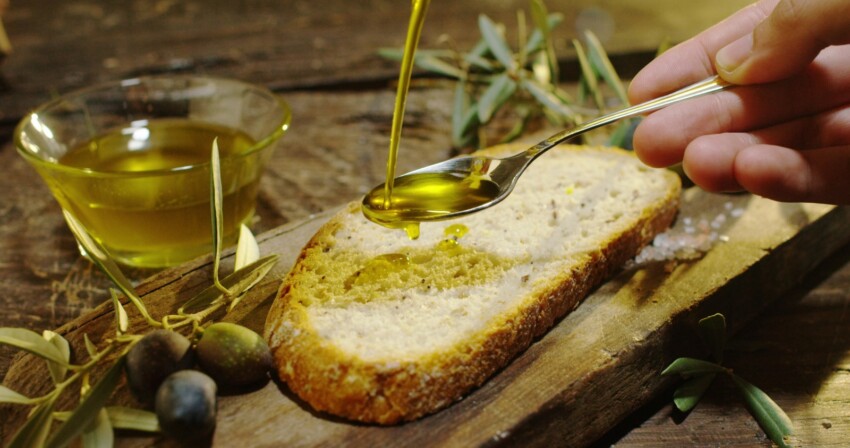
Virgin olive oil has two fundamental characteristics that distinguish it from other vegetable oils: it is derived from a fruit; it is extracted from olives using exclusively mechanical means. These two properties, together with the regulation that prohibits the addition of any additives except water, make this product a food characterised by its natural qualities, as it preserves perfectly intact the original composition it contained within, along with certain components whose formation depends on the mechanical and extraction processes to which it is subjected.
Various regulations govern its production and marketing: some mandatory, such as Regulation 2568/91, which establishes the analytical determinations and the values these must assume for each of the specified parameters; Legislative Decree 155/97 (H.A.C.C.P Hazard Analysis of Critical Control Point) relating to health and hygiene aspects; others voluntary, such as Regulation 2081/92 concerning the protection of geographical indications and designations of origin for agricultural and food products; and the subsequent Regulation 2037/93, which establishes the procedures for its application.
Under this latter regulation, the European Community registered 23 production standards for Italian and foreign extra virgin olive oils. Among these are PGI (Protected Geographical Indication) “Tuscan Extra Virgin Olive Oil” and more recently two PDO (Protected Designations of Origin) “Chianti Classico Extra Virgin Olive Oil” and “Terre di Siena” Extra Virgin Olive Oil.
In addition to the aforementioned regulations, it is worth recalling a further voluntary standard, ISO 8402, and the ISO 9000 standards, which define the quality of a food product as the conformity to specific product requirements, capable of satisfying the expressed and implicit needs of the consumer, and the general criteria for the corresponding certification.
It seems appropriate to note that the concept of quality has taken on different meanings at various points in history, attributing varying importance to the characteristics that determine quality itself and to the variables used to assess its compliance with implicitly and explicitly desired objectives.
Over time and across different contexts, multiple factors have modified its interpretation in an evolutionary sense, and indeed its very application.
Three essential factors deserve highlighting in this context, with broad and profound implications also in the olive oil sector:
The organoleptic characteristics of foodstuffs and olive oil (colour, aroma, taste) are parameters of considerable commercial interest. As has been noted, psychophysiological evaluations such as consumer acceptance are linked to these. One of the quality attributes is indeed the set of properties that make it “acceptable” or “desirable”, to which the consumer can attribute an affective and symbolic value, as well as obviously a gratifying one. These considerations also apply to olive oil, whose commercial classification, according to the EU Regulation already cited, must also take into account organoleptic evaluation in addition to instrumental analysis.
Table 1 briefly outlines the parameters that define the smell, taste and taste-smell of virgin olive oils. From these, it is evident how the chemical composition in this regard is provided almost exclusively by minor components and only in a small part by the unsaponifiable fraction; the chemical part is represented by molecules present quantitatively in parts per thousand or per million, whose quantitative and qualitative variables are heavily influenced by varietal, agronomic, technological and environmental factors.
There is considerable experimental and epidemiological evidence suggesting that the type of dietary behaviour followed in Mediterranean countries, and in particular that followed in southern Italy in the 1960s, is beneficial and effective in the prevention of chronic diseases, particularly cardiovascular diseases. This dietary pattern is characterised by a high consumption of cereals and a low intake of lipids or fats, the majority of which are represented by added fats and above all olive oil.
This food is capable of maintaining a high ratio of monounsaturated to saturated fats in the overall diet. Although it is not possible to attribute this favourable effect in preventing chronic diseases solely to the presence of olive oil, given the possible simultaneous presence of many other substances from food sources present in the diet, the consumption of olive oil from this point of view certainly influences this type of disease significantly. In addition to fatty acids, other components are important.
Among the most significant are sterols, aliphatic alcohols, some terpenols, aromatic compounds, certain vitamins (A, E) and the simple and complex orthodiphenolic fraction (hydrolysable). It is worth noting how tocopherols (Vitamin E) are of considerable importance, especially as inhibitors of intracellular oxidation processes, while their role in preventing oxidation of olive oil during storage is rather limited.
The phenolic component, on the other hand, assumes a decisive role both for its inhibitory activity in “in vitro” oxidation processes and for the same activity in intracellular oxidation processes (in vivo). The reaction of oxygen with certain organic compounds, particularly unsaturated (poly) fatty acids, leads to the formation of unstable compounds (peroxides), which modify not only the commercial, nutritional and sensory characteristics of the foods in which they are present but also influence the health status of the corresponding consumers (inflammation, cardiovascular incidents, carcinogenesis, premature ageing).
All this therefore translates into both achieving greater stabilisation of olive oil (maintenance over time of its chemical and compositional characteristics) with effects on sensory properties including typicity, and into an important series of effects on the human body.
One of the weaknesses of the olive oil economy is the inadequate protection of this product against similar productions and substitute products. This negative aspect was addressed by the aforementioned “2081/92” Community Regulation, as mentioned in the introduction. Indeed, from this date various initiatives have been undertaken aimed at identifying, protecting and enhancing the natural characteristics of extra virgin olive oils that are connected with the environment and which can also be identified by their distinctive characteristics, namely recognition of typicity. The first recognition concerned “Tuscan” extra virgin olive oil (EC Reg. no. 644 of 20/3/1998).
This is a protected geographical indication covering practically the entire region. More recently, two proposals for Protected Designations of Origin were submitted to the EU: “Chianti Classico” extra virgin olive oil and “Terre di Siena” extra virgin olive oil (EC 31/3/2000). These are two oils which, as can be seen from their respective production standards, are produced in territories well known for other famous typical products (Chianti wines, Brunello di Montalcino etc.) and are characterised by low free acidity (0.5%), peroxide value (12), good antioxidant content (100-150 mg/kg), and good oleic acid content (>74% and >72% respectively); by an intense green colour with a tendency towards yellow, a fruity olive aroma and a taste with bitter and peppery sensations.
On 10 December 1999, the National Committee for the protection of virgin and extra virgin olive oil designations of origin approved the proposal for recognition of PDO “Lucca” extra virgin olive oil and prepared the paperwork for the case to be sent to Brussels for Community registration and protection.
 Hotel
Hotel  Budget accommodations
  Apartments
  Family Hotel
  Luxury Hotel
  Resorts