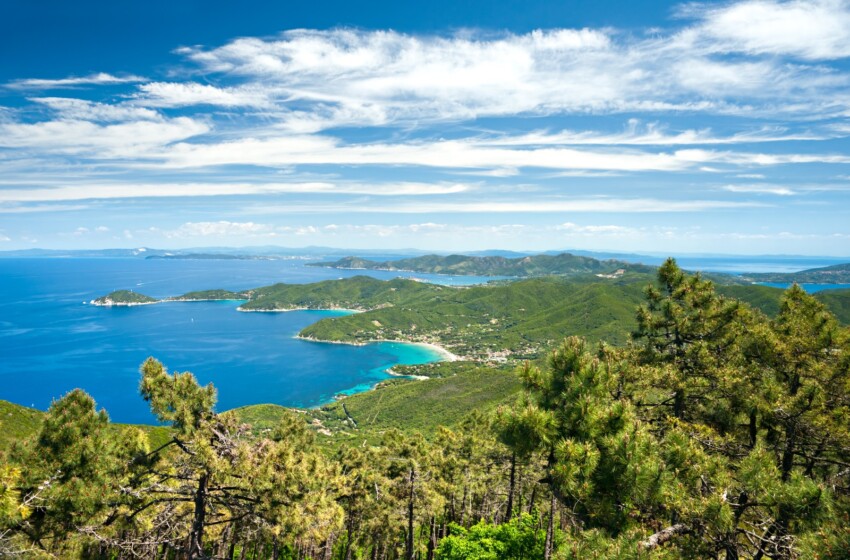
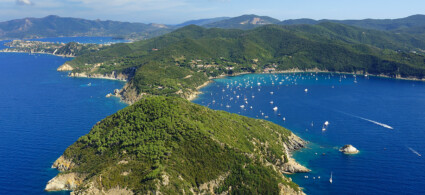
The Tuscan archipelago comprises seven principal islands of exceptional beauty situated between the Ligurian Sea and the Tyrrhenian Sea, a short distance from the region’s coastline, and together they form Europe’s largest protected marine park.
The islands, ideal for spending your summer holidays and exceptional during spring and early autumn, are a sanctuary for rare birds, dolphins and whales.
The largest of the archipelago is Elba, just 10 miles from the Italian coast, followed by Giglio island, 50 kilometres further south, Capraia, famous for its rugged cliffs and secluded coves, Montecristo, Pianosa, Gorgona, the most northerly, and finally Giannutri, the most southerly and crescent-shaped.
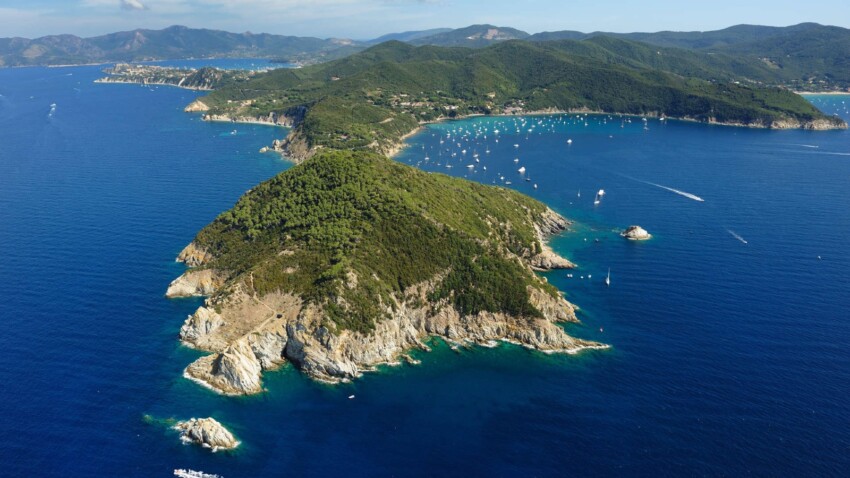
Charming and beautiful, renowned for its beaches, archaeological sites, breathtaking views, mines, churches and fortresses, Elba is the largest island in the Tuscan archipelago.
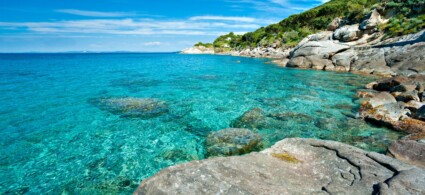
A unique destination, Elba is bathed in crystal-clear waters. With just under 150 kilometres of coastline, the island boasts romantic villages, hilltop settlements, verdant valleys and enchanting bays.
Visit the historic Portoferraio, the island’s capital, the fashionable Porto Azzurro, the charming Capoliveri, the impressive Marciana and be captivated by smaller settlements such as Campo nell’Elba, the colourful Marciana Marina, the mining town of Rio nell’Elba and the tiny Cavo.
The beaches of Elba are all different from one another. Long stretches of golden sand, small pebble coves with white stones, black and red sand beaches, and granite cliffs set in extraordinary scenery will make your holidays unforgettable.
Ideal for outdoor enthusiasts, hiking and mountain biking, golf and sailing are among the most popular activities, whilst diving and snorkelling are equally unmissable.
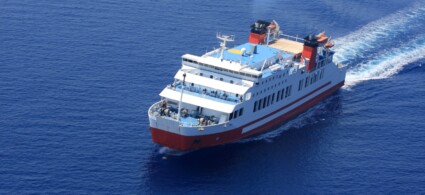
Elba Island is well connected by ferries and hydrofoils that reach Piombino port in an hour’s journey.
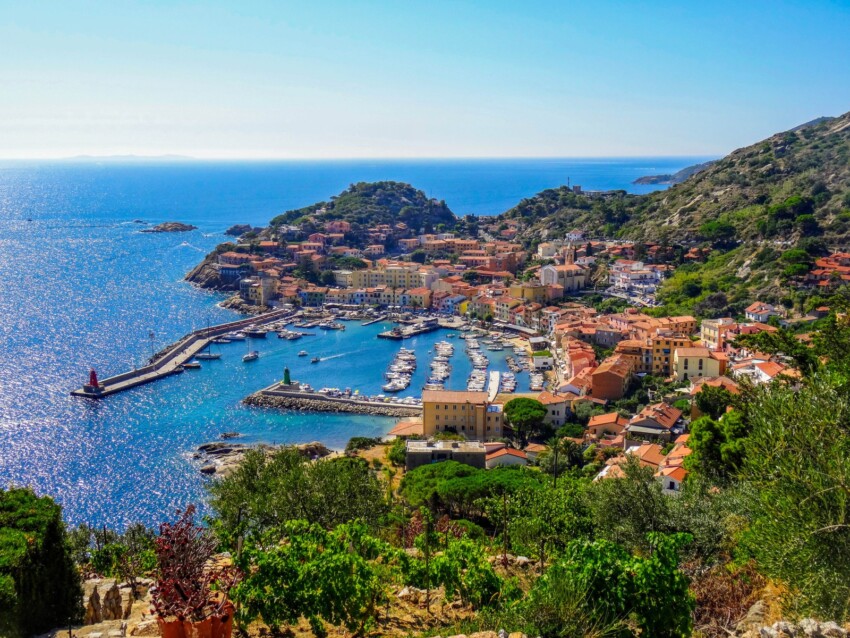
The splendid Giglio island, the second largest in the Tuscan archipelago after Elba, is mirrored against the Argentario promontory and bathed in emerald-green crystal-clear waters.
Predominantly mountainous, Giglio island is sleepy and romantic and offers spectacular sunsets. There are three towns on the island: the wonderful Giglio Castello, inland, Giglio Porto, the hub of the island’s connections, and Giglio Campese, overlooking a wide gulf and a large beach.
The main beaches of Giglio are Campese, the largest, Cannelle, with very fine white sand, Arenella, highly scenic, and Caldane, the wildest beach accessible by boat or a one-kilometre walk, though numerous small hidden inlets dot the 27 kilometres of the island’s coastline.
The seabeds around Giglio, rich and abundant in fish, are among the most renowned and appreciated in Italy for diving. You’ll encounter Posidonia meadows, schools of greater amberjack, barracuda, tuna, moray eels, spiny lobsters and groupers. Among the best dive sites at Giglio are Tralicci, Secca dei Pignocchi, Secca delle Secchi, Punta del Fenaio and Cala Monella.
To reach Giglio Island, board ferries from Porto Santo Stefano in Grosseto province with shipping companies Toremar and Maregiglio. Ferries are frequent and run continuously in summer or late spring. The crossing takes approximately one hour.
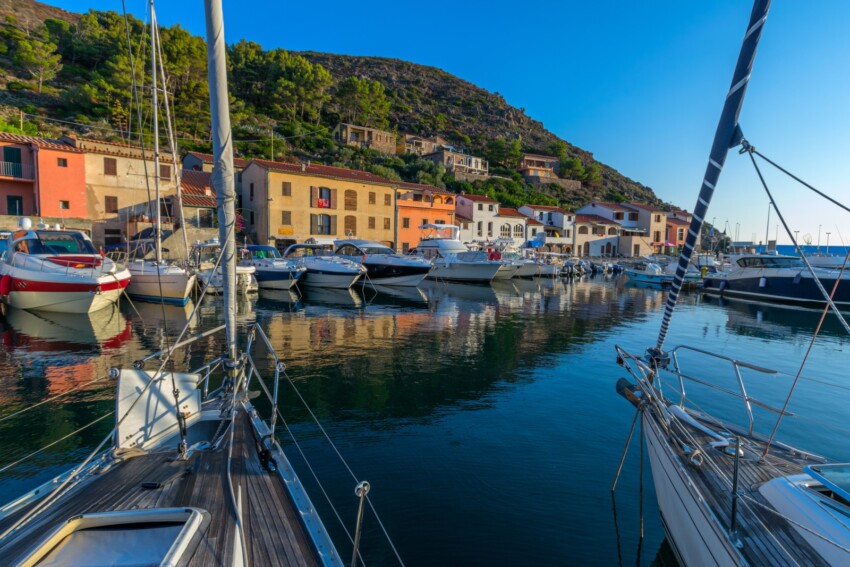
Small and enchanting, the volcanic island of Capraia is part of the Tuscan archipelago, the third largest, and is located northwest of Elba, 36 nautical miles from Livorno and just 16 nautical miles from Corsica.
Wild and steep, Capraia is characterised by lava cliffs plunging into the sea, striking colour contrasts, small waterfalls, unspoilt hills and intense fragrances.
The island, at most 8 kilometres long and 4 kilometres wide from Punta della Teglia to Punta dello Zenobio, has just one inhabited centre, the municipality of Capraia Isola, divided between the port and the historic village, dominated by the Rocca di San Giorgio along the island’s northeastern coast. The town is a maze of narrow streets lined with beautiful and colourful houses and shops.
Along Capraia’s 30 kilometres of coastline, which can be explored thanks to hillside trails, a succession of splendid views and rocky inlets unfold. The island’s western coast is steep, with cliffs dropping straight into the sea from a height of three hundred metres, while the eastern shore, where the port is situated, is gentler and rich in inlets crowned by ancient watchtowers. The sandy beach of Cala della Mortola is accessible only by boat, whilst Cala Rossa, the ancient volcanic cone that collapsed on one side, absolutely deserves a visit.
The wine produced on Capraia is excellent, and naturally fish-based dishes are outstanding.
Capraia is reachable by daily ferries from Livorno port. The service is operated by Toremar and takes approximately 2 hours and 45 minutes. The fast ferry operates seasonally from June to September.
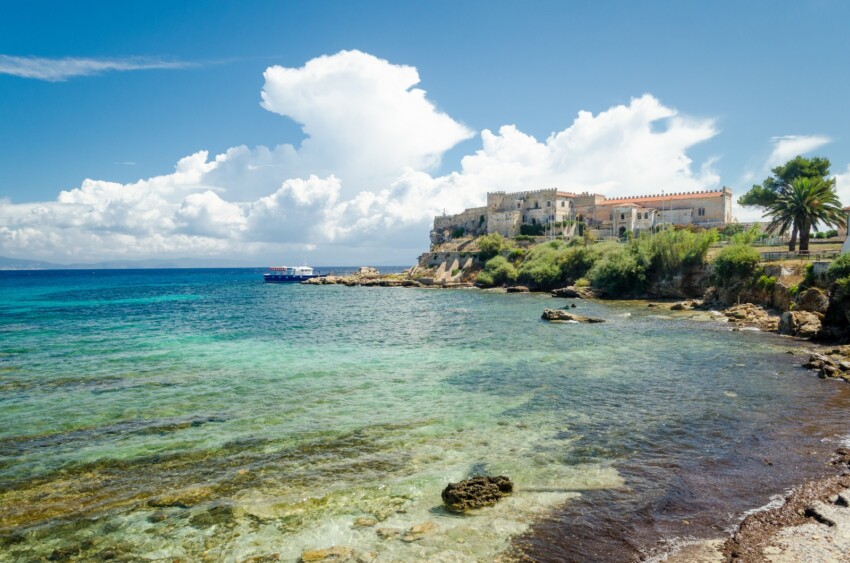
An hour’s sailing from Elba, Pianosa island, the fifth largest in the Tuscan archipelago, barely emerges from the sea. The island has 2 smaller islets, La Scola and La Scarpa, and rises from the sea to approximately 20 metres in height.
Along its coastline, Caribbean-like coves succeed one another, though Cala Giovanna is the only one where swimming is permitted, and cliffs plunge into crystal-clear waters.
Famous for its Palaeolithic caves, the Christian catacombs dating back to the 3rd century AD and the remains of the Baths and Villa of Postumus Agrippa, from 1858 to 1998 it hosted a penal colony, a circumstance that helped preserve its unique natural environment, a habitat for numerous birds.
The sea beds at Pianosa are rich in red coral, groupers, bream and barracuda and represent a true paradise for divers. During your visit you’ll have the opportunity to see dolphins, Caretta-Caretta turtles and, if you’re lucky, cetaceans, sperm whales and fin whales.
The only way to access Pianosa is to take part in one of the paid guided tours, with limited numbers of participants. Boats depart from Marina di Campo, Porto Azzurro and Piombino ports.
The island has a small hotel with just 10 rooms.
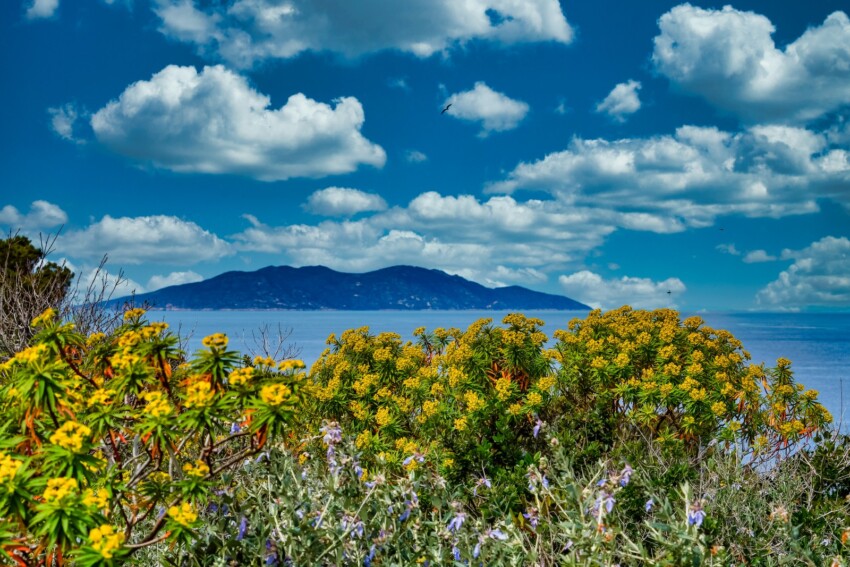
Giannutri is the southernmost island of the Tuscan archipelago and lies 14 kilometres southeast of Giglio island, off the Argentario.
Larger only than Gorgona, Giannutri is a rocky island shaped like a crescent moon or arc, as its Roman name suggests. Just 2 and a half kilometres long and 500 metres wide with a jagged and rocky coastline of 11 kilometres.
Two small beaches are found within the island’s principal inlets, Cala dello Spalmatoio, near the town, and Cala Maestra to the northwest.
Giannutri, a protected natural area and a true diver’s paradise, is a limestone island that conceals extraordinary biological diversity and numerous wrecks. Moreover, numerous caves of interest open along the coast, the most famous being Cala dei Grottoni, on the southern part of the island.
The island has no hotels but it is possible to rent a holiday home.
Access is restricted to 2 areas, north and south of the road connecting Cala Maestra and Cala Spalmatoio: only 300 visitors per day, accompanied by Park Guides, can access area 2 by paying an entrance fee that includes the camping service.
Giannutri is connected during summer to Giglio Island by the Maregiglio shipping company and is also reachable from the mainland year-round thanks to the same company.
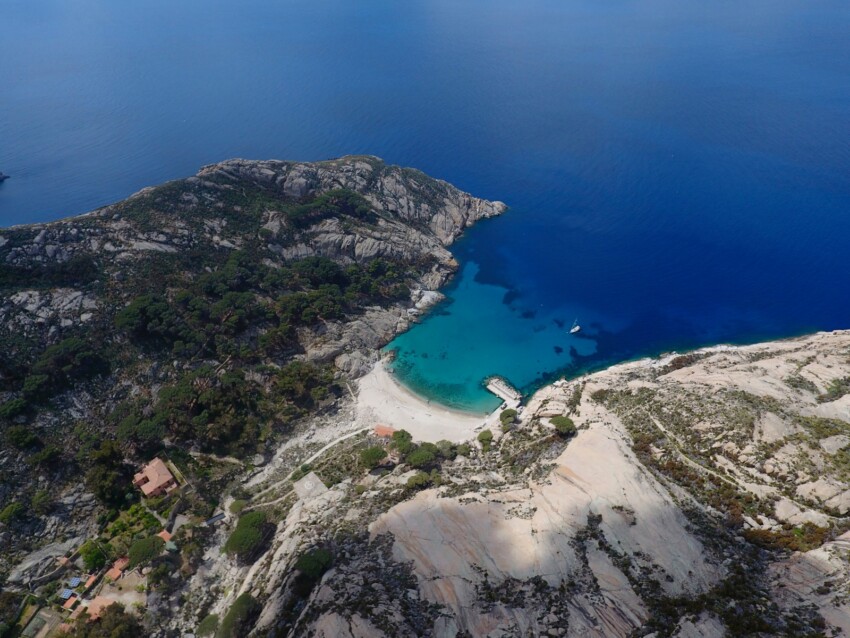
Shaped like a wide, low pyramid, the rugged and nearly inaccessible Montecristo, made famous by Alexandre Dumas who recounts a legendary treasure on the island, is the most remote island of the Tuscan archipelago and lies south of Elba and west of Giglio.
The island, protected since 1971 with strict regulations, is composed of grey-pink granite and is an important habitat for migratory birds and wild goats. Only a thousand visitors a year are permitted on Montecristo and the only way to access it is to take part in educational tours conducted by State Forestry Corps personnel that follow 3 trails leading to the remains of an ancient monastery and the Grotto of San Mamiliano.
Cala Maestra is the only landing point along the 16 kilometres of Montecristo’s coastline, dominated by the only structure present, the former Watson-Taylor villa. Monte della Fortezza, at 645 metres above sea level, gives the island a massive appearance.
To book a visit you must contact the Follonica Forestry Corps, explain your reasons for visiting, indicate the number of people interested and the date. The wait to visit Montecristo can be as long as 2 years.
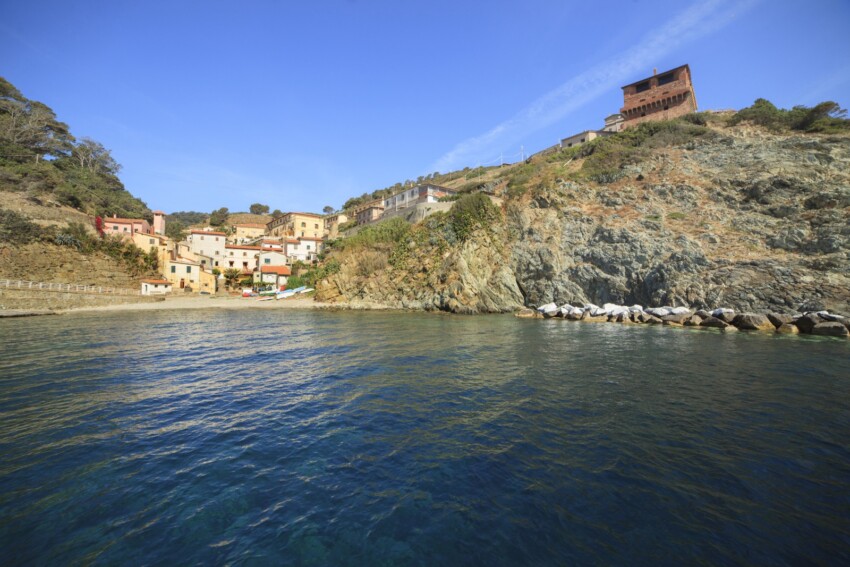
If you wish to visit the unspoilt island of Gorgona, the smallest and most northerly of the Tuscan archipelago, you must take part in scheduled excursions, and booking is mandatory, as it is both a nature reserve and a prison.
Enchanting and unique, Gorgona is just over 2 square kilometres, largely occupied by the penitentiary, and has a rocky and wild appearance. Particularly lovely are Cala Scirocco, where the Grotto of the Moray opens up, and Cala Martina, embraced by dense Mediterranean scrub and bathed in crystal-clear waters.
To reach Gorgona allow for an hour’s ferry journey from Livorno port. The visits, managed by the Cooperativa Parco Naturale Isola di Gorgona, are authorised by the Ministry and also depart from the ports of Elba and Capraia.
It is necessary to provide the Prison Governor with identity document details for each visitor at least 15 days in advance.
In the following map you can see the location of the main places of interest mentioned in this article.
 Hotel
Hotel  Budget accommodations
  Apartments
  Family Hotel
  Luxury Hotel
  Resorts