Terme di Saturnia Natural Spa & Golf Resort
Saturnia - Via Della Follonata, Snc
Book now
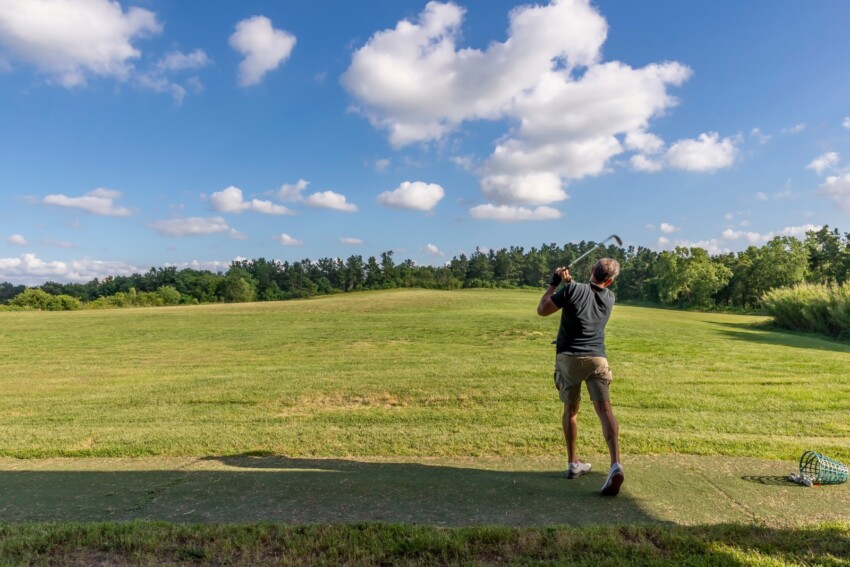
Golf has found in Tuscany one of its most prestigious territories in the world. It was no coincidence that Italy’s first golf course was founded in Florence in 1889: the thriving English community settled in the Tuscan capital chose these landscapes — the Chianti hills, olive groves and cypress trees — as the perfect natural setting for their favourite sport. Since then the region has continued to grow, now boasting over 30 golf clubs spread from the Versilia coast to Maremma, from the Sienese hills to Casentino.
The mild climate, which allows you to play virtually year-round, together with extraordinary landscape variety, makes Tuscany an ideal destination for those wanting to combine a cultural holiday with one or more days on the green. Tuscan golf courses are not merely sports facilities: many are integrated with luxury resorts, wellness centres and wine estates, offering a comprehensive experience difficult to replicate elsewhere in Europe.
Whether you’re an experienced player seeking a championship-standard course or a beginner taking your first swing, Tuscany has facilities suited to every level. Below is a guide to the region’s principal golf clubs, organised by geographical area.
The Circolo del Golf Ugolino, founded in 1889 at Impruneta on the doorstep of Chianti, is Tuscany’s oldest golf course and one of Italy’s most historic. The 18-hole course (par 72, 5,672 metres), designed by architects Peter Gannon and Cecil Blandford, winds through hills dotted with olive groves and vineyards and has hosted numerous national and international championships. Facilities include a restaurant, pro-shop, swimming pool and practice range with grass tees and covered bays.
With its 27 holes and 9,400 metres of overall course, Golf Club Castelfalfi is Tuscany’s largest golf course. Designed by architects Rainer Preissmann and Wilfried Moroder, it stands out for its steep slopes, water hazards and an environmental sustainability approach that distinguishes it throughout the region. The integrated resort comprises a hotel, wellness centre, conference centre, restaurants and a practice facility with grass tees and covered areas for coaching clinics.
Named after Leonardo da Vinci — whose birthplace lies just a few kilometres away — Golf Club Bellosguardo offers a 9-hole course with double tees (5,800 metres), considered among Italy’s most challenging due to its terrain. The facility includes a panoramic swimming pool, a restaurant celebrating local cuisine, and La Fattoria di Bellosguardo, a farmhouse immersed in the Montalbano landscape.
Opened in 1995 and designed by Arnold Palmer, Le Pavoniere is one of central Tuscany’s most prized courses. The 18-hole course (par 72, 6,465 metres) spreads across predominantly flat terrain characterised by numerous water hazards, approximately 20 kilometres from Florence. It’s considered among the region’s most complete facilities for services and tournament organisation.
Designed by celebrated architect Robert Trent Jones Jr. over an area of more than 130 hectares nestled in the Sienese hills, Royal Golf La Bagnaia is regarded as one of Europe’s finest golf courses. The 18-hole course (par 72, 6,101 metres) is characterised by beautiful natural lakes, oak woodlands and a magnificent clubhouse. Its position in the heart of the countryside between Siena and Maremma makes it an essential stop for golfers visiting the region.
At Sinalunga, in Val di Chiana, Golf Club Valdichiana offers a 9-hole course (par 34, 2,633 metres) in a rural setting of typical Tuscan beauty. An intimate and authentic facility, ideal for those wanting to enjoy a round of golf whilst soaking up the atmosphere of the Sienese countryside.
The Argentario Golf Club is Tuscany’s most exclusive coastal golf course and the only one in Italy holding the PGA National Golf Course Italy licence, awarded to it in 2019 by the Professional Golfers’ Association. The 18-hole panoramic course (par 71, 6,295 metres) spreads across 77 hectares in a protected natural area five minutes from the Duna Feniglia Nature Reserve, overlooking the Orbetello Lagoon and Monte Argentario. The course is certified BioAgriCert eco-compatible and hosted the 82nd edition of the Open d’Italia (DP World Tour) in June 2025. Adjacent to the Argentario Golf & Wellness Resort, it includes a swimming pool, beauty centre, pro-shop and restaurant with a panoramic terrace.
Few combinations are as evocative as a day on the green followed by a soak in the thermal waters of Saturnia. The Terme di Saturnia golf course spans 70 hectares of Maremma countryside (par 72, 6,316 metres, 18 holes), with each hole possessing its own character and a layout easily memorised thanks to its clear design. The clubhouse and integrated resort allow you to transform your visit into a complete wellness and sporting stay.
The Golf Club Punta Ala (par 72, 6,168 metres, 18 holes) is nestled in the pine forest surrounding the celebrated Maremma headland, just steps from the port of Punta Ala. The course alternates between tree-lined stretches and more open holes with sea views, offering a varied and visually striking round.
Designed by American architect Keith Preston, Il Pelagone (par 71, 5,920 metres, 18 holes) sits between Gavorrano and Follonica, in a landscape typical of Maremma. The course combines holes on undulating terrain with views across the surrounding countryside and also offers a Golf Academy for those wishing to develop their skills through dedicated weekly coaching programmes.
For those keen to combine golf and thermal spa relaxation, Montecatini Golf Club offers a certified 18-hole course nestled in the countryside between Montecatini Terme and Monsummano Terme. The clubhouse overlooks a valley dominated by the Medici Villa of Montevettolini (a UNESCO World Heritage site), while a panoramic swimming pool and pro-shop complete the facility. The location is strategic: Lucca, Florence and Pisa are all less than an hour away.
The Versilia Golf Club at Pietrasanta is the reference point for golfers staying along the Versilia coast. The 18-hole course is located a short distance from Forte dei Marmi and allows you to combine a round of golf with the seaside, beaches and sophistication of the Apuan coastline.
Founded in 1985, the Casentino Golf Club at Poppi (par 72, 5,626 metres, 13 holes) is one of inland Tuscany’s most spectacular courses. The course is surrounded by hills, medieval castles, Romanesque parishes and Etruscan excavations, and can be fully viewed from the clubhouse positioned atop a series of terraces overlooking oak and chestnut woodlands. A course for those who appreciate golf away from the beaten path.
The only golf course on Elba Island, Acquabona Golf Club (par 34, 2,604 metres, 9 holes) is laid out across a panoramic hillside terrain midway between Portoferraio and Porto Azzurro, close to the Lacona crossroads. A compact course but among the region’s most visually beautiful, set in the island’s unspoilt nature.
Tuscany allows you to play golf year-round thanks to its temperate climate. Spring (March-May) is the ideal season for the colours of blooming Tuscan countryside and mild temperatures. Autumn (September-November) offers similar conditions, with the grape harvest as your backdrop. Summer is the busiest season, particularly at coastal courses, but morning temperatures remain pleasant. Winter is generally mild, especially in Maremma and along the coast, where courses rarely close due to bad weather.
For those planning a golf trip to Tuscany, the main airports to fly into are Florence and Pisa. Car hire is the most convenient option for reaching the more remote courses and for exploring the region between rounds.
 Hotel
Hotel  Budget accommodations
  Apartments
  Family Hotel
  Luxury Hotel
  Resorts