Florence: Uffizi Timed Ticket & Masterpieces Audio App
7.148 reviews
Buy now
From 27,20€ per person
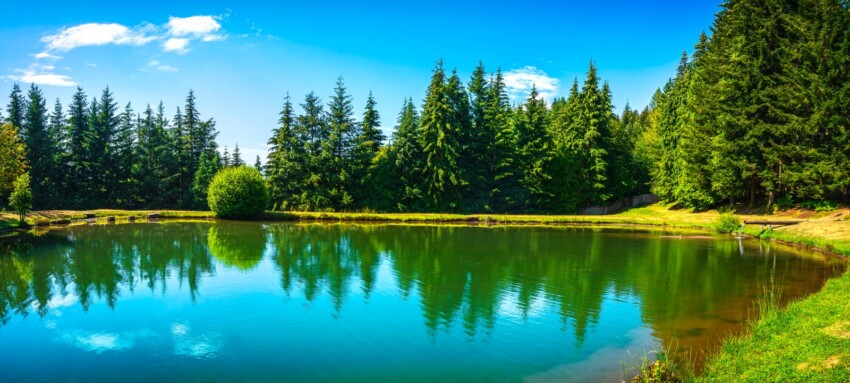
Located in the municipality of Minucciano, along the road from Gramolazzo to Piazza al Serchio, this lake mirrors the imposing Monte Pisanino in its green waters. The shoreline is dotted with equipped areas featuring wooden tables, perfect for stopping to enjoy a leisurely picnic.
Following in the footsteps of ancient travellers, we discover a hidden corner at the heart of the Apuane Mountains and a solitary village frozen in time.
On the shores of a small lake, surrounded by chestnut forests and towering mountains, stands Isola Santa, an enchanting holiday destination for all seasons.
Lago Nero is a glacial mountain lake in the Montagna Pistoiese. Its basin is a bowl carved out by an ancient glacier. Sitting at 1,730 metres above sea level, it is surrounded by impressive Apennine peaks reaching nearly 2,000 metres, particularly Alpe tre Potenze (1,940 m). It takes its name from the dark reflection cast by its waters, which flow into the Sestaione torrent, the main tributary of the Lima River, itself the principal tributary of the Serchio River.
From the car park near the ski lifts (1,309 m) in Valle del Sestaione, the route begins with a gentle climb along a dirt track that, during winter, becomes the red-run ski slope. After crossing the bridge over the Sestaione torrent, continue uphill following the white-red waymarks of trail no. 104 CAI. Near a sharp bend (after roughly 1 km), take the mule track on the left, which runs parallel to the torrent. Following an easy ford and a steep climb, you’ll reach trail no. 102 coming from Boscolungo (GEA-MPT) near the municipal drinking water deposits (1,490 m).
Continue left for several hundred metres through a spruce wood (1), then bear right onto a path that climbs alongside a small stream lined with raspberry plants (2). After a short ascent of about 15 minutes, you’ll reach the broad plateau of the glacial basin at Lago Nero. High up on the left, you can spot a dwarf pine wood (3). Turning right, Lago Nero (1,730 m) is just minutes away.
A small glacial lake situated at 1,823 metres altitude.
The clear waters reflect the peak of Alpe delle Tre Potenze to the south, easily reached via the ridge path (no. 0-0 CAI). From the lake, Lago Nero can be reached in just tens of minutes.
Lake Scaffaiolo sits along the Tuscany-Emilia Apennine ridge, captivating for its solitary, barren location – devoid of fish due to its frigid temperatures and surrounded not by streams or trees, but by rocks and soft grassland. Its clear waters shift in appearance with rapidly changing weather: it’s not uncommon to see it shrouded in mist. This characteristic was noted by Boccaccio himself, who recounts a local legend in his own words.
Although the altitude isn’t extreme (1,775 m), its position means it’s frequently battered by westerly and northerly winds reaching speeds of 120 km/h, sometimes 200 km/h. Temperature swings are dramatic, and in winter the area is blanketed in snow and ice.
The lake lies near the boundary with Bologna province, within the Alto Appennino Modenese Regional Park. It forms an alpine trio with Corno alle Scale and the Dardagna Waterfalls, both located in Bologna’s Corno alle Scale Regional Park. On its shores stands the Rifugio Duca degli Abruzzi, whose long and turbulent history (recounted on this site) culminated in the inauguration of the new building on 30 September 2001.
Lake Bientina, or Lake Sesto, was still Tuscany’s largest lake in the first half of the nineteenth century. Located not far from the Padule di Fucecchio and nestled in the depression between the Lucca plain and the Arno, it was partly controlled by the Grand Duchy of Tuscany and partly by Lucca.
Discussions over regulating this vast wetland involved great scientists including Benedetto Castelli, Giovanni Alfonso Borelli, Vincenzo Viviani, and later Tommaso Perelli. From 1756 to 1763, Leonardo Ximenes created a complex network of canals. One connected the lake to the Arno with the aim not so much of draining the area, but of ensuring constant water exchange to solve the problem of unhealthy air. Though it didn’t achieve the hoped-for hydraulic balance, discussions about the lake continued at a brisk pace. In the nineteenth century, Lorenzo Nottolini proposed a project, which remained on paper, for reclaiming both Bientina and Massaciuccoli.
In 1852 Grand Duke Leopold II of Lorraine approved Alessandro Manetti’s reclamation project, which involved diverting the Imperial Canal beneath the Arno’s riverbed via an underground conduit (Botte).
In November 1995, the first Locally Protected Natural Area in Tuscany was established in the zone of the former Lake Bientina, notable especially for its hydrophilic black alder woodland.
Though located in Pisa Province, the artificial lake of Santa Luce, an LIPU nature reserve since 1992, sits just a stone’s throw from Rosignano. Access is via state road 206 towards Pisa, following signs for the village of Santa Luce.
Shortly after, the lake comes into view, appearing as a mirror of water surrounded by thick reed beds. The LIPU visitor centre sits just beyond the artificial dam.
Entry tickets grant access across the dam, beyond which lies the nature trail (approximately 2 km) complete with educational panels and a couple of bird hides with observation slits, allowing you to watch wildlife without disturbing it.
Lake Porta represents Tuscany’s northernmost surviving coastal wetland, having escaped the reclamation work that progressively reduced the marshes that once characterised the Tuscan coast. Squeezed between the Apuane Alps and the Versilia shoreline, the lake served for centuries as a strategic area controlling the coast and main roads connecting Pietrasanta and Massa.
The lake is fed by springs emerging at the foot of the Rupi di Porta; the water from the spring near the Torretta Medicea maintains a constant temperature of around 17°C.
 Hotel
Hotel  Budget accommodations
  Apartments
  Family Hotel
  Luxury Hotel
  Resorts