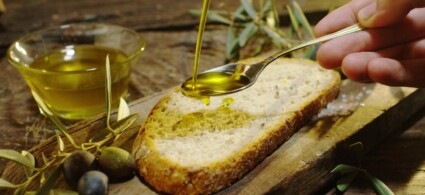
Tuscan Extra Virgin Olive Oil
Discovering Tuscan Extra Virgin Olive Oil. How to Recognise It and Production Standards.
Read more
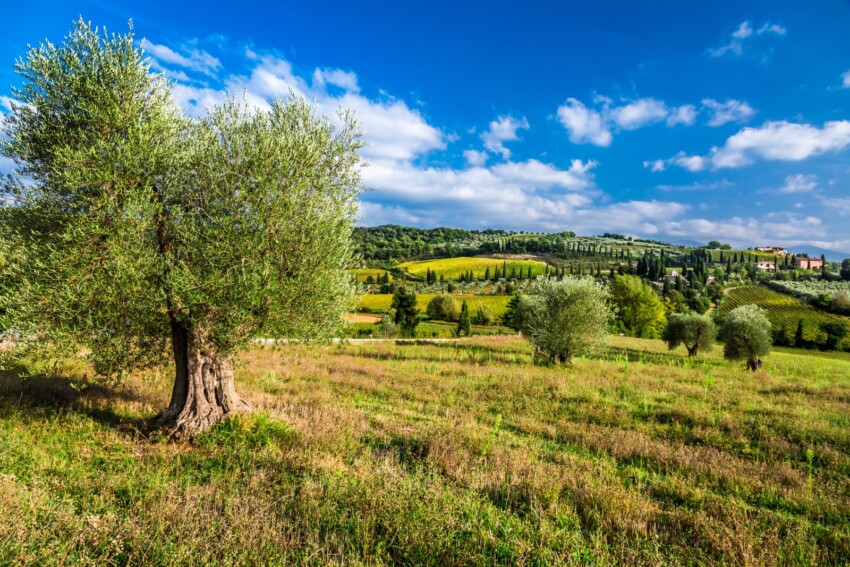
Routes to discover the Lands of Siena, divided into areas with similar characteristics or particular points of interest.
When searching for producers of DOP olive oil, you might follow one itinerary or move freely between them: what matters is discovering new corners of Siena’s territory, along roads that aren’t always the most direct or well-known, but lead to truly unique places.
To the north of Siena, Monteriggioni, an almost intact medieval castle, still appears to rise as a bastion—today not against the centuries-old enemies of the Siena Republic, but against time itself. Dante himself wrote that “…upon the circular ring Monteriggioni crowns itself with towers,” referring to the defensive walls that have survived intact, though the towers have unusual proportions for medieval construction: they were actually lowered in the 16th century to accommodate the demands of artillery and firearms.
A belt of olive groves accentuates the contrast between the site’s defensive compactness and the beauty of the surrounding countryside. Strength and gentleness, after all, are the age-old duo that characterises Tuscan countryside. In its uniqueness, Monteriggioni reflects the particularity of its construction. A frontier castle between Florence’s and Siena‘s territories, often contested between the two, it still allows us to imagine the life of a garrison posted to guard a much-coveted territory.
The settlement of low houses within the ring of fourteen towers is broken up by small squares, tiny courtyards and vegetable gardens. On the piazza stands the Parish Church dating from 1219, with its travertine and pietra serena façade, adding austere grace to a place that has retained the mark of military functionality. Fewer than 50 inhabitants maintain real life here, dispensing the magic of an atmosphere suspended in time.
Descending from Monteriggioni’s olive-covered hill, our route crosses the Val d’Elsa, a territory rich in history, evoked by figures such as Dante and Boccaccio, who was born and lived here in Certaldo, and the site of the historic conflict that long opposed Florence to Siena. Not far away lies Abbadia a Isola.
This small medieval village, built beside a Cistercian abbey (11th century, reworked in the 18th), offers evocative views of the surrounding countryside and of Monteriggioni itself.
Colle Val d’Elsa comprises two centres: Colle Bassa and Colle Alta. The first, of modern and contemporary date, reveals its character in the vast central piazza, which speaks of markets and fairs. As a city of manufacturing and commerce, Colle is famous for its crystal.
The shops deserve a visit, perhaps in the upper, medieval part, accessed through an arch dominated by Palazzo Campana. The Via di Castello, also uphill, should be walked with careful attention to the buildings flanking it—palaces and tower houses—leading to the Renaissance cathedral. Colle is a genuine, vibrant city. The surrounding countryside and landscape are, in a sense, distant.
So it won’t waste time on your itinerary to visit at least one of the city’s three most important museums: the Bandinelli, an archaeological museum; the Museum of Sacred Art in the bishop’s palace; or the Civic Museum in the Palazzo dei Priori, with its richly decorated façade. You won’t be disappointed. Poggibonsi, whose historic centre suffered serious destruction in the Second World War, preserves a medieval fortress. This impressive architectural complex of early medieval origins has undergone numerous developments over the centuries.
Of considerable interest is the recent archaeological recovery of the area, integrated into an elaborate and rich park project, innovative in its approach and the solutions used to illustrate the site’s historical evolution, such as the planned reconstruction of the early medieval village.
Heading towards San Gimignano, in keeping with the spirit of these itineraries, we don’t take the main road but pass through the basilica and convent of San Lucchese. It was St Francis himself who set a local man named Lucchese and his wife on the path to sainthood. He was buried in the church that would soon become a basilica, lending his name to this splendid complex. The interior, of extraordinary richness, features works by Giovanni della Robbia and Bartolo di Fredi, among others, and frescoes by Cennino Cennini and Taddeo Gaddi.
The route we follow to reach San Gimignano is unforgettable, especially towards its end, when the city begins to appear around every bend in the road, its towers—though fewer than once existed—seeming dense and numerous. Try to explore the historic centre, vast and worthy of a proper city given the period it was built, first by wandering down side streets and from there reaching the two main thoroughfares.
You’ll be rewarded with unexpected architectural vistas opening before you. Alternatively, having entered through Porta San Giovanni, walk along the street of the same name, feeling like one of the countless wayfarers who preceded you through the centuries. The palaces lining the street easily transport you back in time: the remains of the Romanesque-Pisan church of San Francesco, the 13th-century tower houses, the Cantagalli tower, the Pratellesi palace… culminating at the Becci arch, flanked by the tower of Palazzo Becci and the Cugnanesi tower.
We reach Piazza della Cisterna, immersed in the 13th and 14th centuries. We can choose to continue our visit outside, playing the role of visitors from another era and letting the surroundings stir our imagination, or pause over one or more of the artistic gems found everywhere. If atmosphere is what you seek, don’t miss a visit to the Oratorio di San Giovanni, where a sweetly gentle Annunciation, attributed to Mainardi (1482), smiles down from above the 14th-century baptismal font by Giovanni di Cecco, before entering the Collegiata. We find ourselves surrounded by frescoes from the most famous masters of the 14th and 15th centuries: Lippo Memmi, Bartolo di Fredi and Domenico Ghirlandaio.
We can admire them with a critic’s eye, placing them among the greatest works of that period, or simply observe them with a modern visitor’s curiosity, rediscovering in the tiniest details—a blanket, a vase, a gesture—a connection with people like us who lived more than six centuries ago. The setting justifies such reverie.
Beyond the city walls awaits lush countryside covered with vineyards and olives. After savouring more of the magical atmosphere San Gimignano generously offers, walking along the path outside the walls and perhaps descending to the ancient springs, we continue towards Certaldo, at the edge of Siena’s territory and now in Florentine lands.
Along the way, the 17th-century sanctuary at Pancole and the remains of a Romanesque abbey (11th century) at Badia a Elmi deserve a stop. Arriving in Certaldo, which now belongs to Florence province, it’s worth entering the upper historic centre with its handsome medieval palaces and the recurring memory of Boccaccio that reappears several times during your walk.
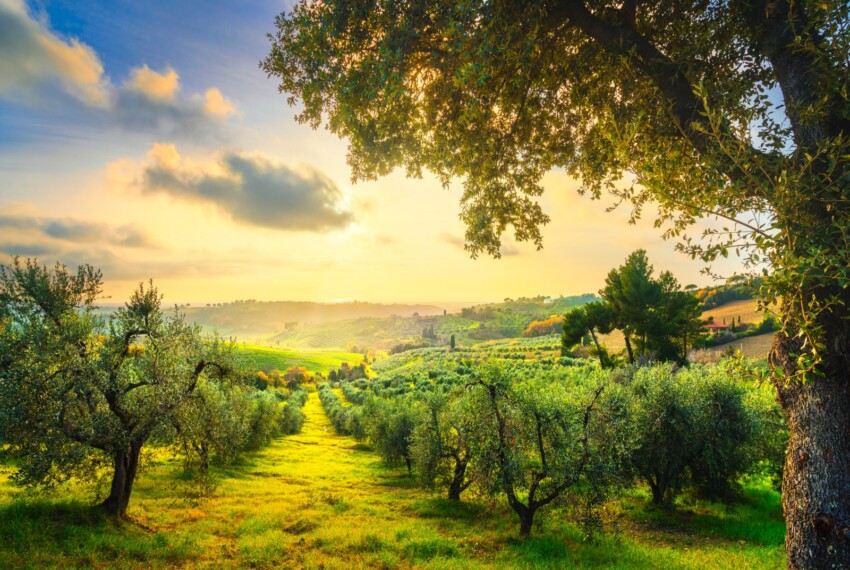
An unusual route but one of great emotion. The road initially offers views of the Val d’Orcia as far as Mount Amiata as it might have appeared in centuries past. This enchanting scenery is then animated by rocks and precipices, becoming similar to the landscapes that formed the backdrop to many early Renaissance paintings.
San Giovanni d’Asso appears gathered around its castle (13th-14th centuries), almost guarding the gateway to the “crete senesi”. Don’t miss San Pietro in Villore, a Romanesque church, intimate and precious in its purity. We continue towards Asciano, passing through Chiusure. This is a road to be travelled slowly, catching sight of the details, near and far, that reveal themselves at every rise and curve. The “crete” are among the landscapes that have most impressed travellers over the centuries—in some periods enchanted, in others even disturbed by this unusual territory. Turning left towards Monteoliveto, everything suddenly changes: between fragile walls, above chasms that seem ready to swallow the gentle undulations of the hills, the abbey emerges, enveloped by the dark green of ancient trees. The impressive badlands introduce us to the atmosphere of the site.
Silence is part of the charm of the place chosen by the Olivetan order to build the monastic complex (1313), which for centuries welcomed the sons of Siena’s finest families. The solemn and austere architecture is striking, as are the magnificent inlaid choir stalls inside the church, the cloister frescoed by Luca Signorelli and Il Sodoma, and the library. The presence of the monks, cordial and discreet, makes it a lived-in place, a stop that restores the regenerating dimension of the spirit. We return towards Asciano, immediately branching right towards Trequanda, through the fantastical “crete”.
A privileged route, barely dotted with a few farmhouses in the colours of Siena’s land. The diversity of the seasons is here a dimension to be savoured. The lustre of olives, the subtle shades of the sky, the very presence of humanity, revealed now by a ladder during harvest season, now by barking dogs, now by wisps of smoke curling from a chimney, remind us that time can flow in harmonious rhythms.
Trequanda clusters around its round, reassuring tower. In the tiny historic centre, a small square: the customary beauty of the whole is interrupted by the chequered façade in ochre and white stone of the small Romanesque church. It’s a gem: more a memory than a monument, the work of labour rather than a masterpiece, yet one that carries the gift of transporting us to the atmosphere of those times when people went to God’s house out of necessity and love alike.
Continuing towards Pienza, we enter the small village of Montisi, a well-preserved example of life in a typical Senese borough. The enormous fortified granary at the entrance recalls the wealth of the Siena Hospital of Santa Maria della Scala, based on vast countryside properties. The village churches, such as that of the Annunziata, preserve splendid works of the Siena school and a small but significant museum of the local Confraternity, which for centuries managed funerals for the dead.
We continue to Castelmuzio, a village that seems lost and presents, on one side, corners of Tuscan idyll, and on the other, the majestic Romanesque parish church of Santo Stefano a Cennano (dating from the 9th century). Next we reach Sant’Anna in Camprena, a solitary monastery (1324) whose refectory features important frescoes by Il Sodoma, recently restored. All around, art continues in the landscape. We arrive at Pienza. Born from the ambitious dream of one of its citizens who became pope, Pius II Piccolomini (1405-1464), Pienza was meant to represent the ideal Renaissance city.
The pope’s death interrupted the dream, but fifty thousand florins remained, allowing Bernardo Rossellino to raise, in just a few years (1459-1462), the cathedral and the family and episcopal palaces of the Piccolomini around the main square. A visit is essential: passing from the cathedral to the palace and its garden, the perfection of spatial relationships induces genuine sensations of physical wellbeing. At all hours, the piazza emanates the palpable charm of the ideal city it was meant to be.
On summer evenings it echoes with the cheerful cries of children on their privileged playground. Around it, on the stone steps and the café tables, where famous people in disguise and ordinary folk have sat, some enchanted by such beauty, others accustomed to it, adults exchange end-of-day gossip, with that music the “Siena dialect” makes resound even in ears to whom Italian is incomprehensible. Having walked the main street, you must lose yourself in the side streets, lingering over details: flowers on a staircase, a shop window, a courtyard, a cornice… Walking through this open-air museum of life in the first ideal city in history, we also enter the covered museum: housed in the newly restored bishop’s palace, it contains a rich collection of works linked to Pienza’s history.
The route we recommend for Monticchiello branches left immediately upon leaving Pienza towards Spedaletto and Bagno Vignoni. The lack of asphalt forces the right pace to savour the unfolding of this itinerary, which has been called a heritage to preserve in all its rarity. The farmhouses and cypresses scattered like magic, the play of near and distant horizons, the scents and fragrances surrounding us in any season, make you want to walk part of the way to fully appreciate it. At Monticchiello, even before passing through the gate in the walls, we enjoy the panorama spanning the Val d’Orcia. The profiles of Radicofani, San Quirico, Montalcino, Mount Amiata… outline themselves on the horizon.
The 13th-century walls enclose a village without monumental highlights, but certainly not lacking great charm. The apex of scenic beauty is reached on the route from Monticchiello to Spedaletto. This stretch should be travelled slowly, as the desire to stop and admire becomes irresistible.
These are itineraries incompatible with speed, so take this road whenever possible. The climb to reach Montepulciano will be nothing but double the pleasure.
Montepulciano faces Pienza across a valley, once marshland, that long divided Siena‘s territory from Florentine Montepulciano. Its Florentine allegiance is evident at first glance, descending from Porta al Prato towards the Piazza Grande, where the cathedral dominates, surrounded by imposing palaces. The churches and palaces lining the descending streets allow you to span from Gothic to Renaissance to Baroque styles. We recognise the hand of distinguished artists and architects in the façades and interiors, from Michelozzo (the favourite architect of Cosimo I de’ Medici), to A. Pozzo, to Antonio da Sangallo the Elder.
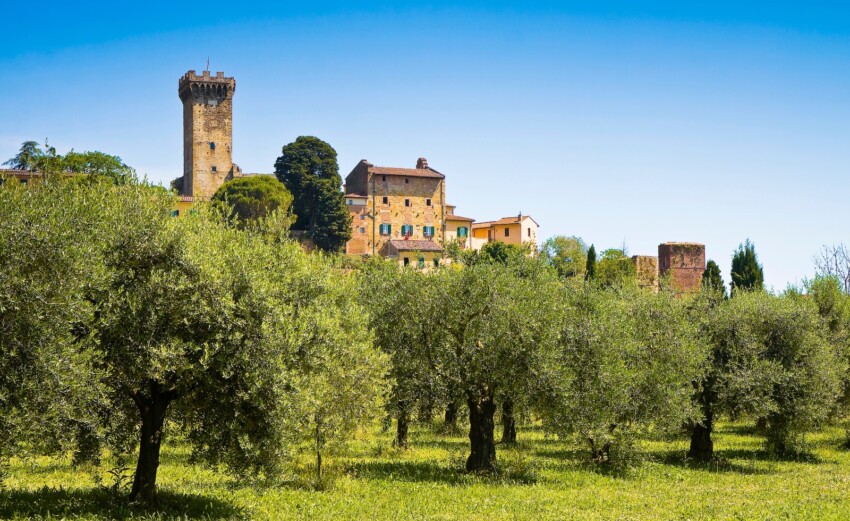
One of the region’s signature products, stretching across the Pisan Mountains, is olive oil, renowned for its quality, which owes everything to the favourable climate and terrain that make this oil one of Italy’s most prized.
The Pisan Mountains Oil Route runs along the foothills road, passing through the municipalities of Vecchiano, San Giuliano Terme, Calci, Buti and Vicopisano, weaving between olive-terraced slopes, mills, rural farmhouses nestled in the countryside and elegant country villas.
The seaward side of the Pisan Mountains is particularly characterised by small terraces where olive trees, chiefly of the “frantoio” variety with their golden-green hue, have been cultivated since Medieval times.
Pisan oil production begins with careful selection of olives harvested by hand directly from the tree and pressed locally, before the fruit has naturally ripened.
The olives are collected in traditional orange nets and transported to the mill for mechanical pressing, with no chemical refining to compromise their integrity.
The flavour is best appreciated drizzled raw over bruschetta (also called fettunta or crogiantina). Oil from the Pisan Mountains, recognised as an additional geographical indication of Tuscan extra virgin olive oil with Protected Designation of Origin, displays a yellow hue with green undertones, a light fruity aroma and a fruity flavour with subtle peppery notes and a distinct sweetness. From autumn through the year’s end, numerous food markets, festivals celebrating oil, chestnuts and mushrooms take place across various Pisan Mountain locations.
Throughout the entire journey, the landscape alternates between plains, rolling hills and mountain ridges. The entire area is rich in natural springs and limestone caves. You’ll discover various archaeological finds testifying to Roman and Etruscan settlements, not to mention Medieval villages.
Passing through Calci, Capannori, San Giuliano Terme, Vicopisano and Buti, you’ll encounter stately villas built by wealthy families from Pisa and Lucca as summer residences, whilst the villages themselves feature Romanesque parish churches and chapels. The mills, whether historic or modern, punctuate the landscape, as do the agriturismo businesses offering visitors genuine hospitality.
The mild, often sunny climate is perfect for various outdoor pursuits: horse riding, mountain biking along dedicated trails or cycling uphill on a road bike, or undertaking rewarding trekking adventures.
The towns, naturally connected by modern roads, are also linked by an ancient Medieval network of mule tracks, cart roads and footpaths that have for centuries connected the entire territory.
We begin our journey in the municipality of Calci, situated in the ValGraziosa (the valley has borne this name since 1366, previously called Valle Buia, when the imposing Certosa monastery was built). Until the 1970s it was inhabited by Carthusian monks, but now houses a historical-artistic museum and a natural history and territorial museum.
At the town centre stands the Romanesque-Pisan parish church, whilst surrounding it along the mountain slopes are numerous ancient villas, mill ruins (one perfectly preserved and open to visitors: the Gangalandi mill), monasteries and churches.
We now follow the Zambra stream, which leads us to Mount Serra along a scenic road. From here, being the highest point in the mountain complex, we can admire the sea and, on clear days, the islands of the Tuscan archipelago.
Continuing towards San Giuliano Terme, we reach the village of Agnano, where you’ll find one of Tuscany’s oldest villas, the Medici villa that once belonged to Lorenzo the Magnificent.
At Asciano we can see the Medici aqueduct stretching across the plain all the way to Pisa. We’ve now arrived at San Giuliano Terme, which under the Habsburgs of Lorraine in the 18th century experienced its golden era and whose celebrated thermal waters continue to attract growing numbers of visitors today.
Continuing along the mountainside, after passing through Rigoli, Molina di Quosa and Pugnano, we reach Ripafratta, which still marks the boundary between Pisa and Lucca territories.
The fortress (rocca) visible above the town was built precisely for this reason, functioning as a defensive system controlling this crucial communication crossroads.
Vecchiano nearby also held defensive and garrison importance, equipped with a castle overlooking the town, later converted to a monastery and now a church. This too is olive-growing country.
In the mountainous stretch between Ripafratta and Agnano, you can admire the Romanesque parish churches of San Giovanni, Santa Maria a Pugnano and San Marco a Rigoli, alongside various villas dating from the 18th-19th centuries.
Alternatively, from San Giuliano taking the scenic road brings you to the “foro”, which leads into Lucca territory. The foro, constructed in 1927 along with the road, follows the ancient route that, via Dante’s Pass, was the lowest crossing of the Pisan mountain range.
Characterised by beautiful hills ideal for producing excellent wines and especially olive oil, Capannori extends from the Pisan Mountains to its south to the Pizzorne plateau to its north, comprising various Early Medieval villages and settlements.
Dotted across its territory are many bell towers and watchtowers, particularly in the southern section: Pieve di Compito, Colle di Compito, Castelvecchio di Compito, Sant’Andrea di Compito, Ruota, San Ginese, Quamo and Vorno.
In the northern section, encompassing Segromigno in Monte, San Gennaro, Gragnano, Sant’Andrea in Caprile, Petrognano, Matraia, Camigliano and Tofori, you’ll find various monumental villas.
At Sant’Andrea di Compito, every year (the last three weekends of March) Italy’s famous “Antiche Camelie della Lucchesia” event takes place, as camellias have thrived here for centuries.
Oil and wine cultivation in this area has been documented since the 11th century, and by the 15th century these products were renowned throughout Europe and prized by Popes and Grand Dukes.
At Guamo you can admire the Nottolini aqueduct that once carried water to Lucca. From Compitese, we take the foothills road along the eastern slopes of the mountain and arrive at Buti, an ancient settlement that has been destroyed and rebuilt multiple times.
The town is dominated by Castel Tonini, which alongside 16th and 17th-century residences and palaces, parish churches and chapels, retains the character of a Medieval village.
Excellent olive oil is produced here too, and chestnuts are worked both as traditional crafts (baskets and hampers) and as food products.
Leaving Buti, we continue along the road through Castel di Nocco, arriving at the municipality of Vicopisano, an ancient village with Medieval structures still intact.
We enter the village through its sole remaining Medieval gate, the Tower of Four Doors; from here we can admire the fortress designed by Brunelleschi, the praetorian palace, the town hall and the towers of intact Medieval townhouses.
Outside the walls stands the Church of Santa Maria (12th century) and a few kilometres from the centre lie the parish churches of San Jacopo and Sant’Andrea.
From Vicopisano, a forest road leads to the fortress of Verruca. Along this very road you’ll find the ruins of the Abbey of Sant’Michele Arcangelo and the hermitage monastery complex.
The fortress of Verruca, dominating the Pisan plain to the sea, held considerable strategic importance and was rebuilt to Leonardo da Vinci’s design following the Florentine conquest.
Various hamlets have their own features: the Oratory of Castellare di San Giovanni alla Vena, the Uliveto Terme thermal establishment and the parish church of San Giulia at Caprona.
From Caprona with its tower, we enter the Crespignano valley, home to several hamlets belonging to Calci, including Montemagno, Castel Maggiore and the 13th-century Nicosia monastery, nestled against the Verruca escarpment, composed of the extremely hard stone used to create the millstones for all the mills in the area.
 Hotel
Hotel 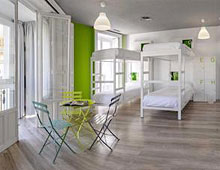 Budget accommodations
  Apartments
  Family Hotel
 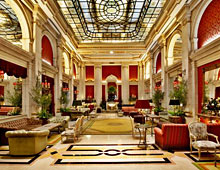 Luxury Hotel
 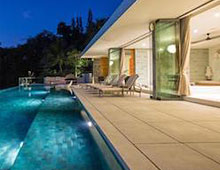 Resorts