Bestseller
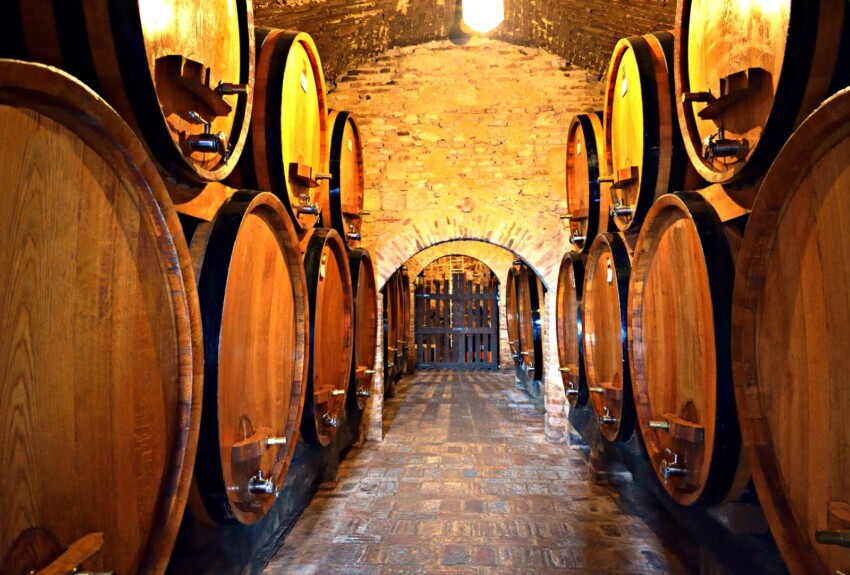
Florence: Chianti Wineries Tour with Wine Tasting
From 49,50 €
Buy the ticket
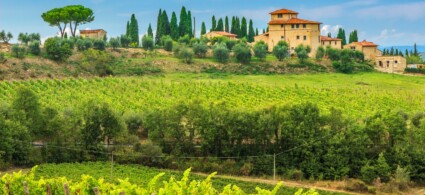
Tuscany is the land of the Medici, the Florence Cathedral and the Leaning Tower of Pisa, a place of art and culture, but it is also a fertile and lush land, renowned worldwide for the excellence of its wines. Rows of fine grapes grow on gentle hills, amidst splendid landscapes and ancient pathways that become true itineraries to explore for those wishing to lose themselves among colours and local gastronomic traditions.
The Wine Roads of Tuscany, along with those dedicated to Local Flavours, represent some of the most fascinating routes to discover the lesser-known corners of the region: villas and farmhouses, estates and cellars where you can taste the finest labels. Seeing where the world’s most famous grapes are grown, learning about production techniques, venturing into farms and savouring local products also means getting to know the people of Tuscany more closely, their hospitality and traditions.
An ideal thread connects the vineyards of Colli di Candia and Lunigiana to those of Montecarlo, the reds of the Chianti Rufina and Pomino route to those of the Medici road of Carmignano. Routes through ever-changing landscapes and unforgettable vistas, such as those enjoyed when crossing the Pisan hills or the Florence hills, tell the story of their products, famous the world over. How could you not get lost in San Gimignano amongst towers and Vernaccia, or in the Pistoia Mountains amid ricotta and the delights of gastronomic tradition?
The itineraries that combine the pleasure of art with the discovery of historic villages, blending tradition and tasting, are manifold and varied, spanning from one side of the region to the other. From the sea, with the delicacies of the Etruscan Coast or Maremma, to the countryside of Montespertoli or Montepulciano and their celebrated labels. The roads leading from Siena to Arezzo speak of wine and the full-bodied flavour of its reds, whilst the olive groves of Montalbano, the marrons glacés of Marradi in Mugello and the villages of Casentino and Amiata lead you to an undiscovered corner of Tuscany, made up of the fruits of the earth, agriculture and genuine hospitality.
Travelling the Tuscan Wine Roads means far more than simply driving through vineyards and cellars: it means above all stopping and tasting. Most of the businesses participating in the official circuits offer guided sessions with a wine expert, during which you’ll learn to recognise the aromas, colours and structure of each wine. Some estates offer vertical tastings, that is, tastings of different vintages of the same wine, a valuable tool for understanding how the territory changes over time.
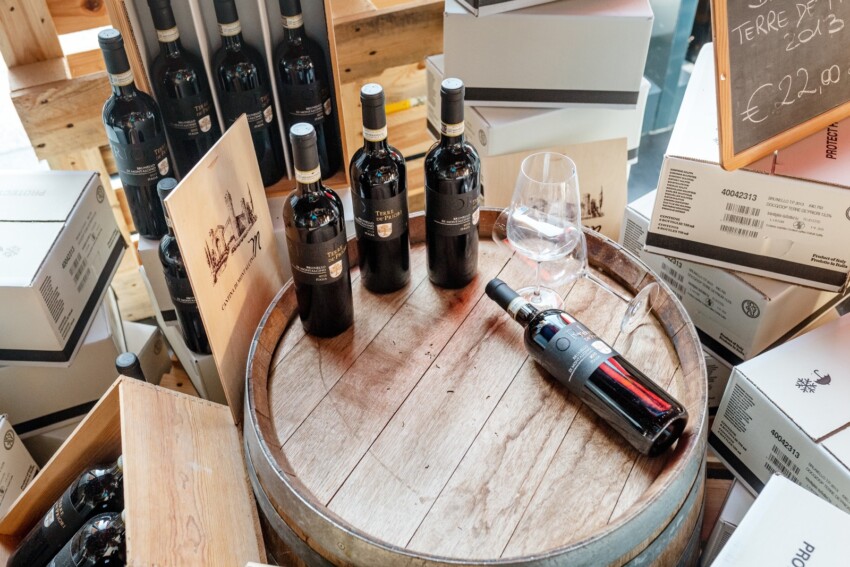
The Brunello di Montalcino is arguably the world’s most celebrated Italian red wine. It is produced entirely from Sangiovese grapes—locally called Brunello—in the municipality of Montalcino alone, in the province of Siena, across approximately 2,000 hectares bounded by the valleys of three rivers: the Orcia, Asso and Ombrone. Its modern history began in the nineteenth century thanks to Clemente Santi’s studies on the Sangiovese Grosso clone and, especially, to the enterprise of his grandson Ferruccio Biondi Santi, who recognised its exceptional ageing potential. In 1980, Brunello became the first Italian wine to obtain DOCG status, Italy’s highest quality designation, and its reputation has continued to grow ever since amongst enthusiasts worldwide.
The wine is characterised by a ruby-red colour that turns to garnet with age, an intense and complex bouquet with notes of undergrowth, wild berries, spices and vanilla, and an elegant, full-bodied and vigorous palate, with integrated tannins and an extremely long aromatic finish. The regulations require a minimum of five years’ ageing before it can be marketed—at least two in wooden barrels and four months in bottle—which rises to six years for the Riserva. This makes it a wine for contemplation and an ideal match for red meats, game and aged cheeses such as Pecorino from Pienza. The Rosso di Montalcino DOC, produced from the same grapes but with shorter maturation, is the more accessible alternative for exploring the denomination without waiting for great vintages.
With over 200 producers active in the denomination, the choice is vast and varied. Fattoria dei Barbi—founded by the Colombini family in 1352 and producing Brunello since 1892—is the oldest cellar and the first to export this wine to the United States and Asia. Guided visits among century-old barrels and bottles conclude with a tasting curated by the staff and access to the on-site shop. Cantina Col d’Orcia, run on organic and biodynamic principles, welcomes visitors year-round from Monday to Saturday: the tour includes a stroll through the natural park of the estate, a cellar tour and a guided tasting.
Cantina Capanna, founded in 1957 by the Cencioni family on the north slope of Montalcino and amongst the founders of the Brunello Consortium, offers tastings from Monday to Sunday with multiple sessions throughout the day, including vertical tastings of the most celebrated Riserva vintages. The panoramic restaurant Il Passaggio by Capanna allows you to pair tastings with contemporary Tuscan cuisine. Those seeking a more intimate experience will find one of the most original formulas at Piombaia: the “blind” tasting, in which the wine expert presents five wines without revealing the vintage or style, stimulating direct sensory analysis. For those wishing to immerse themselves in a luxury setting, Castiglion del Bosco—an entire medieval village owned by Massimo and Chiara Ferragamo and transformed into a resort with spa, gourmet restaurants and golf course—offers guided cellar tours and, during harvest season, Harvest Experiences open to all.
The municipality of Montepulciano is home to approximately 15,000 inhabitants and covers an area of 165 km², making it the largest of the ten municipalities in the Valdichiana Senese. It sits on a hilltop at 605 metres above sea level, from which you can survey a landscape dotted with olive groves, vineyards and the distinctive chalk hills modelled by cypress trees.
From the Town Hall’s Renaissance palace, you can glimpse the Sibillini Mountains and Cimone, and on the clearest days, the Gran Sasso d’Abruzzo. From Montepulciano, the Val d’Orcia is easily accessible, with Pienza, San Quirico and Bagno Vignoni, as well as Amiata, Umbria and Lazio.
The origins of Vino Nobile di Montepulciano are ancient and intimately linked to the city’s history: the presence of cellars integrated into the historic centre is the most evident testimony. As early as 1350, clauses were established for the commerce and export of wine. Pope Paul III praised its qualities in the second half of the sixteenth century, Francesco Redi defined it as the “King of all wines” in his Bacco in Toscana, and celebrated admirers from overseas such as Thomas Jefferson and Martin Van Buren contributed to its international fame.
The Vino Nobile di Montepulciano Wine Road Association, established on 8 April 1998, aims to enhance the overall image of the territory, rich in cultural traditions as well as great wine-growing potential. Its information centre is located in the Palazzo del Capitano del Popolo, overlooking the magnificent Piazza Grande alongside the Town Hall, Cathedral and several Renaissance palaces.
The wine tourism itineraries in the area are divided into four routes: Historic Centre, Cervognano, Gracciano and Valiano. Special signposting makes it easy to navigate among cellars, farmhouses, hotels, restaurants and wine shops. Every participating establishment contributes to creating an offering that combines wine and food, nature, art and local culture.
In the historic centre, the Cantine De’ Ricci are among the most enchanting to visit: a veritable Gothic-Renaissance cathedral carved into rock beneath historic palaces, where narrow passages, stone staircases and hidden crypts hold the Vino Nobile. The guided tour concludes with a tasting accompanied by cold cuts and bruschetta with Tuscan oil. Equally fascinating is Cantina Talosa, which offers a journey through Montepulciano’s underground city with a tasting of four wine types, including Vin Santo DOC, and also features Villa Talosa for those wishing to stay amongst the vineyards of the Val di Chiana.
Outside the walls, the Cantina Poliziano of the Carletti family is a essential stop for anyone wishing to understand the complexity of the Nobile: it was the first company in the denomination to produce a cru wine, the iconic Asinone. Cantina Dei, meanwhile, offers the EnoTour through four areas of the cellar, where wooden barrels blend with travertine columns, and includes a guided tasting of the most representative wines accompanied by the family’s story.
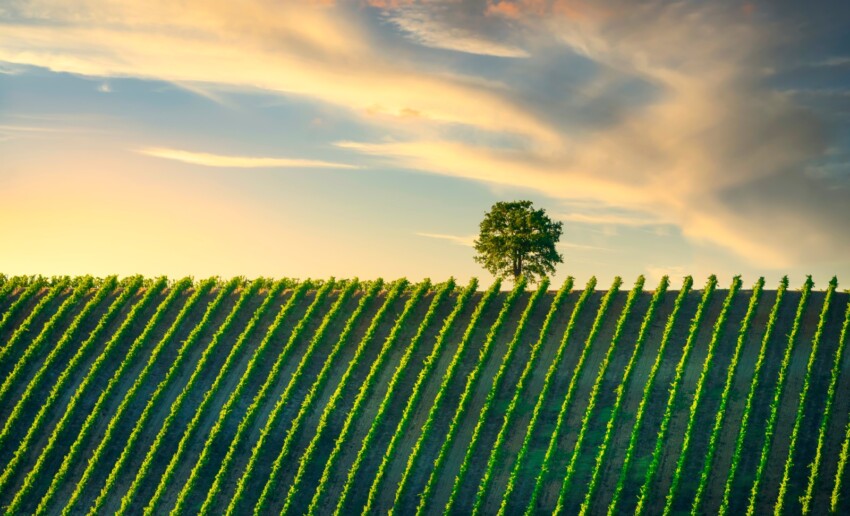
Immediately east of Florence lies the territory of Chianti Rufina DOCG and Pomino DOC, two wines of different character appreciated for centuries. On these hills stretching towards the Apennines, ancient fortified residences, sixteenth-century villas and Romanesque churches tell the story of a great Tuscan civilisation still largely untouched by mass tourism. Here Giotto spent his artistic adolescence and the great Florentine families built their country seats.
The Chianti Rufina and Pomino Wine Road develops across five municipalities: Pontassieve, Pelago, Rufina, Londa and Dicomano, and encompasses sixteen wine-producing estates along with restaurants, farmhouses and artisans. One of its most valuable characteristics is its proximity to Florence, making it easily accessible even for a half-day excursion.
The wine producers are all from the area, with deep family roots in the region’s history. Medieval fortified residences with underground cellars, ancient strongholds transformed into country homes, Renaissance villas dominating the hills: each estate offers different impressions, and together they tell centuries of local wine history. In the restaurants participating in the Wine Road, you’ll find ancient flavours thoughtfully reinterpreted: cold cuts, cheeses, soups, homemade pasta, Mugello steaks cooked with Chianti Rufina, and traditional desserts.
Tenuta di Castello Nipozzano, in Pelago, is the most celebrated address of the denomination: owned by the Marchesi Frescobaldi, it produces Chianti Rufina DOCG and Pomino DOC among historic vineyards and extraordinary landscape. The cellar is open to visitors by appointment and houses the bistro Il Quartino, with a panoramic terrace overlooking the vineyards and zero-kilometre cuisine featuring IGP Chianina beef.
For a more intimate experience, Marchesi Gondi – Tenuta Bossi in Pontassieve offer visits within a historic estate where the noble Florentine family has cultivated vines for centuries, with tasting in a period-style room. Fattoria di Grignano, in the Montefiesole area of Valdisieve, is another highly valued property: 600 hectares of vineyards, olive groves and woodland on an estate that was a Medici possession in the fifteenth century, open to visits with tastings of its Chianti Rufina and extra-virgin oils produced in the on-site mill.
The Pisan wine region extends from the hills south of the city of Pisa along the Era stream, with a landscape of plains and hills reaching up to 200 metres in elevation. The wine-making tradition of the area is documented from the fifteenth century onwards, when period records mention wines produced on the Pisan hills. With the advent of the Tuscan Grand Duchy, agriculture and wine-growing were further developed: historical sources attest that excellent wines reached the Florence market, including an appreciated Trebbiano.
The “Annals of Camaldoli” mention a place called “Curtis San Torpis”, the subject of a donation in 780 to the Abbey of San Savino, already known for producing white wine. In 1965, local wine growers, united in a consortium, chose to hark back to this historical tradition by naming the wine of the area after the Roman centurion Torpè. Among the most important recognitions is the Montescudaio Red DOC, produced with Sangiovese, Malvasia del Chianti and Vermentino grapes, characterised by fruity aromas and a dry, harmonious flavour.
The area between Montescudaio, Guardistallo and Montecatini Val di Cecina concentrates most of the wine-producing estates in the region. In the surroundings of Montescudaio and at Castellina Marittima you’ll find cellars open to visits by appointment, where you can taste Montescudaio DOC in its White version based on Trebbiano and Red version based on Sangiovese, accompanied by local products such as pecorino cheeses and extra-virgin oil. The estates in the area are generally small and family-run, which makes visits particularly authentic: the producers personally guide you through the vineyards and cellar, telling the story of a denomination still little known but of great character.
The Arezzo Wine Route Through the Lands of Arezzo winds for approximately 200 km through various wine regions: Chianti DOCG, Chianti Colli Aretini DOCG, Colli Etruria Centrale DOC, Valdichiana DOC and Cortona DOC. The route begins in San Giovanni Valdarno heading towards Montevarchi, passing through terraced vineyards, medieval villages and castles, until reaching the heart of the Valdichiana valley.
Along the way you’ll encounter the Fineschi Rose Garden in Cavriglia — home to over 8,500 rose varieties — the Galatrona Tower, the Church of Petrolo and the fortified villages of the Valdambra. In Montebenichi you can admire the beautifully restored Aragonese-style castle, whilst in Cortona Etruscan and Roman excavations and the Museum of the Etruscan Academy offer an unparalleled view across the entire Valdichiana.
The route concludes in Arezzo, a medieval city at the centre of four valleys rich in history and culture, renowned for its monthly Antiques Fair and for works by Piero della Francesca, Giorgio Vasari and Andrea della Robbia. Further information is available at the information point in Piazza Grande. A complementary information point is also located in the Valtiberina area.
The Castello di Gargonza, near Monte San Savino, is one of the most charming destinations along the Arezzo Wine Route: an intact medieval village turned into a period residence, producing Chianti DOC and Chianti Colli Aretini DOCG in a landscape of striking beauty, with cellar visits and tastings paired with local produce.
In the Cortona area, the Cortona DOC designation has given rise to a group of producers who primarily make Syrah, a varietal that thrives in these clay soils and expresses particular intensity here. Among the key estates in the Arezzo Valdichiana, the Castiglion Fiorentino area deserves attention, where several wineries offer tastings of Valdichiana DOC paired with cellar visits and, on request, lunch with local products.
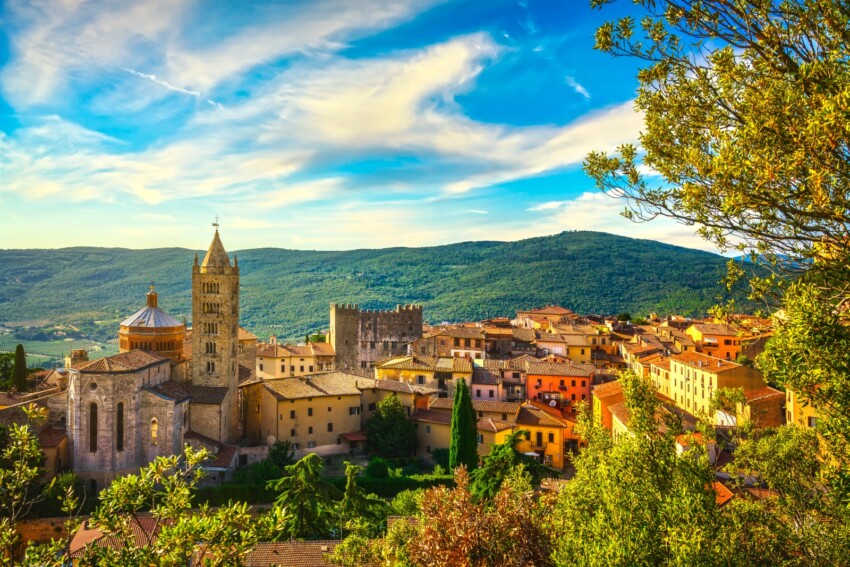
The Monteregio Wine Route winds through the Metalliferous Hills of upper Maremma in the Grosseto area, in a natural landscape where Tuscany’s characteristic features blend with the wild beauty of the Maremma. The itinerary starts by discovering wineries, then expands to include farmhouse restaurants, wine bars, restaurants and producers of local specialities, across a territory rich in medieval history and environmental sites of great value.
The Monteregio DOC comprises eight varieties, including Red, Rosé, White, Vermentino, Vin Santo and Vin Santo Occhio di Pernice, showcasing grape varieties rooted for centuries in the Grosseto winemaking heritage. The route through Roccastrada municipality touches the main locations in the area: Ribolla, Montemassi, Sassofortino, Roccatederighi and Sticciano Scalo, alternating between flat and hilly terrain. In Roccastrada the Museum of the Vine and Wine, housed in an ancient cellar carved into the rock in Piazza dell’Orologio, displays important archaeological finds and a panoramic terrace overlooking the Maremma landscape.
The Monteregio route passes through very diverse wine estates, from large farms on the hills of Massa Marittima to small family-run businesses around Roccastrada. One of the most appreciated features of this wine route is the chance to combine cellar visits with discovering medieval villages of rare charm: Massa Marittima, with its extraordinary Piazza Garibaldi and Romanesque cathedral, and Monterotondo Marittimo, with its geothermal springs, are stops that fit naturally into the food and wine itinerary.
The local wineries produce Vermentino DOC — pale straw-coloured with greenish hints, dry and velvety on the palate — which often proves to be the most delightful discovery for visitors unfamiliar with this designation. The Museum of the Vine and Wine in Roccastrada in Piazza dell’Orologio serves as the orientation point for the entire route: here you’ll find up-to-date information on open wineries, producers welcoming visitors and wine shops where you can purchase local labels without booking.
Carmignano wine has been renowned for over six centuries: the merchant Francesco Datini from Prato was already buying and reselling it at premium prices. Major recognition came with the protective decree issued by Cosimo III in 1716, which established rules, controls and production zones for the four most prized wines of the Grand Duchy, including Chianti and Carmignano.
The Congregation of Carmignano Wines obtained DOCG status for Carmignano — composed primarily of Sangiovese and Cabernet — and for Chianti Montalbano, whilst “Vin Ruspo” and “Vin Santo” are excellent DOC productions. The latter, made from white grapes dried on mats until January and aged in small barrels in the attics, represents one of the highest expressions of the local winemaking tradition.
Francesco Redi, in his Bacchus in Tuscany, warned: it would be great folly, and the worst of sins, to drink Carmignan when it has been watered down!
The Museum dedicated to the Medici Wine Route of Carmignano is a starting point, not a destination: visiting its rooms prepares you for visits to the wineries, villas, churches, Etruscan tombs and the Quinto Martini Museum Park. The entrance is marked by the seventeenth-century colours of Bartolomeo Bimbi’s Grapes, in a corridor that evokes the atmosphere of a vineyard row.
The exhibition route dialogues between the territory’s history and wine history: on one side the Villa of Artimino and the Quinto Martini Museum Park, on the other an Etruscan crater, a Renaissance pitcher and a flask deconstructed by the artist.
The Tenuta di Capezzana is undoubtedly the iconic winery of the denomination: a sixteenth-century Medici villa surrounded by vineyards and olive groves, with views reaching the dome of the Florence Cathedral. The Contini Bonacossi family has managed it since 1920 and offers various visiting experiences, from a stroll through Countess Lisa’s rose garden to tastings in the ancient underground cellars, plus Jeep excursions through the vineyards and picnics in the vines. Guided sessions include up to five wines — including Villa di Capezzana DOCG, Barco Reale and Vin Ruspo — paired with selected cured meats and cheeses.
The Lucca hills offer landscapes of rare beauty: paths through rural traditions, sixteenth and nineteenth-century villas of incomparable charm, hills lined with olive and century-old vineyards, churches and bell towers rising high above the landscape. The Colli Lucchesi Montecarlo DOC Wine Route winds through these places on routes ideal for cyclists too, from the slopes of Pieve Santo Stefano to the hills of Porcari and Altopascio.
The mild climate, south-facing exposure and protection from northern winds by the higher peaks contribute to strong, healthy production with high sugar levels and intense aromas. The area is home to the Colli Lucchesi DOC and Montecarlo, two complementary designations that reflect the territory’s diversity. Along the route visitors find farmhouse hospitality, information services and the chance to discover, alongside wines, local artistic crafts and traditional Lucca cuisine dishes.
The small village of Montecarlo is the nerve centre of its namesake designation and hosts some of the area’s most interesting wineries, many of which open by appointment for tastings accompanied by local specialities. The offer ranges from structured white wines based on Trebbiano and Roussanne to characterful reds produced as Colli Lucchesi Rosso DOC versions, with nuances varying significantly depending on vineyard altitude and exposure. Most of the area’s wine estates follow organic or integrated agriculture practices, and many also offer visits to the oil mills where local extra virgin olive oil is produced, with a fresh, herbaceous aromatic profile.
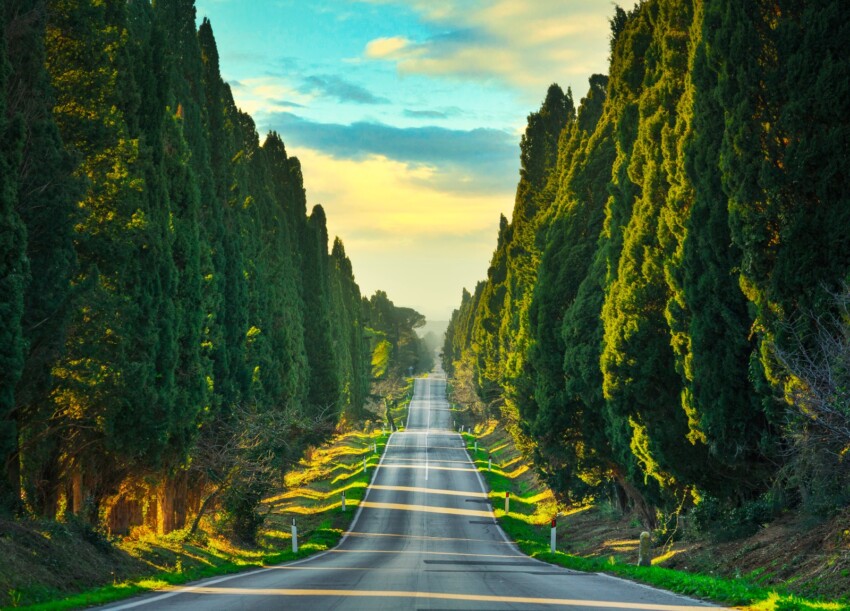
The Coast of the Etruscans Wine Route showcases some of the world’s most celebrated labels, across territory running parallel to the sea that brings together medieval villages, wooded hills and vistas between green vegetation and the blue of the Tyrrhenian Sea. It was here, around Bolgheri, that Italy’s most extraordinary wine story of recent decades unfolded.
From the lineage of Count Ugolino della Gherardesca emerged two dynasties: the Incisa della Rocchetta family, who created Sassicaia — described by a leading international magazine as “the most famous Italian wine in the world” — and the Antinori family, who bring centuries of experience in producing Ornellaia and Guado al Tasso. Ornellaia was recognised in 1995 by Decanter as Italy’s finest Cabernet and, in 2002, the world’s best wine.
Alongside these historic names, the area has seen a flourishing of young producers achieving remarkable quality peaks, not only in the Bolgheri territory but also in the neighbouring DOCs of Montescudaio and Val di Cornia. Along the sides of Bolgheri’s famous cypress-lined avenue are Sassicaia’s vineyards, the cellars of Ornellaia and Le Macchiole, accompanied by mills for cold-pressing local extra virgin olive oil.
In Bolgheri the concentration of excellent wineries is unique in Italy. Ornellaia, owned by the Marchesi Frescobaldi, is visited by appointment only, Monday to Friday: the tour guides you through historic vineyards and the cellar — designed like a contemporary art gallery as part of the Artist’s Harvest project — and concludes with guided tastings of the current vintage labels, including Ornellaia, Le Serre Nuove and Le Volte.
The Tenuta Guado al Tasso of the Antinori family, with its 1,000 hectares of which 312 are planted with vines, is the largest in the Bolgheri area: visits with tastings — bookings essential at least one month ahead — last over two hours and include a complete tour of vineyards, cellar and barrel rooms, with tastings of Vermentino, Scalabrone rosé, Bruciato and Guado al Tasso Bolgheri Rosso Superiore. For those seeking smaller operations, Le Macchiole offers visits Monday to Saturday (May to October also Saturday mornings) among murals and frames inspired by Carducci’s verses, through to the barrel room where wines age under certified organic regimes.
The Castello di Bolgheri, of the ancient Della Gherardesca family, is one of the village’s oldest wineries — active since 1796 — with tastings of the labels Castello di Bolgheri Superiore and Varvàra. It’s worth noting that the Tenuta San Guido, producer of Sassicaia, does not offer guided visits, but the wine can be tasted at the wine bar and Osteria San Guido.
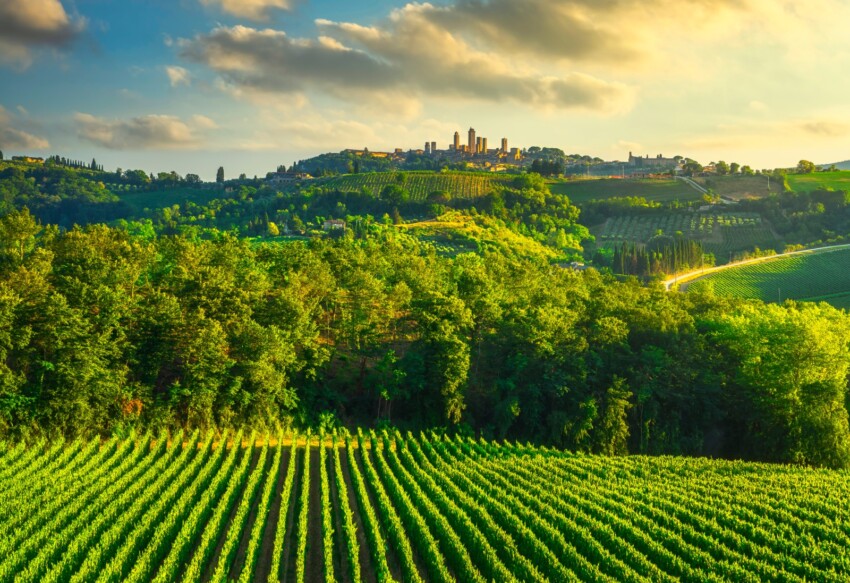
Vernaccia di San Gimignano is Tuscany’s greatest white wine and Italy’s oldest wine with a protected designation of origin. In 1966, it became the first Italian wine to receive DOC status, followed by DOCG recognition in 1993. Produced from grapes of the indigenous varietal of the same name, grown around the medieval towers of San Gimignano in Siena province, the result is a white with a brilliant straw-yellow colour, a dry flavour with a slightly bitter edge, and a saline, mineral character that sets it apart among Italian whites. Dante Alighieri mentioned it in the Divine Comedy, and Pope Martin IV praised it with words that local producers love to cite even today: according to the pontiff, Vernaccia was worth any penance to obtain.
The designation encompasses two main styles: Vernaccia Annata, fresher and more immediate, pairing beautifully with fish and light antipasti, and Vernaccia Riserva, often aged in oak barrels for several months, more structured and complex, capable of evolving positively in the bottle. San Gimignano is also a production zone for Chianti Colli Senesi DOCG and San Gimignano Rosso DOC, which pair wonderfully with the territory’s typical cured meats: prosciutto, wild boar sausages, finocchiona and the rare mortito, a myrtle-flavoured salami of local tradition. Vernaccia has historically been one of Italy’s most progressive denominations in organic production, a testament to a particularly conscious and attentive relationship with the land.
The ideal starting point for anyone wanting to explore the denomination is the Vernaccia di San Gimignano Wine Experience La Rocca, a municipal documentation and tasting centre run by the Consorzio. Cantina Panizzi, located in the medieval hamlet of Larniano outside the walls, combines organic wine and olive oil production with agriturismo hospitality: tastings take place in a charming setting, with the Tower of Larniano rising in the background and rolling Tuscan hills closing the horizon.
Cantina Guicciardini Strozzi is among the most refined addresses in the area, with visits that include the historic cellars, the villa gardens and a tasting paired with a light lunch. The family offers several thematic experiences, suited to both newcomers and seasoned enthusiasts. For those preferring a more intimate setting, Cantina Cesani offers a tasting of five wines with extra virgin olive oil and nibbles, in a welcoming room or on a terrace overlooking the soft Sienese hills: the story of how founder Vincenzo Cesani rescued Vernaccia in a territory dominated by reds accompanies every visit with an authenticity rarely found elsewhere.
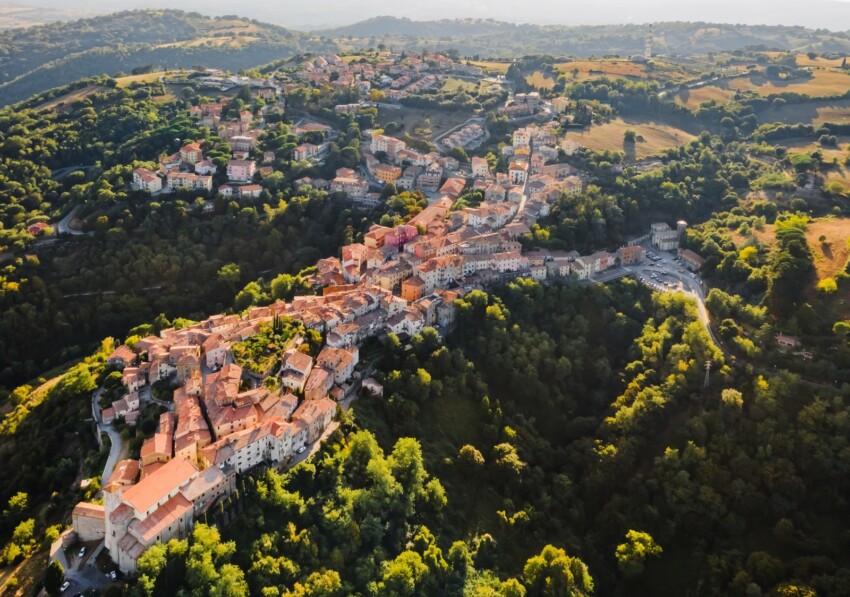
Morellino di Scansano DOCG is Maremma’s greatest red wine, produced from the hills stretching between the Ombrone and Albegna rivers, in the territory of Scansano and parts of Manciano, Magliano in Toscana, Grosseto, Campagnatico, Semproniano and Roccalbegna. The name Morellino likely derives from the dark colour of the local Sangiovese grape—called Morella—or, according to another tradition, from the dark horses that pulled the noble carriages heading to Scansano to purchase this prized wine. Viticulture in this area has Etruscan roots, documented by agricultural tools discovered at the Ghiaccioforte archaeological site, and in the Middle Ages feudal lords were already protecting the vineyards with specific regulations.
The wine received DOC status in 1978, then DOCG in 2006—the highest quality recognition—quickly becoming one of Tuscany’s most sought-after reds on the international market. Its success is partly linked to Frances Mayes’ Under the Tuscan Sun, translated worldwide, which introduced Morellino to a vast audience. The regulations require a minimum of 85% Sangiovese, complemented by other red-berried varietals such as Canaiolo, Ciliegiolo or Merlot. In its Annata version, it is fresh, fruity and immediate, with notes of cherry and plum; in its Riserva version, aged for at least two years with one spent in wood, it develops complexity, spicy notes and a structure suited to pairing with red meats and aged cheeses. The area’s Mediterranean climate, with hot, dry summers and consistent sea breezes, ensures balanced ripening and healthy grapes.
Cantina dei Vignaioli del Morellino di Scansano, a cooperative founded in 1972 by a group of local producers, is today the denomination’s flagship wine tourism destination: with approximately 170 members working 700 hectares of vineyards, and thanks to new facilities inaugurated in 2018, it offers structured visits in various formats.
Tuscany’s Wine Routes are best explored with an expert guide by your side. Book a tasting tour to experience the magic of these territories firsthand: every glass tells a story worth hearing directly from those who produce the wine every day.
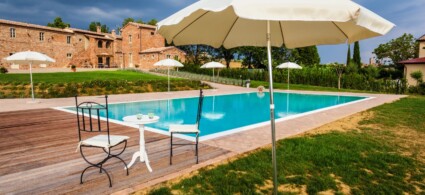
 Hotel
Hotel  Budget accommodations
  Apartments
  Family Hotel
  Luxury Hotel
  Resorts