Plus Florence
Florence - Via Santa Caterina D'Alessandria 15
Book now
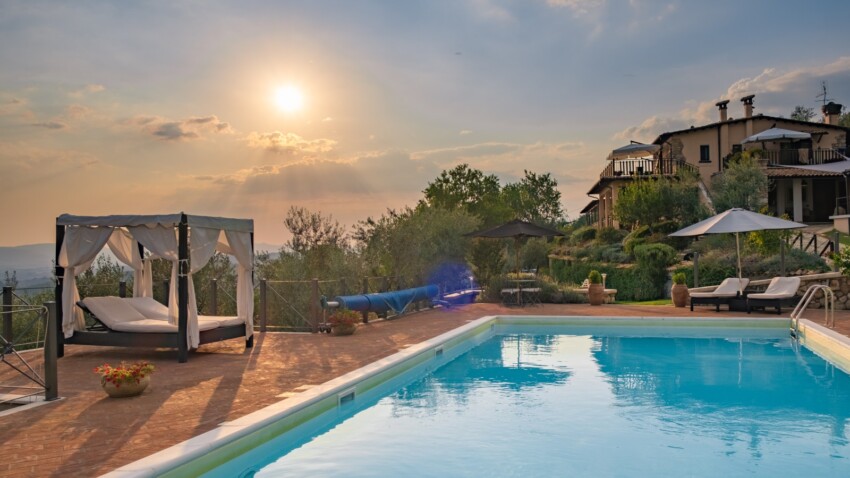
Tuscany is a vast region that encompasses a diverse range of geographical, historical and cultural realities. Choosing where to stay in Tuscany is therefore strategic if you want to plan your dream holiday based on your tastes and needs.
You can base yourself in a major city and venture out on day trips to other famous locations, or do the opposite – stay in small villages or rural areas and explore the art cities from there. Your choice depends on what appeals to you most: urban atmospheres or peaceful countryside? And do you want to stay in one place or travel around?
The good news is that Tuscany has a highly developed and widespread tourism industry, run with equal success by small family businesses and major international chains. This means you’ll find an enormous variety of hotels, B&Bs and holiday rentals in this region – perhaps unmatched anywhere else in Italy.
To help you work out where to stay, we’ve created a mini-guide to accommodation in Tuscany with the best locations and recommended hotels suited to different types of holiday.
Florence is a city with an extraordinarily high concentration of artistic masterpieces. And it’s not just the quantity that’s remarkable. Michelangelo’s sculptures, the Uffizi Gallery, the Duomo with its distinctive dome – clustered close together, Florence’s top attractions are among the most famous and admired works of art in the world.
Essential for any art and history enthusiast, the city that cradled the Renaissance is also an ideal destination for a romantic getaway. Hand in hand, strolling along the charming Ponte Vecchio and the beautifully maintained Boboli Gardens is one of life’s most romantic experiences.
Though the popular imagination places Florence in a distant past, the reality is of a dynamic city, bursting with cultural activity, events and places to enjoy yourself. Perfect, then, for holidays with friends and groups of young people too!
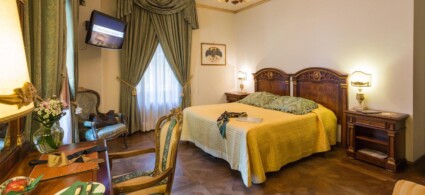
Florence’s hotel offering can welcome an extremely high number of visitors. This means the choice of accommodation is vast, with options to suit all budgets and needs.
The centre is preferred by most tourists: it’s the perfect solution if you want all the main attractions within reach, if you’re arriving by public transport, or if you’re staying for a short time. The centre isn’t necessarily the most expensive area – in fact, you can find excellent budget options here, such as family-run guesthouses and hostels.
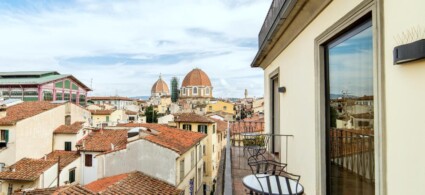
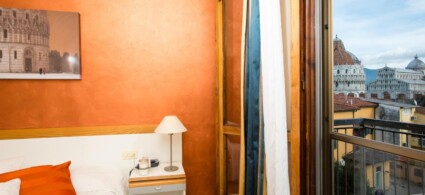
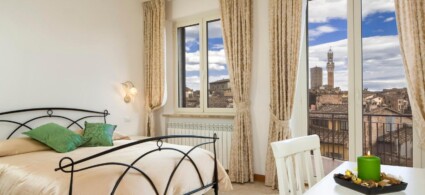
Those who don’t want to compromise on comfort, or who have plenty to spend, can choose from luxury hotels, many with spas, and elegant apartments with stunning city views. The most sought-after are inevitably rooms with Duomo views.
Don’t limit yourself to the centre when looking for your hotel or B&B in Florence. In the areas just outside the centre and even in outlying neighbourhoods, you’ll find good-value accommodation. In particular, if you’re arriving by car, it’s a good idea to avoid the centre, which is busy and a bit tricky to navigate if you don’t know the city.
A completely different atmosphere awaits in Fiesole, a charming little town just 5 km from Florence: a good choice if, after a day of cultural visits, you want greenery and relaxation.
Florence’s wonders are just one part of Tuscany’s artistic and architectural treasures. The leaning tower of Pisa and the Piazza dei Miracoli in Siena are two other iconic images of Italy: a visit to these two cities is a must.
Lucca is perhaps less iconic but deserves to be seen – or rather, experienced, given that it’s a culturally vibrant city; Pistoia and Arezzo are often overlooked, overshadowed by more famous destinations, but they’re worth rediscovering as they hold interesting surprises.
Although smaller than Florence, Pisa and Siena also have a long tourism tradition, so the range of hotels, B&Bs and apartments is very good here too. Both cities’ historic centres are small and easily navigable on foot, so all tourist accommodation is conveniently close to attractions and services.
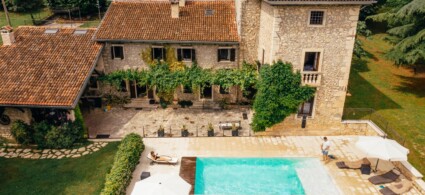
The choice of accommodation reduces significantly in Lucca, Pistoia and Arezzo, though good options can still be found. In some cases, by moving just a few kilometres from the centre, you can find splendid farmhouses and villas with pools that let you combine city visits with relaxing afternoons in the countryside.
How beautiful are the villages of Tuscany! Like the cities, they’re steeped in history and often home to artistic masterpieces, but they’re a completely different world from the art cities. Havens of peace, devoted to beauty and life’s simple pleasures.
You could spend a lifetime visiting all of Tuscany’s small towns and walled cities: how do you choose which to include in your itinerary? The choice is indeed difficult, but you have to start somewhere. Why not with San Gimignano, Certaldo, Colle Val d’Elsa, Montepulciano or San Quirico d’Orcia?
For a food and wine itinerary, the villages not to miss are Montalcino, home of Brunello wine, Pienza, home of pecorino cheese, San Miniato, home of truffle, and any one you choose (why not just one?) among the villages of the Chianti region.
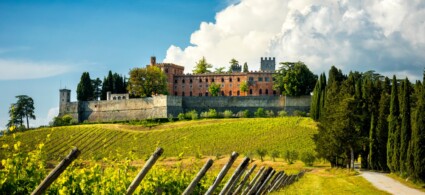
In the more famous and visited villages, such as San Gimignano and Montepulciano, it’s not difficult to find hotel facilities, and you can generally choose between budget and luxury options; however, these are almost always small hotels, B&Bs and apartments. Don’t expect to find large hotel chains.
The choice is more limited in small towns usually ignored by mass tourism, but if you’re driving there’s no need to worry: a good farmhouse is never far away in Tuscany!
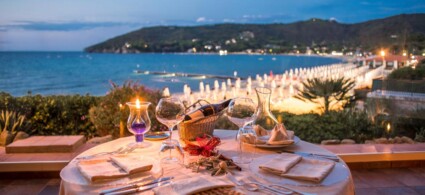
Tuscany boasts hundreds of kilometres of coastline, almost all bathed by the Tyrrhenian Sea and a small stretch in the north washed by the Ligurian Sea. Along the shore lie countless beaches, both sandy and rocky, some still unspoilt and others with a long tourism tradition; to these add the marvellous beaches of the islands that make up the Tuscan Archipelago.
The main coastal areas are: the Maremma coast, Riviera Apuana, Versilia, Pisa coastline and Etruscan Coast. The most famous seaside resorts are concentrated in the Maremma and Versilia.
Versilia is a stretch of coast about 20 km long in the northern part of Tuscany, squeezed between the sea and the Apuan Alps mountains. Along this shoreline extend long sandy beaches behind which popular seaside resorts have developed.
Among these are Forte dei Marmi and Viareggio, two names immediately associated with fun and carefree living: the first for its famous high society scene, the second for one of Europe’s most famous carnivals. Other must-see seaside destinations in Versilia are Pietrasanta and the Lido di Camaiore.
Maremma is a vast area of Tuscany that includes one of the region’s most well-known and popular coastal stretches, largely protected by nature parks and marine reserves. It’s an excellent choice if you love beaches surrounded by greenery or nestled near charming villages.
The best destinations for a beach holiday in Maremma are Castiglione della Pescaia, the lido of Capalbio and the Argentario headland.
The Tuscan Archipelago rivals top beach holiday destinations like Sardinia, Sicily and Greece. Many Italians prefer to spend their beach holidays on the islands off Tuscany, both because they’re beautiful and because they’re much easier to reach.
The top destination for visitor numbers is the wonderful Elba Island, a large island with varied landscapes that’s worth visiting in any season. Its crystal-clear sea, lush nature, characteristic fishing villages and fascinating inland trails are an irresistible draw for beach lovers, hikers and romantic souls.
The other islands of the archipelago are also worth exploring, particularly Giglio Island, Capraia and Pianosa.
Fancy some relaxation? When you need to unwind and recharge, Tuscany’s thermal spas are the ideal destination. Top choices include Saturnia, Montecatini Terme, Chianciano and Rapolano Terme.
The first is famous for its free thermal springs: natural pools of sulphur water that reach a temperature of 37.5°. Being very famous and free, Saturnia’s natural thermal springs are almost always packed, which is why some people prefer to book a spa hotel with private thermal facilities.
Montecatini Terme is history and elegance, while Chianciano and Rapolano are geared towards modern wellness tourism.
All of Tuscany’s spa towns offer a good choice of accommodation. Spa hotels with private pools predominate, but you can also stay in B&Bs and farmhouses and bathe in the pools of thermal establishments that allow day-use admission.
Generally, thermal hotels are mid-to-upmarket; if you want to spend less, head to nearby villages.
Use the form below to check room availability and prices in real time.
 Hotel
Hotel 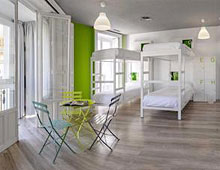 Budget accommodations
  Apartments
  Family Hotel
 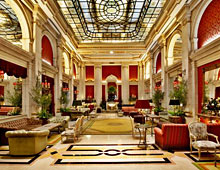 Luxury Hotel
 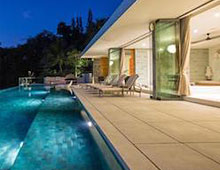 Resorts