1 Il Castelluccio Country Resort Restaurant & SPA
Barberino di Mugello - Via Ariano snc
This 11th century Tuscan farmhouse is nestled in the beautiful Florentine hills, amongst private gardens where you can enjoy al fresco dining.
Book now
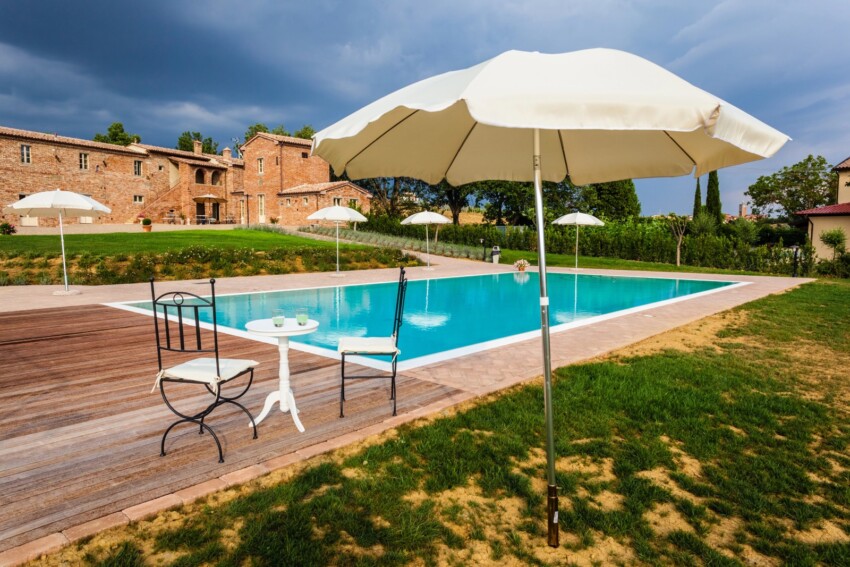
Farm stays in Tuscany represent one of the region’s most sought-after forms of accommodation and one of Italy’s most authentic: these are reception facilities located within active agricultural businesses, where your stay intertwines with the production of wine, oil, cheese and vegetables that arrive directly on your table. From Chianti to the Maremma, from the hills of Garfagnana to the farms of Val d’Orcia, the choice is extraordinarily wide in terms of landscapes, types and price ranges.
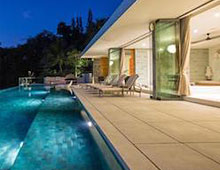
Choosing a Tuscan farm stay means staying in an authentic rural setting, often in restored historic buildings — farmhouses, country estates, old barns — surrounded by olive groves and vineyards. Breakfast featuring the farm’s own produce, dinner with wine from the cellar and the chance to take part in the grape harvest, olive picking or cooking classes are experiences difficult to find in any other type of accommodation. Many facilities also offer a swimming pool with panoramic views, an amenity that has become almost essential for the international market.
This type of stay works well for stays of at least 3-4 days, ideally whole weeks during peak season, and is particularly popular with couples seeking peace and quiet, families with children who want contact with nature and groups renting the entire property. Prices vary widely depending on the area and level of comfort: you’ll find everything from simple, family-run operations to luxury farms with spas, wellness centres and gourmet restaurants.
During peak season — June to September — it’s essential to book at least 3-4 months in advance, particularly for the most popular properties in Chianti and Val d’Orcia. Spring and autumn are instead the best times for those wanting to enjoy the Tuscan landscape more leisurely, with lower rates and, in autumn’s case, the opportunity to participate in the grape harvest and olive pressing.
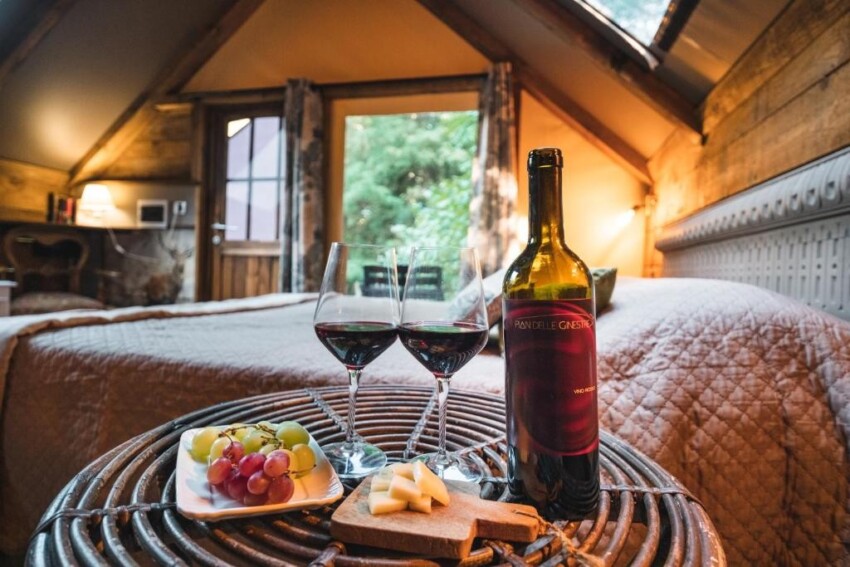
The term “farm stay” covers a very diverse range of facilities in Tuscany, all sharing the characteristic of being located within an active agricultural setting. Understanding the differences helps you choose the solution that best suits your expectations.
The traditional farm stay is the family-run farm where you sleep in simple rooms and eat what the business produces: wine, oil, vegetables from the kitchen garden, cured meats, cheese. The cooking is often home-style and seasonal, the service informal, the price reasonable. It’s the most authentic choice for those wanting direct contact with Tuscan agricultural reality and preferring a family atmosphere to that of a resort.
The farm stay with swimming pool is nowadays the most widespread and sought-after type, particularly among foreign visitors. These facilities offer rooms or independent apartments within restored rural buildings, a panoramic swimming pool overlooking the hills, and often breakfast included with the farm’s own produce. The level of comfort is comparable to a good hotel, with the advantage of open spaces and privacy. You’ll find them throughout the region but with particular concentration in Chianti and Val d’Orcia.
Luxury farm stays — sometimes overlapping with the concept of glamping or rural resort — offer a completely different experience: carefully furnished suites, spa, restaurant with refined cuisine, guided cellar tastings, treatments using the farm’s own products. They’re often located within prestigious wine estates and found mainly in Chianti Classico, around Montalcino and Montepulciano.
Finally, educational farm stays are facilities designed also for families with children: in addition to accommodation they offer practical activities such as animal care, bread-making, cheese production and vegetable gardening workshops. They’re distributed throughout the region and represent an effective way for young ones to have a concrete experience in contact with nature and the rhythms of the countryside.
All of Tuscany is suited to farm stays, but certain areas stand out for their concentration of facilities, quality of landscape and wealth of nearby attractions.
Chianti is the most requested area by far: the combination of iconic landscape, world-renowned wines such as Chianti Classico, medieval villages and proximity to Florence and Siena makes it the preferred destination for international tourism. The facilities are numerous and of good average quality, with a prevalence of country estates and farms with pools. Prices are among the highest in the region, but average quality justifies the expense.
Val d’Orcia and the Crete Senesi offer an even more spectacular landscape and a more unspoiled atmosphere compared to Chianti, with farms and estates set in an area almost devoid of modern construction. It’s the ideal area for those seeking tranquillity, landscape photography and visits to the villages of Pienza and Montalcino. Wine itineraries and those for extra virgin olive oil naturally develop across this territory.
The Grosseto Maremma is the most interesting choice for those wanting to combine countryside and sea: prices are generally lower than those in the Siena area, the landscape is wilder and more authentic, and many facilities are less than 30 minutes from the Grosseto coast’s beaches. It’s also the area with the greatest presence of traditional livestock farming — Maremmano horses, wild boar, Maremmano cattle — which adds a unique character to the experience.
For those preferring mountains and unspoiled nature, Mugello, Garfagnana and Casentino offer farm stays of great appeal at more modest prices: chestnut forests, high-altitude pastures, artisan dairy products and cured meats not found elsewhere. These are areas less affected by mass tourism, which ensures a more genuine experience and contact with local communities.
Below you’ll find a selection of farm stays in Tuscany chosen for authenticity, location and quality of services offered, distributed across the region’s main agricultural areas. For each property you can verify current availability and rates.
Use the form below to check room availability and prices in real time.
 Hotel
Hotel  Budget accommodations
  Apartments
  Family Hotel
  Luxury Hotel
  Resorts